How to Make Ice Cream in a Blender
A blender cannot churn, so it does the job in two steps instead of one. A chef explains both methods, the ratio that keeps the base scoopable, and why yours came out icy.
Updated
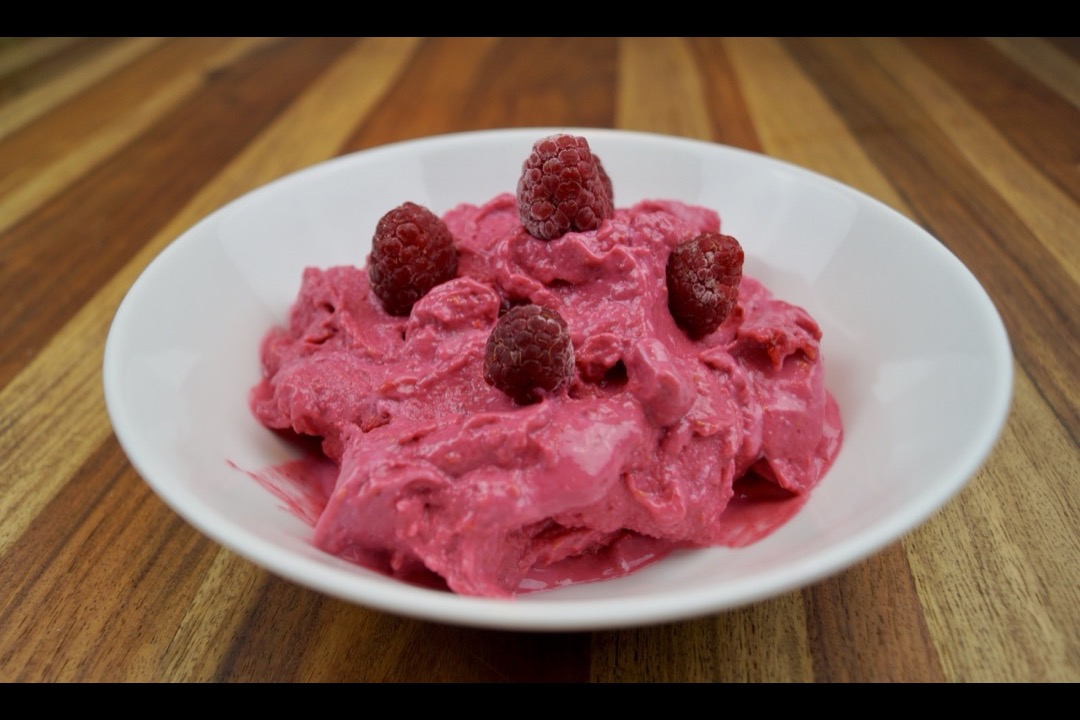
A blender cannot make ice cream the way an ice cream machine makes ice cream, and every article that skips past this is setting you up to be disappointed by a result that is actually quite good. The gap is mechanical, not a matter of effort or a better recipe. Once you understand exactly where it sits, you can work around it, and what comes out of the jar is genuinely worth making on a weeknight.
I ran a restaurant group’s test kitchen for four years. We had a proper compressor machine, and we also had a lot of evenings where somebody wanted frozen dessert in ninety minutes and the machine was full of something else. The two workarounds below are what we used, and they are the same two methods that every credible source on the internet has independently arrived at. What almost nobody explains is why there are exactly two of them, and why each one produces a different kind of not-quite-ice-cream.
What You Are Actually Making
Three things get filed under “ice cream in a blender” and they behave completely differently.
Real dairy ice cream, frozen without a churn. Cream, sugar, flavor, frozen in a home freezer with the blender doing the aerating or the crystal-breaking. This is what the rest of this article is about.
Nice cream. Frozen fruit, usually banana, blended into a soft mass. No dairy fat, no added sugar, nothing to control crystal growth except the fruit’s own fiber. Good, fast, and not ice cream.
Ninja Creami output. A different machine entirely. It shaves a pre-frozen pint with a downward-driven paddle rather than spinning a blade in a jar, and it gets closer to churned texture than a blender does. It also takes 24 hours and a dedicated appliance.
Why a Blender Cannot Churn
An ice cream machine does three things at the same time, and the simultaneity is the whole trick. It freezes, it agitates, and it aerates, continuously, for twenty to forty minutes. A dasher scrapes newly formed ice off the frozen cylinder wall the instant it appears, so no single crystal ever gets the chance to grow, and the same motion beats air into the mix while it thickens.
That matters because of one number. Your tongue starts detecting individual ice crystals as grit at somewhere around fifty microns. Below that, the mass reads as smooth. A churn keeps crystals well under that threshold by never letting any of them mature, and it holds them apart in a fat-and-air matrix.
A blender can only do those three jobs one after another, and that gives you exactly two options.
You can aerate first and freeze second, which is the whip-and-freeze method. You whip air into cream, then freeze it statically. Crystals grow uninterrupted during that freeze, but they grow inside a base that is already full of insulating air bubbles and fat, which slows and disrupts them.
Or you can freeze first and fragment second, which is the reblend method. You let the base freeze solid, crystals and all, then physically shatter the large crystals into smaller pieces with the blade. This is fragmentation, not the fine nucleation a churn produces, which is why the texture lands close to real ice cream without ever being identical to it.
That distinction is the honest answer to “why doesn’t mine taste like the good stuff,” and it is also why both methods work about as well as each other despite looking nothing alike.
Method 1: Whip and Freeze
This is the one to use if your blender is ordinary, and it is the method America’s Test Kitchen landed on after testing alternatives, including a stand mixer, which incorporates so much air the result goes past ice cream and into frozen whipped topping.
Blend cold heavy cream on medium until it thickens to soft peaks. In a jar blender this takes forty to sixty seconds and you want to stop while it still moves, not when it has seized. Blend in sweetened condensed milk, vanilla, a pinch of salt, and whatever else you are flavoring with, on the lowest speed, just until combined. Every extra second here knocks air back out.
Pour into a shallow metal pan rather than a deep container. Metal pulls heat out faster than glass or plastic, and a shallow layer freezes faster than a deep one, and both of those buy you smaller crystals. Cover the surface with plastic wrap pressed down onto the ice cream, not stretched across the top of the pan, and freeze at least six hours.
No second blending step. That is the point of this method.
Method 2: Freeze Then Reblend
This one gives you real control over flavor, because you can build any base you like rather than working around condensed milk. It also asks considerably more of the machine.
Make your base, chill it thoroughly, then freeze it in an ice cube tray overnight. Cubes rather than a single block, deliberately: a solid brick is close to unblendable and it is where most people burn out a motor. Drop the cubes into the jar with two or three tablespoons of cold cream or milk, pulse, scrape down, pulse again, and keep going until it comes together at soft-serve consistency. Then either eat it immediately, which is my preference, or spread it in a shallow pan and firm it up for two hours.
The scrape-and-pulse rhythm is not optional. A blender vortex will happily carve a cavity around the blade and spin in it while the outside of the load never moves, and pulsing is what collapses that cavity back down onto the blade.
A food processor does this job as well as a blender and sometimes better, because a wide flat blade sweeping the floor of a shallow bowl meets frozen chunks more evenly than a narrow vortex does. If you already own one, use it. If you are choosing between the two machines, our comparison of a food processor versus a blender covers where each one wins, and a combination machine covers both jobs in one footprint.
The Ratio, and Why the Numbers Matter
Nearly every recipe you will find gives you fixed quantities. Almost none explains the two variables you are actually managing, which means you cannot adapt anything.
Fat. Heavy cream is at least 36 percent milkfat. That fat physically obstructs the path between growing ice crystals, which is why a cream base freezes smoother than a milk base at identical sugar. Federal labelling rules require 10 percent milkfat before something can be sold as ice cream at all, and that floor exists for exactly this reason. Below roughly a quarter of your liquid volume in heavy cream, texture falls off fast.
Sugar. Sugar dissolved in water lowers the temperature at which that water freezes. In a properly sugared base, a portion of the water is still liquid at freezer temperature, and that unfrozen fraction is what makes the mass scoopable rather than solid. Cut sugar for health reasons and you will get a brick, every time, and no amount of blending fixes it. Corn syrup is useful here because it depresses the freezing point and adds body without tasting as sweet as the equivalent sugar.
A working starting point for a quart: three cups heavy cream, one cup whole milk, three quarters of a cup of sugar or a half cup of sugar plus a quarter cup of corn syrup, and a half teaspoon of salt. Adjust flavor freely. Adjust those two variables carefully, and in opposite directions if you must, because dropping one while dropping the other compounds.
The Pantry Stabilizer Nobody Mentions
Commercial ice cream uses guar gum and locust bean gum to bind free water so that less of it is available to migrate into existing crystals during storage. You can approximate this with things you already have.
Whisk two teaspoons of cornstarch into a quarter cup of the milk, bring the rest of the dairy to a bare simmer, stir the slurry in, cook for one minute until it thickens slightly, then chill completely before you blend. An extra egg yolk does a similar job through lecithin and protein, and two tablespoons of softened cream cheese is the laziest version and works better than it has any right to.
The difference shows up on day three, not day one. Skip it for something you are eating tonight.
Which Blender Features Actually Change the Result
Wattage matters only for the reblend method, where a thousand watts is the practical floor and twelve to fifteen hundred is comfortable. A tamper matters for the same method and is close to essential, because it lets you push frozen material into the blade without stopping. Pulse control matters for both. Jar shape matters more than people expect: a narrow tapered jar keeps pulling material down toward the blade, while a wide flat-bottomed one lets it sit at the edges.
Two smaller notes from experience. Repeated frozen loads plus high-speed friction heat is the hardest thermal cycle you can put a jar through, so if you are shopping for a glass-jar blender this is the one job where the material genuinely matters. And a full-power blender working on frozen cubes is loud in a way a smoothie never is, which is worth thinking about in an apartment or with a sleeping child in the house. Our roundup of the quietest blenders covers which machines keep the noise down under load, and if you already own a Ninja, our operating guide explains why its stacked blade assembly wants ingredients loaded in the opposite order from every other blender.
How Long It Keeps
Two to three days at its best. A week before it is obviously worse. This is not a preservative issue, it is a crystal-growth issue: every freezer defrost cycle warms the surface a fraction, melts a little ice, and refreezes it onto crystals that are already there. They only ever get bigger.
Shallow container, plastic wrap pressed onto the surface, back of the freezer rather than the door. Small batches, eaten quickly, are the real answer.
Where I Would Start
Make the whip-and-freeze version first, tonight, with whatever blender is on your counter. It is the lower-risk method, it tells you immediately whether you like the texture this approach produces, and it will not stall your motor. If you like it and want control over the flavor, graduate to the reblend method and make sure the machine is up to it before you fill the jar with frozen cubes.
Either way, the thing to hold onto is that you are not making a worse version of churned ice cream through incompetence. You are making a structurally different frozen dessert with the equipment available, and once the fat and the sugar are in the right place, it is very good on its own terms. If you are shopping for the machine to do it with, start with our guides to the best blenders for thick frozen loads and the best blenders for protein shakes, both of which grade the motors and jar shapes that decide whether frozen material actually moves.
Frequently Asked Questions
Can I make real ice cream in a regular blender, or do I need a high-powered one?
Why is my blender ice cream icy or grainy instead of creamy?
What is the difference between blender ice cream and a Ninja Creami?
Is banana nice cream the same thing as blender ice cream?
How long does homemade blender ice cream stay good in the freezer?
Related Articles
About the Reviewer

Nora Whitfield, CIA Culinary Arts, ServSafe Certified
A.O.S. Culinary Arts, The Culinary Institute of America
Nora Whitfield trained at the Culinary Institute of America and spent twelve years in professional kitchens, the last four running the test kitchen for a regional restaurant group where her job was to decide which equipment could survive a dinner service and which could not. She has seasoned more carbon-steel woks than she can count, boiled water in every kettle worth owning, and broken enough cheap gear to know exactly where manufacturers cut corners. She reviews kitchen equipment the way she specified it professionally: cook on it, clean it, and see what it looks like after a month.