How to Use a Ninja Blender
A Ninja loads backwards from every other blender, and its 72-ounce pitcher only takes 64. A chef's operating guide, straight from the owner's guides.
Updated
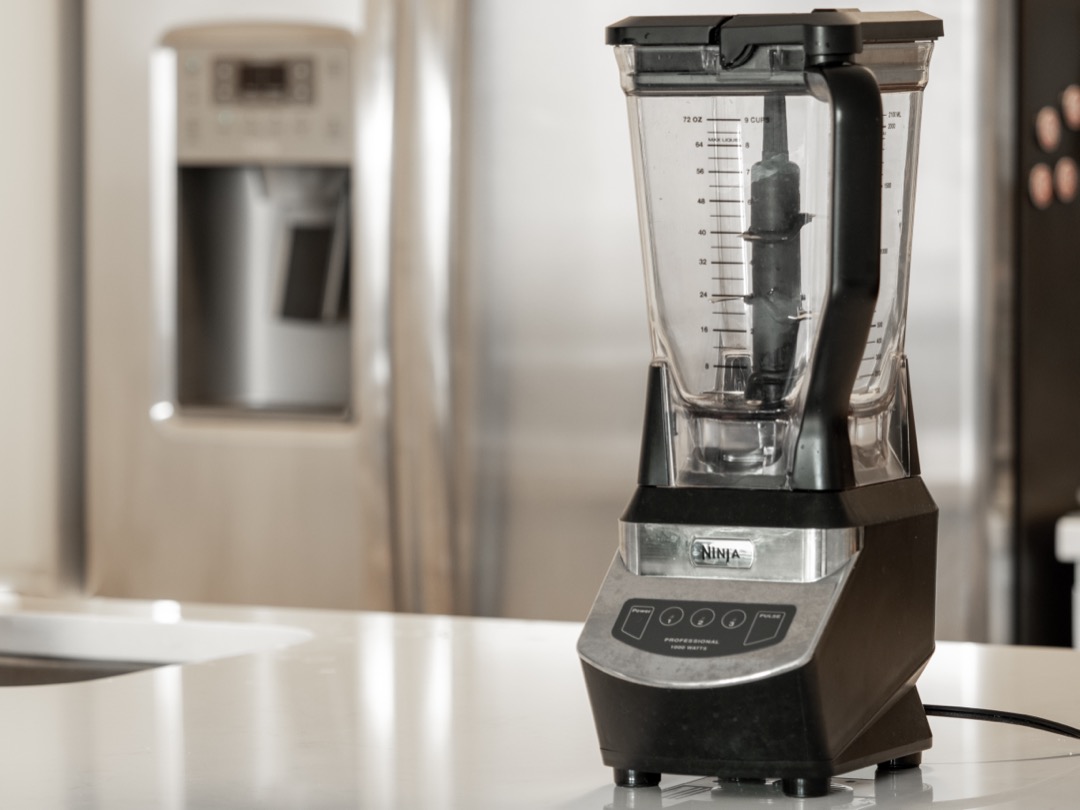
The Ninja is the blender most American kitchens actually own, and it is the one I have watched competent cooks operate wrongly more than any other appliance. Not because it is complicated. Because it is assembled backwards from every other blender they have used, and nothing on the machine tells them so.
On a conventional blender the blade is bolted into the base of the jar and you pour liquid in first. A Ninja pitcher has a loose blade tower that stands on a drive gear and has to go in before any food does. A Ninja single-serve cup is filled right way up, capped with the blade, then turned upside down onto the motor, which means the fill order that keeps a normal jar moving is the exact order that makes a Ninja cup stall. Both habits transfer badly. Both are the reason a machine with more than enough power produces a smoothie with a dry pocket in the middle.
Everything below comes from the owner’s guides for the two most common configurations, the Professional Blender with Nutri Ninja cups and the Professional Plus Blender Duo with Auto-iQ, cross-checked against how these machines behave on a bench. Ninja’s line-up changes names often and the buttons move around, so where models differ I have said so rather than flattened it.
If you only need the sequence: put the base on the counter, twist the pitcher on clockwise until it clicks, drop the loose blade tower onto the gear before any food, fill to the max liquid line, align the two triangles and press the lid handle flat until it clicks, then press power and pick a program. The single-serve cup goes the other way around: food first, blade screwed on second, then invert the whole cup onto the base and twist. Everything after this is why each of those steps is in that order, and what to do when one of them will not go.
The Two Machines in the Box
A Duo-style Ninja is not one blender with an accessory. It is two blending systems that share a motor, and almost nothing carries across between them.
The pitcher runs a stacked blade assembly, a tower of blades on a vertical shaft that sits loosely on a gear in the bottom of the jar. It is not attached, it is sharp, and Ninja’s guidance is to hold it only by the top of the shaft. The single-serve cup runs a Pro Extractor blade assembly, a flat screw-on cap of blades you grip by the outer rim. The guides are explicit that the two blade assemblies are not interchangeable, and the vessels are not either.
More usefully, the base knows which one you have fitted. There is a detection tab on each container, and only the programs valid for that container will light up. If a button you want is dark, you have not broken anything, you have fitted the other vessel. This is also why a panel where every LED is flashing means the base thinks no container is on it at all.
One number worth knowing before you buy accessories: on the Professional Plus Duo, Ninja states that the headline wattage rating is measured on the single-serve cup and blade configuration, and that other configurations may draw less. The 1400 peak watts on the box is a peak figure on the smallest vessel. The nameplate power in the same guide is 1200 watts.
Assembling the Pitcher in the Only Order That Works
Four steps, and three of them are where people go wrong.
Set the base on a dry level surface and lower the pitcher on with the handle sitting slightly to the right of the lock symbol, then rotate it clockwise until it clicks. It drops as it turns, because the safety tabs on the jar slide under the tabs on the base. On most models the handle can end up at either front corner, so pick whichever suits your bench.
Now the blade, before any food. Hold the stacked assembly by the top of the shaft and drop it onto the drive gear. It will feel loose and slightly wobbly, and it is meant to. Ninja states it directly in the guides: never add ingredients into the container before placing the blade assembly in first. If food is already in the jar you cannot see the gear, the tower lands on a strawberry instead of the splines, and it sits high.
Then the ingredients, and then the lid. The lid has a triangle on it and the handle has a matching triangle, and they must be aligned for the lid to lock. Press the handle down until it clicks. If it will not click, the blade is not seated, which is the failure the previous paragraph creates.
Plug in and press power. On a correctly assembled machine the buttons light steadily and it is ready. If the pitcher and lid are not right, the motor is disabled and the lights flash instead. That flash is a feature and it is the only diagnostic the machine gives you.
Coming apart, the order reverses and one step is easy to skip. For a pourable mixture, leave the lid locked and open the spout cap. For anything thick, press the lid release, lift the handle, and take the blade tower out by the shaft before you tip the jar. That tower is sharp, unattached, and will slide out onto whatever you are pouring into. Ninja lists this as a laceration risk rather than a suggestion.
The Fill Order Ninja Publishes, and It Is Not Liquids First
Every general blender guide tells you liquids first, then soft, then hard, then ice. That is correct for a jar with a fixed blade at the bottom, because the liquid is what lets the vortex form.
Ninja’s own instruction for the single-serve cup is almost the reverse, and it is buried in a troubleshooting entry rather than the assembly steps. Fill with fresh fruit or vegetables first, then leafy greens or herbs, then liquids or yogurt, then seeds, powders or nut butters, and ice or frozen ingredients last.
That looks wrong until you remember the cup blends upside down. Whatever you put in first ends up furthest from the blades once the cup is inverted, and whatever goes in last sits directly against them. Ice on top of a filled cup becomes ice against the blade when the cup flips, which is exactly where you want it. Protein powder loaded near the end lands in the liquid layer rather than caking on the base of the cup, which is the single most common cause of that gritty band at the bottom of a shake. If shakes are most of what you make, the vessel geometry matters more than the wattage, and we get into which machines handle powder cleanly in our blenders for protein shakes roundup.
The pitcher blends the right way up, so it follows the conventional order: liquid, soft, hard, frozen last. The two vessels genuinely want opposite loading, which is not something Ninja advertises anywhere on the box.
Seventy-Two Ounces That Holds Sixty-Four
The pitcher on almost every full-size Ninja is sold as 72 ounces. The guides carry an asterisk that most owners never read: 64 ounces maximum liquid capacity.
Those eight ounces are not a rounding error, they are the headroom a sealed jar needs for the mixture to climb during blending. There are two lines moulded into the jar for this reason, a max fill line and a lower max liquid line, and for anything pourable the lower one is your limit. Overfilling is the reason a lid that locked perfectly starts weeping around the seal, and Ninja’s own reset instructions name exceeding maximum capacity as the most typical cause of overloading the motor.
Practically, a 72 ounce Ninja makes about four smoothies, not six. Working under the liquid line and running two batches is faster than running one overloaded batch that has to be stopped and scraped twice.
What the Buttons Actually Do
Manual speeds, meaning Low, Medium and High, run continuously at that speed for 60 seconds and then stop on their own. Press the lit button again to end it early. There is no way to run a manual speed longer than a minute without restarting it, which is a deliberate limit on motor heat rather than a fault.
Pulse only runs while your finger is on it. Short press, short burst. This is the control you want for anything where texture is the point, so salsa, coarse-chopped nuts, or breaking a frozen block apart before a continuous run.
Auto-iQ programs are recorded patterns of blending and pausing at varying speeds, and they stop themselves when finished. The pauses do real work. When a thick mixture bridges over the blades and spins air, no amount of continuous power fixes it, because the vortex is what is holding the pocket open. A pause drops the load back down. Ninja’s answer to “unit doesn’t mix well, ingredients get stuck” is to use an Auto-iQ program for precisely this reason, with adding liquid as the second suggestion.
The old rule of thumb still holds for the manual speeds. Low is for thin batters, gravies, marinades and rough chopping. Medium is for grating hard cheese, grinding nuts, dips, sauces and milkshakes. High is for smoothies, liquefying and ice.
Ice, and Why Yours Comes Out Slushy
Ninja built its reputation on crushed ice and this is the complaint I hear most often about it. The guides name the cause and it is not the machine.
Do not use ice that has been sitting out or has started to melt. Ice from a freezer door bin that has been opened all morning already has a water film on every cube, and water is what turns crushed ice into slush. Use cubes straight from the freezer, and start with a few pulses before switching to a continuous run so the bed breaks up before the blades try to spin it.
The Hot Liquid Rule Is Not Negotiable
Do not blend hot liquids in a standard Ninja. This appears as a numbered caution in every guide, and it is a genuine hazard rather than a disclaimer.
A Ninja jar is sealed by a locking lid with no vented centre cap, which is what a Vitamix-style lid plug is for. Hot liquid hitting the blades flashes to steam, the steam cannot leave, and the pressure finds the lid. Soups and sauces go in at room temperature. The exception in the range is the Foodi Cold and Hot Blender, which has a heating element in the jar and is designed for it. Everything else in the line-up is a cold appliance.
One inconsistency across generations is worth flagging because it changed in the safe direction. The older Professional guide tells you to add ingredients mid-blend through the open pour spout. The newer Professional Plus Duo guide carries a numbered warning not to open the pour spout cap while the blender is operating. If your machine is recent, follow the newer instruction. Stopping the motor to add something costs three seconds.
Things a Ninja Is Not
This is where most of the disappointment comes from, and none of it is the machine’s fault.
It is not a grinder. The newer guide forbids dry ingredients and grinding operations in both the pitcher and the cup. Wet-food blade geometry throws dry beans to the wall where they sit untouched, and hard dry material dulls an edge you are not allowed to sharpen.
It is not a food processor. A blender pulls food down into a narrow vortex, which is right for liquid and wrong for anything you want in even pieces. Nobody makes a decent pie dough or an even dice in a blender jar of any brand. If you keep reaching for the Ninja to chop, that is the wrong tool talking, and we lay out where the line actually falls in food processor vs blender. Ninja does sell kitchen systems with a proper processor bowl, and the blender and food processor combos are worth a look before you buy a second machine.
It is not a juicer. The Extract program on the single-serve cup blends whole fruit and vegetables including skins, seeds and stems. That is pulverised produce with the fibre still in it, which is a good drink and not juice. If you want juice, you need a machine that separates pulp, and our guides to stainless steel juicers and hand press juicers cover both approaches.
It does not come with a glass jar. Ninja pitchers and cups are Tritan, a BPA-free copolyester. That is a deliberate choice, because a 72 ounce glass jar taking daily ice loads is heavy and fragile, but it does mean Tritan scratches, hazes over years of dishwasher cycles, and holds garlic and turmeric smells in a way glass does not. If a glass jar is a requirement, Ninja is not the brand, and neither are most of the names you would expect. We went looking and wrote up what genuinely ships with glass in blenders with glass jars.
It is not quiet. A Ninja crushing dry ice is one of the loudest appliances in a domestic kitchen, and there is no setting that changes that. If early mornings in a small flat are the constraint, that is a specification to buy for rather than work around, and we tested for it in quiet blenders.
Three jobs in particular go badly in any high-speed blender, Ninja included, and they are worth naming because people keep trying. Whipped cream shears past soft peaks into butter with no visual warning, because you cannot see the bowl the way you can on a stand mixer and there is no slow speed that behaves gently. Mashed potato turns to glue, because rupturing that much potato starch that fast is exactly how you make wallpaper paste. And thick nut butters or doughs stall, because there is not enough free liquid to keep a vortex turning and the machine ends up spinning air against a solid block. None of that is a fault in the machine. It is a blender being asked to do a whisk’s job, a ricer’s job, and a processor’s job.
Cleaning, and the One Habit That Kills Blades
The fast method is Ninja’s own, published in its support articles: rinse the vessel, fill it halfway with warm water, add one small drop of dish soap, put the blade and lid back on, run it briefly, then rinse. Thirty seconds, done before the mixture dries.
For a proper wash, everything is dishwasher safe with two conditions the guides repeat every time. Top rack only, for jars, cups, lids and blades. And the blade comes out of the container first. A blade left standing in a jar shields both parts from the spray, so you get a jar that looks clean and a blade hub still packed with mango fibre.
Hand washing is fine and often better, but use a brush or a long-handled utensil. The stacked assembly is not locked to anything and will rotate under a sponge.
Two habits to drop. Do not leave the blade tower soaking loose in a sink full of water, which is how people find it with their hands. And never store a blended drink in a single-serve cup with the Pro Extractor blades still screwed on. Blended produce carries on fermenting, the sealed cup traps the gas, and Ninja warns that the resulting pressure can pose a risk of injury. Take the blade off, put the spout lid on, then refrigerate.
When It Stops Working
Two completely different complaints get filed under the same sentence, and the fixes have nothing in common. Sort out which one you have first: the motor will not start at all, or the motor runs happily and the food does not move.
It runs, but nothing blends
This is cavitation, and it is not a fault. A thick mixture bridges over the blade, the blade spins a pocket of air underneath, and the vortex that dug the pocket is now the thing keeping it open. Running longer makes it worse and heats the motor for nothing.
The fix is to break the bridge rather than out-power it. Stop the machine, and either pulse in short bursts so the load drops back between them, or add liquid a splash at a time until the surface starts moving. If you can see the mixture turning over at the top, it is cutting. If the top is still and only the middle is churning, it is not. On the single-serve cup the same problem answers to lifting the cup off the base and giving it a shake, since the food is sitting on the lid end. An Auto-iQ program is the automated version of all this, which is why Ninja names it as the first answer to ingredients getting stuck.
It will not start
Almost every “my Ninja died” case is one of three states, and the lights tell you which.
All LEDs flashing means powered on with no container detected. Reseat the jar or cup and turn it clockwise until it clicks.
Low, Medium, High and Pulse flashing together means the thermal cutout has tripped from an overload. Unplug it, take the lid and blade off, empty the container, and check nothing is jammed at the blade. Let it cool. The guides say approximately 15 minutes in the reset procedure and 30 minutes for the flashing case, so give it half an hour. Then work under the max liquid line, because exceeding capacity is the cause Ninja names first.
Nothing lights and nothing runs is usually the lid. Check the triangles are aligned and the handle has clicked flat, then check the blade is fully seated, because an unseated blade is what stops the handle folding down.
Two more that read as faults and are not. The manual speeds stopping at 60 seconds is the timer, not a cutout. And the lid handle refusing to fold down while the lid is off the pitcher is by design, since the mechanism only releases when it is on the jar.
The Short Version
Blade in before food in the pitcher, food in before blade in the cup. Align the triangles or nothing runs. Sixty-four ounces of liquid in a seventy-two ounce jar. Ice from the freezer, not from a melting tray. Load the cup fruit first and ice last, because it blends upside down. Nothing hot, nothing dry. Blade out of the jar before it goes in the dishwasher, and off the cup before it goes in the fridge.
Get those seven right and the machine does what it is supposed to do, which is a great deal for what it costs.
Frequently Asked Questions
Why won't my Ninja blender turn on?
Can you blend hot soup in a Ninja blender?
Can you grind coffee beans or spices in a Ninja blender?
What is the difference between an Auto-iQ program and just pressing High?
Are Ninja blender parts dishwasher safe, and can you leave the blade in the jar?
Related Articles
About the Reviewer

Nora Whitfield, CIA Culinary Arts, ServSafe Certified
A.O.S. Culinary Arts, The Culinary Institute of America
Nora Whitfield trained at the Culinary Institute of America and spent twelve years in professional kitchens, the last four running the test kitchen for a regional restaurant group where her job was to decide which equipment could survive a dinner service and which could not. She has seasoned more carbon-steel woks than she can count, boiled water in every kettle worth owning, and broken enough cheap gear to know exactly where manufacturers cut corners. She reviews kitchen equipment the way she specified it professionally: cook on it, clean it, and see what it looks like after a month.