Best Juicers for Celery of 2026
Chef Nora Whitfield reviews the 9 best juicers for celery of 2026, every listing verified live, ranked on fibre handling, clog resistance, yield and cleanup.
Updated
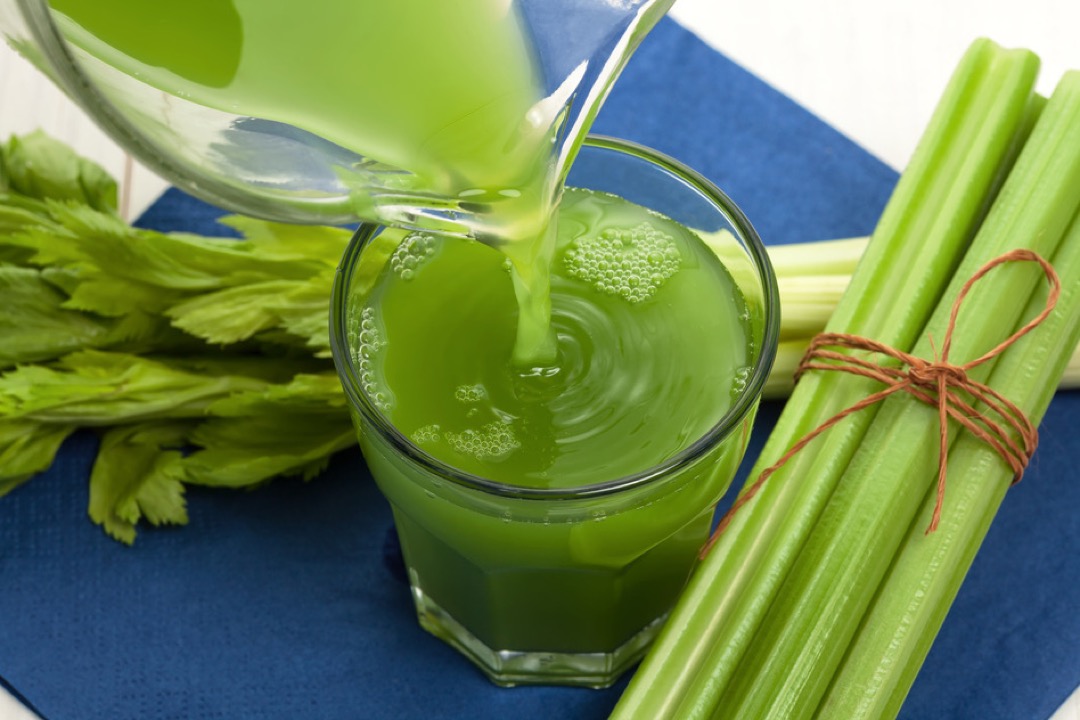
Celery is the one vegetable that will tell you, within about a week, whether you bought the right juicer. It is roughly 95 percent water, so yield is not the problem. The problem is the fibre: long, parallel strands that run the entire length of the stalk and behave nothing like the soft cell walls in a cucumber or an apple. Those strands do not pass cleanly through a spinning disc and they do not politely release a rotating auger. They wrap. That is why the best juicer for celery is not simply the most powerful machine on the shelf, and why a juicer that makes a beautiful glass of carrot juice can stall halfway through a bunch of celery.
I trained at the Culinary Institute of America, I hold a ServSafe certification, and I spent twelve years in professional kitchens, the last four running a restaurant group’s test kitchen where deciding which equipment survived service was my actual job. For this 2026 guide I worked through the celery-capable machines currently listed on Amazon and narrowed them to nine, across horizontal augers, vertical augers, self-feeding hoppers and one centrifugal machine included deliberately as the counter-example. Every listing here was checked live, in stock, and confirmed as the right product before it made the list. If you are also juicing root, our companion roundup of the best juicers for ginger covers the machines that handle dense rhizome, which is a different problem with a different answer.
One thing worth saying before the recommendations. Almost every page you will read about celery juicing is really a page about celery juice, and it will make claims about what the juice does to your body that no clinical trial supports. This is not that page. I am a chef, not a clinician. What follows is about machines: which ones crush long fibre without jamming, which ones you will still be washing in six weeks, and how much celery you actually have to buy. If you want to know whether drinking it daily is a good idea for you, ask a doctor or a registered dietitian.
Find the Best Celery Juicer for Your Need
Celery juicing splits into a handful of very different routines. Jump straight to yours:
- Best juicers for celery overall
- Best cold press celery juicer
- Best budget juicer for celery
- Best small juicer for celery in a tight kitchen
- Best juicer for celery, greens and carrots
- Is the Omega celery juicer worth it
- Best juicer for the Medical Medium celery juice routine
- More celery juicers by use case
How We Chose These Juicers
I graded these the way I graded equipment for a test kitchen, which means starting with the failure you cannot engineer around. On celery, that failure is fibre wrap. Long parallel strands catch where the screw flight meets the auger shaft and wind on until the machine stops pulling new material down, and the first you know about it is wet, unpressed stalk sitting in the pulp bin. So the first question on every machine was how it handles that: does it have a reverse switch that unwinds the wrap in two seconds, or a horizontal layout that gives the fibre a long crushing path rather than a short vertical drop.
The second was the feed. Celery’s shape is the reason chute width matters here more than it does on any other produce. A narrow vertical chute means cutting every stalk across the grain into short pieces, every morning, which sounds trivial the day you buy the machine and does not sound trivial in week three. The machines in this guide run from a compact chute that needs real knife work up to a 6-inch opening and two self-feeding hoppers that size the produce themselves.
After that it was ordinary discipline. I checked every ASIN as a live, in-stock listing on the correct product page, read the recurring complaints in each review record rather than the highlights, noted which listings are held by a third-party reseller rather than sold by Amazon or the manufacturer, and deliberately spread the picks so that a single morning glass, a Sunday batch for the week, a small counter and a mixed vegetable juice each have a real answer rather than a compromise.
Best Juicers for Celery Overall
These are the nine machines I would put celery through, each reviewed once below with its genuine strengths and its genuine limits. The best overall pick leads because it is the only one in the category whose manufacturer designed a part specifically for this vegetable. The use-case sections further down regroup the same machines by routine, so you can skip straight to cold press, to budget, to a tight kitchen, or to the batch question.
Omega Celery Juicer and Nutrition System: Best Overall
I checked the live listing bullets on this one myself, because the claim is unusual enough to deserve verification. They read “Optimized For Celery” and then, in plain language, “Feed fresh, cold, whole celery stalks through juice press chute rather than cutting into small pieces.” The machine ships with two adjustable end caps, one made specifically for juicing celery and explicitly described as not intended for any other fruit or vegetable. In a category where every other machine is a general produce juicer that happens to cope with celery, this is the only one whose own manufacturer data says it was engineered for the job. That is the hook, and it is a real one.
Mechanically it is a horizontal single auger turning at 80 RPM, which is the layout best suited to long fibrous material. Produce is crushed along the length of a screw against a screen rather than dropped a short distance onto a vertical auger, and that longer crushing path is exactly what celery needs. The end cap adjusts the back pressure inside the drum, which is how you tune extraction for a stalk that is almost entirely water held in fibre. At about 14 lb it sits solidly on the counter without walking, and the 15-year motor warranty is the longest coverage in this guide alongside the Kuvings.
The honest limits are three. It is sold by a third-party reseller rather than by Amazon directly, so returns and warranty claims go through that seller rather than Amazon’s own process. The celery cap is a swap-in part, which means one more component to keep track of and wash, and you do have to swap it out for anything that is not celery. And the review record is thinner than several of the budget machines here, so there is less accumulated owner experience to read before you commit. None of that changes the fact that it is the only machine on this page built around the vegetable rather than adapted to it.
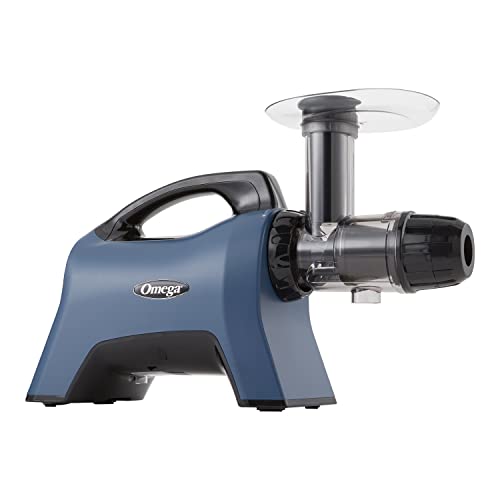
Omega Celery Juicer and Nutrition System Masticating Juicer, Cold Press Juicer Machine For Celery with Adjustable Dial, 200-Watt, Blue
by Omega
The one machine in this guide built around celery rather than adapted to it, with a dedicated celery end cap and a slow horizontal auger that crushes long fibre instead of shredding it.
Pros
- The only machine here whose own manufacturer data says it was engineered for one vegetable, with listing bullets that read Optimized For Celery and tell you to feed whole cold stalks rather than cutting them small
- Ships with two adjustable end caps, one made specifically for juicing celery and explicitly not intended for any other fruit or vegetable, which is a design decision no other maker in this guide has made
- A horizontal single auger turning at 80 RPM, which gives long celery fibre the slow crushing path it needs instead of shredding it at speed
- Doubles as a nutrition system that makes nut butter, baby food and pasta and grinds coffee and spices, so the counter space is earning something on non-juicing days
Cons
- Sold by a third-party reseller rather than by Amazon directly, so returns and warranty service run through that seller
- The celery end cap is a swap-in part, which means one more component to keep track of and wash every time you change produce
- A 361-review ownership record is thinner than the budget machines here, so there is less accumulated owner experience to read before you buy
Jocuu Slow Masticating Juicer: Best Value
The reason this is the value pick is not the price. It is what the price includes. At the entry end of this category most machines are a plain auger, a screen and an on switch, and the first time celery fibre wraps around the shaft you are unlocking the drum and picking it off by hand. This one has a genuine reverse function, and reverse is the feature that matters most at this end of the market. It backs the auger out and unwinds the wrap in a couple of seconds. Everything else on a cheap juicer’s spec sheet, wattage included, is secondary to whether you can get out of a jam without disassembly.
The other thing it has is history. Its ownership record is the deepest of any machine in this guide at any price, which means the failure modes have been documented by thousands of people before you. It runs two speed modes for soft and hard produce, states 60 dB running noise, which is one of only two decibel figures published anywhere in this roundup, and the removable parts go in the dishwasher. Celery is named on the manufacturer’s own packaging rather than inferred from a generic list of produce.
What you give up is real. There is a 20-minute automatic shutoff, which is fine for one glass and genuinely annoying if you are juicing for a household, because you have to stop and let the motor cool. The feeder chute is small, so every stalk needs cutting across the grain before it goes in, and on celery that is the prep tax you pay daily. And Jocuu is an Amazon-native brand with no reputation or service network off the platform, so if something fails outside the warranty window there is nowhere else to take it.

Jocuu Slow Masticating Juicer with 2-Speed Modes, Quiet Motor & Reverse Function (Gray)
by Jocuu
The value pick because of what it includes rather than what it costs: a genuine reverse function on the deepest review record here, paid for with a narrow chute and a 20-minute shutoff.
Pros
- The deepest ownership record of any machine in this guide at any price, so the failure modes are documented long before you spend anything
- A true reverse function, which is the single feature that matters most at this price because it unwinds a celery fibre wrap without taking the machine apart
- Two speed modes for soft and hard produce, a stated 60 dB running noise, and dishwasher-safe removable parts
- Celery is named on the manufacturer's own packaging and listing copy rather than left to be inferred from a generic produce list
Cons
- A 20-minute automatic shutoff interrupts a large batch, so juicing for a household means waiting for the motor to cool
- The feeder chute is small, so stalks need real knife work before anything goes in
- An Amazon-native brand with no reputation or service network outside the platform
Hurom H400 Easy Clean Slow Juicer: Premium Pick
Hurom put the word Easy Clean in the model name, and I want to explain why that is the right thing for a maker to optimise for rather than a marketing throwaway. Celery pulp is the stringiest material most home juicers will ever process. It does not fall out of the strainer, it mats into the mesh, and if you leave it to dry it needs soaking rather than brushing. A machine that shortens that job by two minutes shortens it by two minutes every single morning, and over a year that is the difference between a routine you keep and a machine in a cupboard.
The other half of the case is the self-feeding hopper. It takes whole produce, which for celery means dropping stalks in rather than standing over the machine feeding them one at a time behind a tamper. Combined with the quiet motor stated in the title, that is a machine designed around the actual shape of a morning celery routine. Hurom sells and ships the listing itself rather than through a reseller, which at this price tier matters more than it does lower down.
I have to be straight about the listing, though. The text bullets on it are unusually thin, and most of the detail that would normally sit in a specification table lives inside image content instead. That means several of the claims above come from the product title and the photographs rather than from stated specifications, and I would rather tell you that than pretend I read a spec sheet that is not there. It also sits in the premium tier, priced below only the Kuvings here, on a 329-review record that is thin for the money. Buy it if cleanup is the thing that has defeated you before. Do not buy it expecting a published number for everything.

Hurom H400 Easy Clean Slow Juicer, Matte Black
by Hurom
The premium pick, chosen for the one thing a daily celery routine punishes you for, which is cleanup, on a listing that publishes less hard specification than its price deserves.
Pros
- A self-feeding hopper that takes whole produce, which on celery means dropping stalks in rather than standing over the machine feeding them piece by piece
- Easy Clean is in the model name and it is the right thing for a maker to optimise for, because celery pulp is the stringiest thing most home juicers will ever meet
- A quiet motor, stated in the product title, which matters for a routine that happens early in the morning
- Hurom sells and ships this listing itself rather than through a reseller, so service runs through the manufacturer
Cons
- A premium-tier price, second only to the Kuvings in this guide
- The listing's text bullets are unusually thin and most of the detail lives in image content, so several claims here come from the title and photographs rather than from stated specifications
- A 329-review record is thin for a machine at this price tier
Tribest Solostar SS-4200-B: Cleanest Buy Box
This is the machine I would point at if the thing that worries you is who you are actually buying from. It is sold and shipped by Amazon.com directly, which is the cleanest buy box on this page. Half the machines in this guide sit behind a third-party reseller, and while that is usually fine, it does mean that returns, warranty claims and any dispute run through a seller rather than through Amazon’s own process. On a machine at this price that difference is worth something.
The mechanism is a horizontal single auger, the same layout as the Omega above, and for the same reason it suits celery: the crushing path runs the length of the screw rather than being a short vertical drop, so long fibre gets worked over a distance instead of being pinched once. Tribest claims 26 percent more torque at 10 percent less power draw than its previous models, and torque is the honest specification here, because what stalls an auger on celery is not lack of watts but lack of turning force against a wad of wound fibre. Tribest is also a genuine juicing company with parts and service that exist off Amazon, which none of the Amazon-native brands in this guide can say.
Three caveats. Stock read low on the day I checked, with only single-digit units showing, so availability is not guaranteed and this is not a listing to sit on. The listing states nothing about auger material, so if you have seen this machine described as stainless somewhere, treat that as unsupported, and our roundup of stainless steel juicers explains why that claim is worth checking rather than assuming in this category. And a 143-review record is the thinnest on this page, which is a real gap at this price tier.
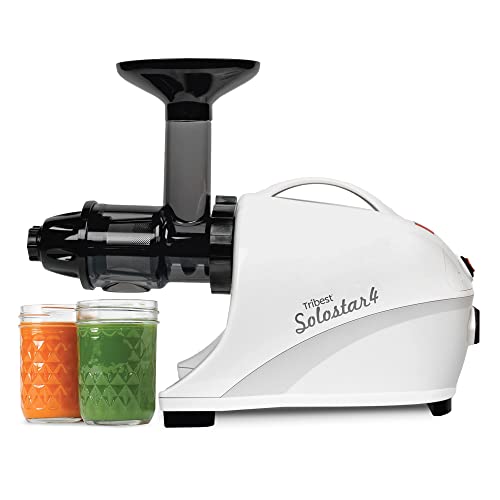
Tribest Solostar SS-4200-B Horizontal Slow Masticating Juicer, Single Auger
by Tribest
The horizontal auger I would buy if buy-box cleanliness matters to you, from a real juicing brand, held back by one of the thinnest review records on this page.
Pros
- Sold and shipped by Amazon.com directly, which is the cleanest buy box in this guide and the simplest returns path if the machine arrives wrong
- A horizontal single auger, the layout that copes best with long fibrous material because the crushing path runs the length of the screw rather than a short vertical drop
- Tribest claims 26 percent more torque at 10 percent less power draw than its previous models, and torque is what keeps an auger turning through a wad of celery fibre
- A long-established juicing brand with parts availability and service that exists off Amazon as well as on it
Cons
- Stock read low on the day I checked, with only single-digit units showing, so availability is not guaranteed
- The listing states no auger material, so treat any stainless steel assumption as unsupported
- A 143-review record is the thinnest in this guide, which is a real gap for a machine at this price tier
Godspeeds 6-inch Chute Cold Press Juicer: Widest Published Chute
The 6-inch chute is the whole argument, and on celery specifically it is a better argument than it would be on almost anything else. Celery arrives as long stalks with the fibre running end to end, and the standard advice for a narrow vertical chute is to cut them across the grain into short pieces before they go in. A 6-inch opening removes most of that work. It is the widest chute measurement any manufacturer in this guide publishes, and I am phrasing it that way deliberately, because two machines here have self-feeding hoppers whose openings no maker states a figure for.
It is also the only machine on this page that publishes a noise figure, stated at under 58 dB. That sounds like a small detail until you remember that celery juice is almost universally a pre-dawn routine, and that the reason people quit is usually the household rather than the juice. Almost nobody in this category publishes decibels, so a maker that does is telling you they measured it. The manufacturer bullets name celery among the fibrous produce the 300W motor targets, and the detachable toothed filter rinses out fast, which matters more here than anywhere because celery pulp mats into mesh.
The reservations are the ones that come with any Amazon-native brand. There is no track record off the platform, no service network, and a 496-review base that is modest enough that the long-term failure modes are not documented yet. And at 58 RPM it sits at the fast end of what gets called a slow juicer, so it is not the gentlest auger here despite the cold press label.

Godspeeds 6-inch Chute Cold Press Juicer Machine
by Godspeeds
The widest published chute here at an entry price, with a stated noise figure nobody else provides, sold by a brand with no history outside Amazon.
Pros
- A 6-inch chute, the widest chute measurement any maker in this guide publishes, which is enough to drop celery stalks in without breaking them down first
- The manufacturer bullets name celery among the fibrous produce the 300W motor is aimed at, rather than burying it in a generic list
- The only machine here that publishes a noise figure, stated at under 58 dB, which is a real differentiator for an early-morning routine
- A detachable toothed filter that rinses out quickly, which matters more on celery than on any other produce because the pulp mats into mesh
Cons
- An Amazon-native brand with no track record or service presence off the platform
- 58 RPM is at the fast end of what gets called a slow juicer, so it is not the gentlest auger in this guide
- A 496-review record is modest, so the long-term failure modes are not yet well documented
Kuvings AUTO10 Cold Press Juicer: Best for Batching a Week
The AUTO10 answers a different question from every other machine here: not how well does it juice, but how much can it juice before you have to intervene. The hopper holds 100 oz, the largest capacity figure any maker in this guide publishes, and the motor is rated for 30 minutes of continuous running. Set those two numbers against the budget machines, several of which cut out after 5 to 20 minutes to cool, and you have the difference between a Sunday session that produces a week of juice and one that produces two glasses and a wait.
The auto-cut hopper sizes whole produce itself, which on celery means loading stalks in and walking away rather than standing there with a tamper. At 50 RPM the auger turns slowly enough that the juice comes out cool and unaerated, which is directly visible in how it keeps in the fridge. The 15-year warranty is the longest coverage in this guide alongside the Omega.
Three things weigh against it. A third-party reseller holds the buy box rather than Kuvings or Amazon, so service runs through that seller. The review record is very thin for a machine at this price tier. And the footprint is large, which is not a spec-sheet quibble but the actual trade you are making: a hopper big enough to hold 100 oz of produce has to physically occupy that much counter, and a juicer that has to be lifted out of a cabinet is a juicer that gets used four times.

Kuvings AUTO10 Cold Press Juicer Machine, Hands-Free, 100 oz, White
by Kuvings
The batch machine: the biggest stated hopper here and a 30-minute continuous rating, which together make a Sunday session for a whole week genuinely realistic.
Pros
- A 100 oz hopper, the largest capacity figure any maker in this guide publishes, which is what turns a week of celery juice into one session
- Rated for 30 minutes of continuous running, against the 5 to 20 minute cutoffs on the budget machines, so a full hopper actually gets processed in one go
- An auto-cut hands-free hopper that sizes whole produce itself, so you are not standing at the machine with a tamper
- 50 RPM and a 15-year warranty, which is the longest coverage in this guide alongside the Omega
Cons
- A third-party reseller holds the buy box rather than Kuvings or Amazon, so service runs through that seller
- A 264-review record is very thin for a machine at this price tier
- A large counter footprint, which is the trade you make for a hopper this size
Ninja NeverClog Cold Press Juicer: Best for a Small Kitchen
Ninja named this machine after the exact failure this page is about, and the manufacturer bullets name celery directly as produce it handles without clogging. The mechanism behind that claim is a slow auger plus one-touch reverse, which is the same answer the Jocuu gives at a lower price, wrapped in a build that is noticeably better finished and backed by a brand you can actually get parts for.
What makes it the small-kitchen pick is the footprint. It is built to sit under a cabinet, which sounds like a minor convenience and is not. The single strongest predictor of whether a juicer is still in use six months after purchase is whether it has to be lifted out of a cupboard first, and every machine in this guide with a big self-feeding hopper fails that test. This one passes it, has dishwasher-safe parts, and carries the third deepest review record on this page at 3,673 owners, which is the deepest of any masticating machine here from a nationally known brand.
The trade-offs are honest ones. At 150W it is modest for dense produce, so it is far happier on celery and cucumber than on a load of hard root. Ninja publishes no RPM figure, so the slow-juicer claim rests on the model name rather than a number, which is worth noting on a page where three other machines do publish one. And the 24 oz jug means emptying it part way through if you are juicing more than a glass or two at a time.

Ninja NeverClog Cold Press Juicer, 24oz Jug, 36oz Pulp, Charcoal, JC151
by Ninja
The small-kitchen answer: a compact masticating machine with real reverse from a brand you can get parts for, and the deepest review record here outside the Amazon-native names.
Pros
- The third deepest review record on this page at 3,673 owners, and the deepest of any masticating machine here from a nationally known brand
- The manufacturer bullets name celery directly as produce it handles without clogging, and the model name is built around that claim
- One-touch reverse, which is the control that unwinds a celery fibre wrap in a couple of seconds instead of a full disassembly
- A compact under-cabinet build with dishwasher-safe parts, which is what makes it a machine that stays on the counter in a small kitchen
Cons
- 150W is modest for dense produce, so it is happier on celery and cucumber than on a load of hard root
- No published RPM figure, so the slow-juicer claim has to be taken on the model name rather than a number
- A 24 oz jug means emptying part way through a large batch
nutribullet Juicer NBJ50100: Fastest Option, Wrong Mechanism
I am including this machine so that this page tells you the truth rather than only the flattering half of it. The nutribullet is centrifugal. It grates produce against a disc spinning at high speed and throws the juice out through a stainless steel sieve, and on celery that is the wrong mechanism. Long parallel fibre gets shredded rather than crushed, which means it holds onto more of its liquid, so the pulp comes out visibly wetter and the yield is lower than any masticating machine on this page. There is also no reverse function, so a jam means stopping and clearing the basket by hand.
So why is it here. Because it is fast in a way no auger can match, it carries the second deepest review record in this guide at 4,452 owners, and it sits at the entry price. If your morning drink is a mixed vegetable juice where celery is one ingredient alongside carrot, apple, cucumber and beet, this machine makes it in a fraction of the time and the yield penalty applies only to the celery portion. That is a perfectly rational purchase, and pretending otherwise would be dishonest.
Two clarifications on the specifications. The stainless steel claim covers the sieve and only the sieve: the 27 oz pitcher and the pulp basin are BPA-free plastic. And the 3-inch feed chute cuts prep time on everything except celery, which still wants sizing because a full-length stalk does not fit any chute. If celery juice is the entire point of the purchase, buy an auger. If celery is one line in a longer recipe, this is a sensible machine.

nutribullet Juicer, 800W, 3" Feed Chute, 27oz Pitcher, NBJ50100
by nutribullet
The fast, inexpensive option and honestly the wrong mechanism for celery, which earns its slot only when celery is one ingredient in a mixed juice rather than the entire point.
Pros
- The second deepest review record in this guide at 4,452 owners, on a machine at the entry price rather than a premium one
- Fast in a way no auger here can match, which is the point if celery is one ingredient in a mixed vegetable juice rather than the whole routine
- A stated stainless steel sieve, and a 27 oz sealing pitcher you can put straight in the fridge
- A 3-inch feed chute takes whole soft produce, so prep time on everything except the celery is short
Cons
- Centrifugal is the wrong mechanism for celery specifically, because a spinning disc shreds long fibre rather than crushing it, giving wetter pulp and lower yield than any masticating machine in this guide
- No reverse function, so a jam means stopping and clearing the basket by hand
- The pitcher and pulp basin are BPA-free plastic, so the stainless claim covers the sieve only
AMZCHEF Self-Feeding Cold Press Juicer: Hopper Feeding on a Budget
This is the machine that undercuts the premium hopper argument, and it does it in the one way that matters on celery. A 5.8-inch self-feeding hopper at an entry price is unusual, because at this price you normally get a narrow chute and a chopping board. Self-feeding means stalks go in without you standing over the machine with a tamper, and it means far less knife work before you start. The maker’s own copy names celery juice twice, once when describing the chute size and once when describing the filtration, so celery is a stated design target rather than something inferred from a produce list.
The other genuinely useful design decision is that the juicing body lifts out as one piece for rinsing. On celery that is not a small thing. Stringy pulp mats into the strainer and has to be dealt with immediately, and the difference between a machine that comes apart into one washable assembly and one that comes apart into five separate components is the difference between a two-minute clean and a five-minute one, repeated every morning. A 2,223-review record is deep for a machine at this price, so there is real owner experience to read.
The caveats stack in the usual place. AMZCHEF is an Amazon-native brand with no reputation off the platform. The multi-stage filtration and the 60 RPM figure are manufacturer claims that have not been checked against independent testing, and I am not going to repeat them as though they had been. And no warranty length is stated anywhere on the listing, which on a machine with moving parts under load is the omission I would want explained.

AMZCHEF Self-Feeding Cold Press Juicer, 5.8" Wide Chute, 3-in-1
by AMZCHEF
Hopper-style self-feeding at a price that normally buys a narrow chute, with celery named twice in the maker's own copy and no stated warranty to back any of it.
Pros
- A 5.8-inch self-feeding hopper at an entry price, which is hopper-style feeding on a budget that normally buys a narrow chute
- The manufacturer copy names celery juice twice, once for the chute size and once for the filtration, so celery is a stated design target rather than an afterthought
- A 2,223-review record, which is deep for a machine at this price and gives you real owner experience to read
- The juicing body lifts out as one piece for rinsing, which is the difference between a two-minute clean and a five-minute one on stringy celery pulp
Cons
- An Amazon-native brand with no reputation or service network off the platform
- The multi-stage filtration and 60 RPM claims have not been verified against independent testing
- No warranty length is stated anywhere on the listing
Best Cold Press Celery Juicer
Cold press and masticating mean the same thing in practice: an auger turning slowly enough that produce is crushed rather than shredded, with very little heat and very little air introduced. On celery the distinction is not cosmetic. A spinning disc hits a stalk at high speed and tears the fibre into short shreds, and shredded fibre holds onto its water, which is why centrifugal pulp comes out wet. An auger squeezes the stalk progressively along a screw against a screen, so the liquid is pressed out of the fibre rather than flung off it. That is the entire mechanical reason auger machines land at the top of published extraction figures for celery and centrifugal machines land at the bottom. The variables that then separate one cold press from another are the length of the crushing path, whether the chute lets you feed stalks whole, and how many parts stand between you and a clean screen.
| Product | Price | Buy |
|---|---|---|
| Omega Celery Juicer and Nutrition System Masticating Juicer, Cold Press Juicer Machine For Celery with Adjustable Dial, 200-Watt, BlueBest cold press for celery A horizontal 80 RPM auger with a dedicated celery end cap that tunes back pressure for the stalk | $239.90 | View on Amazon |
| Tribest Solostar SS-4200-B Horizontal Slow Masticating Juicer, Single AugerBest horizontal cold press The same horizontal layout from an established juicing brand, sold and shipped by Amazon directly | $299.95 | View on Amazon |
| Godspeeds 6-inch Chute Cold Press Juicer MachineBest cold press for whole stalks A 6-inch chute takes stalks without chopping, and it is the only machine here that publishes a noise figure | $119.99 | View on Amazon |
Best Budget Juicer for Celery
There is one thing to understand about buying a celery juicer at the entry price, and it is not wattage. At this end of the market the machines are all broadly similar augers with broadly similar motors, and the number on the box tells you almost nothing about whether it will get through a bunch of celery without stopping. What separates them is whether they can recover from a fibre wrap without being taken apart. A reverse switch turns a jam into a two-second interruption. No reverse switch turns the same jam into unlocking the drum, pulling the auger, picking wet fibre off the screw by hand, and rinsing everything before you can start again, and doing that twice will end the routine faster than any other single factor. Buy the reverse function. Ignore the watts.
| Product | Price | Buy |
|---|---|---|
| Jocuu Slow Masticating Juicer with 2-Speed Modes, Quiet Motor & Reverse Function (Gray)Best value celery juicer A true reverse function on the deepest review record in this guide, with a stated 60 dB noise figure | $69.99 | View on Amazon |
| Ninja NeverClog Cold Press Juicer, 24oz Jug, 36oz Pulp, Charcoal, JC151Best budget from a known brand One-touch reverse and a compact build from a brand with real parts availability off Amazon | $149.95 | View on Amazon |
| AMZCHEF Self-Feeding Cold Press Juicer, 5.8" Wide Chute, 3-in-1Best budget self-feeding A 5.8-inch self-feeding hopper at an entry price, which normally buys a narrow chute and a chopping board | $99.99 | View on Amazon |
Best Small Juicer for Celery in a Tight Kitchen
Footprint against hopper size is the real trade in this category, and it is worth stating plainly because no listing will tell you. The machines that take whole celery stalks are the machines with self-feeding hoppers, and a hopper has to be physically large to hold produce, so the machines that save you the most prep time are also the machines that eat the most counter. In a small kitchen that is not a minor inconvenience. A juicer that has to come out of a cupboard before you can use it is a juicer you use four times and then stop using, and I have watched that happen in more kitchens than I can count. In a tight space the right answer is a compact machine plus a few minutes of chopping, because the chopping happens at a chopping board you already own and the counter space does not.
| Product | Price | Buy |
|---|---|---|
| Ninja NeverClog Cold Press Juicer, 24oz Jug, 36oz Pulp, Charcoal, JC151Best compact celery juicer Built to sit under a cabinet, with reverse and dishwasher-safe parts, so it stays on the counter and gets used | $149.95 | View on Amazon |
| Jocuu Slow Masticating Juicer with 2-Speed Modes, Quiet Motor & Reverse Function (Gray)Best small-footprint value A narrow vertical body that takes very little bench space, at the cost of cutting every stalk first | $69.99 | View on Amazon |
| AMZCHEF Self-Feeding Cold Press Juicer, 5.8" Wide Chute, 3-in-1Best small hopper machine The smallest of the self-feeding machines here, so you get hopper feeding without a premium footprint | $99.99 | View on Amazon |
Best Juicer for Celery, Greens and Carrots
If celery is one part of a wider produce habit, the machine choice shifts. Leafy greens are the hardest case, because kale, chard and spinach have almost no structure to press against, and a horizontal auger handles them better than a vertical one for a simple reason: the long horizontal crushing path gives soft leaf material a distance over which to be worked, where a vertical auger tends to let it slip past. Carrots are the opposite problem, dense and hard, and they want torque rather than path length. A machine that does all three well is a horizontal auger with enough turning force, or a large hopper machine that can auto-feed a mixed load.
One honest note on the Omega if you are buying it for mixed produce. The celery end cap is celery-only, and the manufacturer states that explicitly, so for greens, carrots and everything else you swap back to the standard cap. That is a ten-second job, not a flaw, but it is one more part in the drawer and worth knowing before you buy the machine expecting to leave it set up.
| Product | Price | Buy |
|---|---|---|
| Tribest Solostar SS-4200-B Horizontal Slow Masticating Juicer, Single AugerBest for greens and carrots A horizontal auger with a long crushing path, which is the layout that copes best with leafy greens | $299.95 | View on Amazon |
| Kuvings AUTO10 Cold Press Juicer Machine, Hands-Free, 100 oz, WhiteBest for large mixed loads A 100 oz auto-cut hopper rated for 30 minutes continuous, so a mixed load goes through in one session | $729.99 | View on Amazon |
| Omega Celery Juicer and Nutrition System Masticating Juicer, Cold Press Juicer Machine For Celery with Adjustable Dial, 200-Watt, BlueBest for celery plus everything else A horizontal 80 RPM auger, though you swap off the celery-only end cap for greens and carrots | $239.90 | View on Amazon |
Is the Omega Celery Juicer Worth It
This is the question people actually type, so here is a direct answer rather than a hedge. What you are paying for is one thing: a manufacturer that designed a component for this specific vegetable, plus the horizontal auger layout that suits long fibre, plus a 15-year motor warranty. What you are not paying for is a wider chute, because the Godspeeds publishes a 6-inch opening at roughly a third of the price, or a cleaner buy box, because the Tribest Solostar sits at a similar price sold and shipped by Amazon directly.
So the honest framing is this. If the celery end cap and the tunable back pressure genuinely matter to you, and they are a real engineering decision rather than a sticker, the Omega is worth it and nothing else on this page substitutes for it. If what you actually want is a slow auger that takes stalks without much chopping, the Godspeeds does that for far less money and even publishes a noise figure the Omega does not. And if what worries you is buying from a reseller, the Tribest removes that concern at a comparable price with a horizontal auger from an established juicing brand. Three different buyers, three different right answers.
| Product | Price | Buy |
|---|---|---|
| Omega Celery Juicer and Nutrition System Masticating Juicer, Cold Press Juicer Machine For Celery with Adjustable Dial, 200-Watt, BlueWorth it for the celery-specific design A dedicated celery end cap and adjustable back pressure, backed by a 15-year motor warranty | $239.90 | View on Amazon |
| Godspeeds 6-inch Chute Cold Press Juicer MachineBetter value on chute width A published 6-inch chute and a stated noise figure at roughly a third of the Omega's price | $119.99 | View on Amazon |
| Tribest Solostar SS-4200-B Horizontal Slow Masticating Juicer, Single AugerBetter on buy-box cleanliness A horizontal auger from an established brand, sold and shipped by Amazon.com directly | $299.95 | View on Amazon |
Best Juicer for the Medical Medium Celery Juice Routine
I am not going to tell you what this routine does or does not do for you, because there are no clinical trials on celery juice as a beverage and I am a chef rather than a clinician. What I can tell you is what the routine physically demands of a machine, because that is an equipment question and equipment is my job.
The routine is roughly 16 oz of straight celery juice, every morning, on an empty stomach, before most households are awake. Translate that into machine requirements and you get four things. Volume: 16 oz of juice needs somewhere between one and one and a half bunches of celery, which is a lot of stalk to get through before you have had breakfast. Speed of prep: if the chute makes you chop the entire load first, that is several minutes added to every single morning. Noise: it is happening early, in a quiet house. And cleanup: this is the one that ends routines, because you will do it every day for months and celery pulp does not wait.
On the equipment question specifically, I confirmed today that the Omega listed here is the co-branded machine and that the Medical Medium name and the MM1500 and MM900 model designations still appear on the live listing. The older MM900HDS that most people are pointed at shows sold out on Omega’s own storefront, which is worth knowing before you go hunting a particular SKU. Mechanically there is nothing exclusive about it. Any capable slow auger does the same job.
| Product | Price | Buy |
|---|---|---|
| Omega Celery Juicer and Nutrition System Masticating Juicer, Cold Press Juicer Machine For Celery with Adjustable Dial, 200-Watt, BlueThe co-branded machine The Medical Medium branding and MM model designations still appear on this live listing, on a celery-specific design | $239.90 | View on Amazon |
| Godspeeds 6-inch Chute Cold Press Juicer MachineQuietest stated figure The only machine here publishing a noise figure, stated under 58 dB, which matters for a pre-dawn routine | $119.99 | View on Amazon |
| Hurom H400 Easy Clean Slow Juicer, Matte BlackEasiest daily cleanup Easy Clean is the model name, and cleanup is what ends a daily routine on day forty | $749.00 | View on Amazon |
Best Celery Juicers by Use Case
A few more situations worth matching to a specific machine, including the mechanism question people ask most often:
| Product | Price | Buy |
|---|---|---|
| Hurom H400 Easy Clean Slow Juicer, Matte BlackBest easy-clean celery juicer A self-feeding hopper and a maker that made cleaning the headline feature, at the highest price here | $749.00 | View on Amazon |
| Kuvings AUTO10 Cold Press Juicer Machine, Hands-Free, 100 oz, WhiteBest hands-free celery juicer A 100 oz auto-cut hopper rated for 30 minutes continuous running, which is what makes weekly batching real | $729.99 | View on Amazon |
| Omega Celery Juicer and Nutrition System Masticating Juicer, Cold Press Juicer Machine For Celery with Adjustable Dial, 200-Watt, BlueMasticating vs centrifugal for celery Masticating wins on celery: an auger crushes long fibre where a spinning disc shreds it and leaves it wet | $239.90 | View on Amazon |
| nutribullet Juicer, 800W, 3" Feed Chute, 27oz Pitcher, NBJ50100Best centrifugal juicer for celery If you want the fast centrifugal route anyway, this is the one to buy, on the second deepest record here | $69.99 | View on Amazon |
| Godspeeds 6-inch Chute Cold Press Juicer MachineBest quiet juicer for celery The only stated decibel figure in this guide, at under 58 dB, on a 6-inch chute at an entry price | $119.99 | View on Amazon |
How Much Celery Do You Actually Need?
This is the question nobody answers, and it is the one that determines your grocery list. Published testing puts celery extraction somewhere between roughly 56 and 73 percent of input weight becoming juice, with masticating machines at the high end of that band and centrifugal machines at the low end. The most careful measurement I found came from the independent juicing site juicenext.com, which ran 500 gram batches of celery through nine different machines and published the results. I want to be clear that those are their numbers, not ours. We did not run that test, and I am not going to dress up somebody else’s data as a Sprout and Press lab result.
What nobody does is translate that into shopping. So here it is, using a range from 56 percent extraction at the centrifugal end to 73 percent at the masticating end. A supermarket bunch of celery is roughly 1 to 1.5 lb.
| Glass size | On a masticating juicer | On a centrifugal juicer |
|---|---|---|
| 8 oz | about 0.7 lb, roughly half a bunch | about 0.9 lb |
| 16 oz | about 1.4 lb, roughly one bunch | about 1.8 lb, about one and a half bunches |
| 32 oz | about 2.7 lb, about two bunches | about 3.6 lb, close to three bunches |
Two practical consequences fall out of that table. The first is that a daily 16 oz routine means buying roughly a bunch of celery a day, which is a real grocery commitment and the thing most people underestimate before they start. The second is that the choice of mechanism is worth about a third of a bunch per glass, every day, which over a month is a meaningful amount of money in produce. That is the strongest financial argument for an auger machine, and it is one that no juicer listing will ever make for you.
Why Celery Clogs Juicers, and How to Stop It
Celery clogs juicers more reliably than any other common produce, and the reason is geometric rather than mysterious. The fibre in a celery stalk runs long, parallel and unbroken from base to tip. When that meets a rotating auger, it catches at the point where the screw flight joins the central shaft, and then it winds on, exactly like thread onto a bobbin. Once it has wrapped, the auger cannot pull new material down. The machine either stalls or keeps turning while the pulp sits unpressed, and you usually find out by looking in the bin and seeing wet, barely-touched stalk.
There are three fixes and they work in combination. The first is prep: cut the stalks across the fibres into 2 to 4 cm pieces before feeding a narrow vertical chute. Cutting across the grain shortens every strand, and short strands cannot wrap. This is not optional on a small-chute machine. The second is machine choice: a wide self-feeding hopper or a horizontal auger can usually take stalks whole or in halves, because the feed geometry does not force the fibre into a tight turn at the shaft. The third is reverse. A reverse switch backs the auger out and unwinds an existing wrap in a couple of seconds, which is the difference between a two-second pause and a full disassembly with a wet screen dripping on your bench.
Then there is the part almost nobody writes about: the strainer screen. Celery pulp is meaningfully stringier than carrot or apple pulp, and rather than falling loose into the bin it mats into the mesh from the inside. Let it dry and it stops being a residue and becomes something closer to a lacquer, which needs soaking rather than brushing. The rule is simple and I am going to state it as a rule: rinse the screen the moment the machine stops, before you drink the juice, not after breakfast. When you are choosing between machines, look for a strainer that lifts out as one removable piece, a dishwasher-safe basket, and an included brush, and count the parts in the listing photographs, because that count is what you pay every single morning. If the whole cleanup question is what has put you off buying a juicer at all, our guide to hand press juicers covers the manual end of the category, where there is less to wash and considerably more work.
Does Celery Juice Have to Be Drunk Right Away?
The advice on this contradicts itself everywhere you look, and the reason is that people are answering the wrong question. It is not really about the juice. It is about the machine that made it.
A high-speed centrifugal juicer grates produce against a disc spinning fast enough to whip air into the liquid and warm it slightly on the way out. Air and heat are the two things that drive oxidation, so juice from a centrifugal machine genuinely is best drunk on the spot, and you can watch it separate and dull within an hour. A slow auger introduces very little of either, so cold press juice keeps far longer. Nama, which makes cold press machines, states 72 hours of fridge life for juice from its own juicers, and that is the manufacturer’s claim for its own equipment rather than a universal constant, so treat it as a ceiling for a well-made cold press rather than a rule that covers every machine.
The underlying chemistry is not controversial. Vitamin C degrades with time, temperature, light and oxygen exposure, which is why the practical storage advice is the same regardless of machine: fill a glass jar right to the rim so there is no air gap, seal it, keep it cold, and keep it dark. If you are drinking your juice within a couple of hours, this is all academic and the mechanism does not matter. If you are batching a week on a Sunday, it is the entire reason to buy an auger machine rather than a fast one.
How to Choose the Best Juicer for Celery
The short version: buy an auger rather than a spinning basket, and then decide honestly whether you are going to chop. Those two decisions account for almost everything. An auger crushes long celery fibre progressively and gets more liquid out of it, which is worth roughly a third of a bunch of celery per glass against a centrifugal machine, every day, forever. And chute width is the specification that determines whether your morning includes five minutes of knife work, because celery stalks are long and the fibre runs their entire length.
After that, check for a reverse switch before you check anything else, especially at the entry price, because reverse is what turns a fibre wrap from a full disassembly into a two-second pause. Then count the parts in the listing photographs and ask yourself whether you will rinse that many components before breakfast, every day, in November. Then look at the footprint, and be honest about whether a hopper machine will actually live on your counter or in a cupboard. Warranty length is worth reading, but read what it covers rather than how long it runs, because a 15-year motor warranty does not cover the auger, the screen or the drum, which are the parts that fail on fibrous produce. If you are still deciding between auger designs and hopper machines in general, my guide to the best cold press juicers compares the machine types side by side.
And if you find yourself weighing a juicer against a blender you already own, blend the celery with a splash of water and strain it through a nut milk bag first. It is a genuinely fine way to run the routine for a week and find out whether you will keep it up before you spend anything.
Final Verdict
The Omega Celery Juicer is my best overall pick for 2026, and the reasoning is unusually simple for this category. It is the only machine on this page whose manufacturer designed a component for celery specifically, its own listing bullets tell you to feed whole cold stalks rather than chopping them, and the horizontal auger layout underneath that is exactly the geometry long parallel fibre needs. Nothing else here is built around the vegetable rather than adapted to it. What you accept in exchange is a third-party reseller in the buy box, one more part to keep track of, and a review record thinner than the budget machines.
If the price is out of range, the Jocuu is the value call, and the reason is the reverse function rather than the number on the tag. At the entry end of this category, being able to unwind a fibre wrap without dismantling the machine is worth more than any amount of wattage, and it comes attached to the deepest ownership record in this guide. If cleanup is the thing that has defeated you before, the Hurom H400 is the premium answer and it optimises for the correct problem. And if celery is one ingredient in a mixed vegetable juice rather than the whole routine, the nutribullet is fast, inexpensive and honestly the wrong mechanism, which is a trade worth making when celery is a line in the recipe rather than the recipe.
One last thing, because celery juice content is full of claims that do not survive checking. I have said nothing on this page about what the juice does to your body, and that is deliberate: there are no clinical trials on celery juice as a beverage, the sodium figures circulating online for a 16 oz glass range from under 200 mg to over 800 mg for nominally the same serving, and USDA FoodData Central’s actual baseline is roughly 80 mg of sodium per 100 g of raw celery, which means your total depends entirely on stalk size and how efficiently your machine extracts. Whether drinking it daily is a good idea for you is a question for your doctor or a registered dietitian. Which machine gets it into the glass without jamming, waking the house, or defeating you at the sink is the question I can answer, and if you are also juicing dense root, our best juicers for ginger guide picks up where this one leaves off.
Frequently Asked Questions
Can I juice celery in a juicer?
Is celery better juiced or blended?
Can you juice celery in a blender?
What juicer does the Medical Medium recommend?
How do you clean a juicer after celery, and how loud are they?
Related Articles
About the Reviewer

Nora Whitfield, CIA Culinary Arts, ServSafe Certified
A.O.S. Culinary Arts, The Culinary Institute of America
Nora Whitfield trained at the Culinary Institute of America and spent twelve years in professional kitchens, the last four running the test kitchen for a regional restaurant group where her job was to decide which equipment could survive a dinner service and which could not. She has seasoned more carbon-steel woks than she can count, boiled water in every kettle worth owning, and broken enough cheap gear to know exactly where manufacturers cut corners. She reviews kitchen equipment the way she specified it professionally: cook on it, clean it, and see what it looks like after a month.