How to Use an Aroma Rice Cooker
The cup is 180 mL, not a US cup, and that one fact explains most Aroma complaints. A chef's model-by-model guide to the buttons, the fill lines, and the steam tray.
Updated
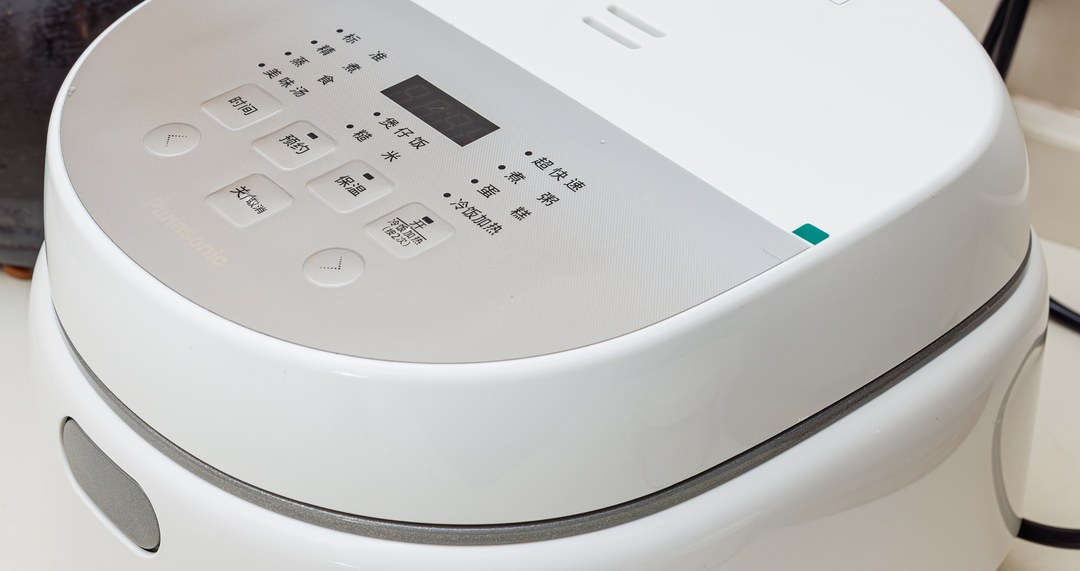
Aroma sells more rice cookers in America than anyone, and the instructions that come with them are better than the brand’s reputation suggests. The problem is that Aroma does not sell one rice cooker. It sells a one-touch machine with a single mechanical switch, a digital line with five buttons, a twenty-cup model, and a Professional tier that browns meat before it simmers, and the advice for one of them is frequently wrong for another. Almost every guide online treats all of them as the same appliance.
I ran a restaurant group’s test kitchen for four years and Aroma units were what we bought when we needed a lot of rice cookers rather than a few good ones. They are honest machines. Nearly every complaint I have seen about them traces back to two things: not knowing which model you are holding, and the measuring cup.
If you want the underlying mechanics of how any rice cooker decides the rice is finished, along with what the different heating designs actually do, that is a separate subject and we cover it in how to use a rice cooker. Everything below is specific to Aroma hardware.
Start Here: the Cup Is Not a Cup
The plastic cup in the box holds 180 mL. That is about six fluid ounces, or three quarters of a standard US cup, and Aroma states the figure directly in its own customer support documentation.
This is not a quirk. It is the traditional Japanese gō, the measure Japanese rice cookers have been built around since the first domestic electric models, and every brand that ships a cup ships one this size. What makes it consequential on an Aroma is what it is tied to. The numbered water lines stamped inside the inner pot are calibrated against that 180 mL cup and nothing else. Two Aroma cups of rice, water to the line marked 2. That is the entire measuring system, and it only works if you use both halves of it.
Use a US measuring cup against those printed lines and you have put roughly a third more rice in the pot than the line was drawn for. Aroma’s own support page says the result is overflows or undercooked rice, and both happen for the reason you would expect: too much grain for the water the line supplies, and too much total volume for the headroom the pot was designed with.
If you have lost the cup, Aroma’s published substitute is three quarters of a US cup. Not a full one, and not a full one with a bit poured off by eye.
That said, the fill lines are a closed system that assumes you want Aroma’s default texture. If you want to work in real ratios by grain, or you are cooking something the lines do not cover, our rice to water ratio guide has the numbers by grain and vessel, and the rice to water ratio calculator will do the arithmetic for a specific batch size.
Which Aroma Do You Have
Work out which of these you own before following any instruction, including the ones below. The fastest tell is the front of the machine.
| What you see | Which line | Capacity |
|---|---|---|
| One physical switch you push down, two indicator lights | Simply Stainless / one-touch, such as the ARC-363NG | Small pot-style, commonly 3 cups uncooked and 6 cooked |
| Five labelled buttons and a small digital display, hinged lid | 8-cup digital cool-touch, such as the ARC-914SBD | 4 cups uncooked, 8 cooked |
| Digital panel on a tall 20-cup body | Digital Professional, such as the ARC-150SB | 10 cups uncooked, 20 cooked |
| Digital panel including a Sauté-then-Simmer button | Professional Plus, such as the ARC-1230B, or the ARC-954SBD in the smaller size | Varies by model |
Capacities are always quoted twice, uncooked and cooked, and the larger number is the one on the box. A 20-cup Aroma holds 10 cups of dry rice.
One thing worth knowing before you assume anything about your pot: Aroma does not use a single inner pot material across the range. Its own materials explainer lists stainless steel, aluminium, purple clay and cast iron across different models, and says explicitly that not all Aroma cookers have a nonstick coating. So pot material is a per-model fact, never a brand-wide one. The naming does not help you here. The Simply Stainless line is named for its exterior housing, and the pot inside it is coated. The eight-cup digital model has a coated aluminium pot, while a separate SKU, the ARC-914SBDS, is the version with the stainless pot. The twenty-cup Professional uses Aroma’s bonded granite coating rather than stainless despite what the model code suggests. If a bare metal cooking surface is what you actually want, check the specific SKU rather than the range name, and our stainless steel inner pot rice cooker roundup covers which models genuinely have one.
The One-Touch Models
There is one control: a switch you press down to start. A Cook light comes on, and when the machine is finished the switch flips up by itself and a Warm light takes over.
Nothing about that is timed. The switch is held down against a thermostat that releases when the pot temperature climbs past boiling, which can only happen once the free water is gone. This means you cannot shorten, extend or adjust a cycle, and the machine cannot tell that you opened the lid.
Two things follow that are specific to this line and get people worried unnecessarily.
A brown layer on the bottom is normal here. Aroma says so in its own support material: a slightly brown or scorched bottom layer on an analog cooker is a characteristic of the design, not a defect. Contact heat stays on the base right up to the release point and there is no way for the machine to modulate power. Aroma’s own mitigations are to rinse the rice three to five times until the water runs clear, add a small amount of butter or oil, and stir gently before closing the lid. Rinsing does most of the work, because the dissolved starch is what settles and caramelizes. A wide mesh colander makes that a ten-second job rather than a chore, which matters when it is the difference between doing it and not.
Keep Warm has a stated ceiling. The manual for this line says rice should not be left in the pot on Keep Warm for more than twelve hours. That is Aroma’s own published number for these models rather than a general rule, and it is about quality rather than safety.
Most of these units ship with a removable steam tray, so the steaming section below applies to them too, run against the cook switch rather than a timer.
The Digital Models, Button by Button
On the eight-cup digital line the panel is five buttons plus a minus and plus pair for adjusting times.
White Rice and Brown Rice are separate presets, not one button with a grain toggle. Brown rice needs a long low soak before it ever boils, because the bran layer resists water, and that is what the second button buys you. Aroma’s own table for this model puts white rice at 27 to 32 minutes for one cup and 30 to 35 for two, against 50 to 57 and 53 to 60 for brown. If you are cooking brown rice regularly, the technique side of it is worth reading properly in how to cook brown rice in a rice cooker.
Flash Rice replaces White Rice for a faster cycle rather than adding to it. The display tells you what it is doing: a standard white rice cycle only shows a countdown for the final twelve minutes, and Flash Rice only for the final three. It is the same job compressed, which means it has far less slack for a measuring error. A batch that would have come out slightly firm on the standard cycle comes out hard on Flash.
Steam defaults to five minutes, and each further press adds one.
Delay Timer moves in one-hour steps. The twenty-cup Professional manual gives the clearest published range for this function: 1 to 15 hours for white rice and 2 to 15 for brown. There is a real caution attached to the delay timer across the digital line, which is that Keep Warm is gated on the liquid being gone rather than on a clock. For a wet dish such as a soup, the machine will not switch to Keep Warm until the liquid has boiled away, so a delayed start with a soupy recipe does not behave the way a delayed start with rice does.
The stated water table for the eight-cup model is short and worth committing to memory, since it is the calibration the pot lines encode:
| Fill to line | Aroma cups of rice | Cooked yield |
|---|---|---|
| 1 | 1 | About 2 cups |
| 2 | 2 | About 4 cups |
For quantities, and for how far a given number of cups actually goes at a table, see how much rice per person.
Using the Steam Tray
Aroma documents two different procedures here and mixing them up is the usual mistake.
Steaming on its own. Two of the 180 mL cups of water go into the inner pot, nothing else. Food sits on the steam tray, the tray goes in above the water, lid closed, then press Steam. The countdown does not start when you press the button. It starts when the water reaches a boil, which is why the display can appear to sit still for a few minutes at the beginning. When it finishes, the cooker beeps and goes to Keep Warm immediately, and Aroma’s manual is specific about removing the food promptly rather than letting it sit.
Steaming while the rice cooks. This one starts as an ordinary batch of rice: rice and its measured water in the pot, exactly as normal. The tray of food goes on top before you close the lid, and you run the standard rice cycle. You do not add water for the steaming, because the steam coming off the rice is what cooks the food above it.
Either way, that tray comes out over a pot of boiling water and it is hot. Lift it with tongs rather than a pair of fingertips and a tea towel.
Sauté-then-Simmer, on the Models That Have It
This one is confined to the Professional tier, the ARC-1230B and the eight-cup ARC-954SBD. It is not a setting on the standard digital line.
The sequence in Aroma’s manual is worth following exactly:
- Press Sauté-then-Simmer. The unit preheats for about five minutes, beeps, and shows a chasing light pattern to tell you it is ready.
- Add what you are browning straight into the inner pot.
- Stir with a long-handled wooden spoon. The manual explicitly tells you not to use the plastic serving spatula that came in the box at this stage, because the sauté heat is beyond what it is meant for. That instruction is easy to skim past and it is the one that costs you a spatula.
- Add the rest of the ingredients and the liquid, and close the lid.
- The machine switches itself to simmer after a few minutes. You do not press anything.
- It beeps and moves to Keep Warm when it is done.
It is genuinely useful for risotto, Spanish rice, chili and stews, where browning first and simmering after is the whole structure of the dish. What it is not is a substitute for a hot pan. The preheat tops out well below what searing wants, so it browns rather than sears. For anything where you actually need aggressive heat and a moving pan, that is a job for a wok and a burner, not a rice cooker.
Worth noting separately so it does not get conflated: the yogurt preset on the ARC-1230B, which heats milk to 180F before culturing, is a different function with a different purpose. It is not Sauté-then-Simmer doing something else.
Cleaning, and the Part That Is Not Washable
On the digital models, the inner pot, spatula, measuring cup and steam tray are dishwasher safe. Aroma prints a caveat next to that: dishwashing may cause slight discoloration to the pot and accessories, which is cosmetic and does not affect performance. Hand washing avoids it.
The lid and hinge assembly, the steam vent and the seal around it are a different matter. Aroma’s guidance is a damp cloth only for that whole area, never the sink and never the dishwasher, so that water stays out of the hinge and away from the heating element, and everything is dried before it goes back together. That area is also where a leaking lid seam starts, and it is the part almost nobody touches.
One instruction from the manuals that has nothing to do with washing but gets broken during the same tidy-up: do not put the inner pot on a stovetop burner. It is not built for a direct element and it will deform.
When Something Goes Wrong
It switched to Warm and the rice is undercooked. Almost always the measuring cup, for the reason set out at the top. Check the seating of the pot and whether its base was wet as well, particularly on a one-touch model, since both change how heat reaches the sensor.
Water is spitting from the lid seam. The steam vent is the pressure path, and when it clogs the pressure finds the seal instead. Clean the vent and stay under the marked capacity line.
An E1 or E3 code on a Professional model. The manual’s instruction is to turn the cooker off, let it cool for two to five minutes, and restart it. If the code comes back, Aroma’s line is 1-800-276-6286. The manual does not publish what distinguishes the two codes mechanically, so treat any confident explanation you find online with suspicion.
Leftover rice. Get it into the fridge within the hour in a shallow container rather than leaving it on Keep Warm all evening. Day-old refrigerated rice is drier and separates properly, which is exactly what fried rice wants.
Aroma covers these machines with a two-year limited warranty from provable date of purchase in the US, which is longer than most of the budget tier offers and worth registering.
The Short Version
Use the 180 mL cup and fill to the matching line, and most Aroma problems never happen. Know whether you are holding a one-touch machine or a digital one before you take anyone’s advice, including mine, because the scorched bottom layer that is a defect on one is normal on the other. And if you are weighing whether to stay in the range or move up, our best rice cookers roundup lays out what the tiers above this actually buy you.
Frequently Asked Questions
What size is the Aroma rice cooker measuring cup?
Why does my Aroma rice cooker switch to Warm before the rice is done?
What does Flash Rice do on an Aroma rice cooker?
Is a brown or scorched layer on the bottom normal in an Aroma rice cooker?
Can you steam vegetables while rice cooks in an Aroma rice cooker?
Which parts of an Aroma rice cooker are dishwasher safe?
Related Articles
How to Use a Rice Cooker
small-appliances
How to Cook Brown Rice in a Rice Cooker
small-appliances
Rice to Water Ratio: The Chart for Every Type of Rice (Stovetop, Rice Cooker, Instant Pot)
small-appliances
The 9 Best Rice Cookers of 2026, Tested by a Chef
small-appliances
The 9 Best Stainless Steel Rice Cookers of 2026, Tested by a Chef
small-appliances
About the Reviewer

Nora Whitfield, CIA Culinary Arts, ServSafe Certified
A.O.S. Culinary Arts, The Culinary Institute of America
Nora Whitfield trained at the Culinary Institute of America and spent twelve years in professional kitchens, the last four running the test kitchen for a regional restaurant group where her job was to decide which equipment could survive a dinner service and which could not. She has seasoned more carbon-steel woks than she can count, boiled water in every kettle worth owning, and broken enough cheap gear to know exactly where manufacturers cut corners. She reviews kitchen equipment the way she specified it professionally: cook on it, clean it, and see what it looks like after a month.