How Much Rice Per Person? Portions for 1 to 100 People (Chef's Chart)
Plan on 1/4 cup uncooked rice per person as a side and 1/2 cup as a main. Full charts for 2, 4, 6, 10, and 50 people, by cup, gram, and pound.
Updated
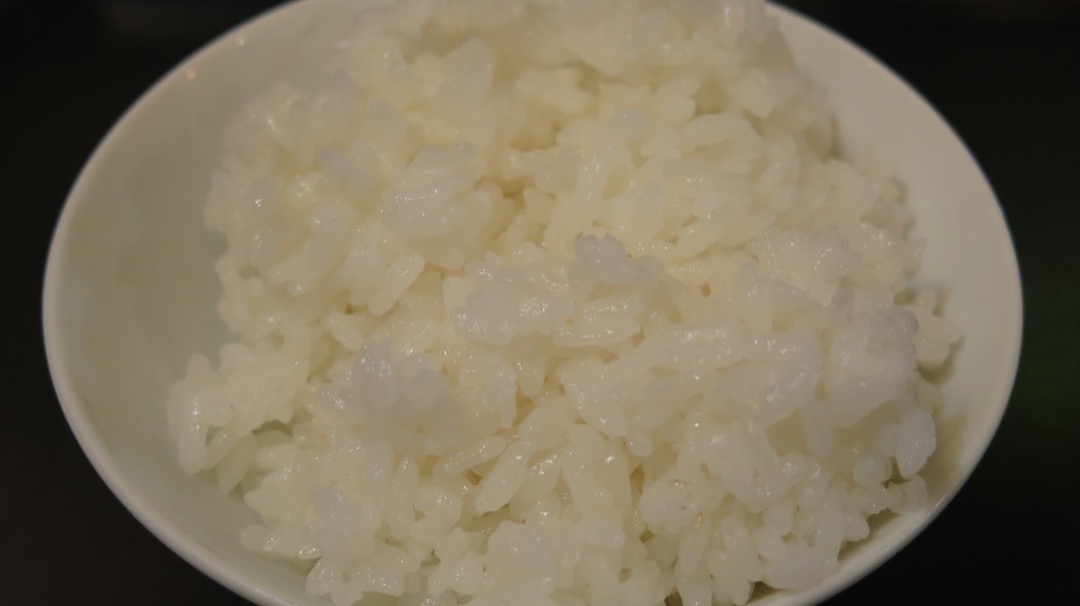
Plan on 1/4 cup of uncooked rice per person when rice is a side dish, and 1/2 cup per person when rice is the base of the meal. On a scale that is about 45 g and about 90 g. Everything else on this page is that one rule scaled up, adjusted for variety, and checked against the two places it reliably breaks.
- Rice as a side dish: 1/4 cup dry per person, about 45 g, which cooks up to roughly 3/4 cup.
- Rice as the base of a main: 1/2 cup dry per person, about 90 g, which cooks up to roughly 1 1/4 to 1 1/2 cups.
- Rice as the staple of the meal: 1/2 to 3/4 cup dry per person, 90 to 135 g, which cooks up to roughly 1 1/2 to 2 cups.
I trained at the Culinary Institute of America and spent four years running a restaurant group’s test kitchen, where rice was portioned by the pound for services of two hundred and by the quarter cup for a tasting plate. The numbers below are the ones I actually used, and where a published chart disagrees with them I have said why.
The Short Answer: Side Dish Versus Main
Portion rice by the dry measure. It is the only number in the process that does not move.
A quarter cup of uncooked long-grain white rice weighs about 45 g and cooks up to roughly 3/4 cup. That is the amount that sits beside a braise, under a piece of fish, or next to a curry without taking over the plate. It is a side.
Half a cup of uncooked rice weighs about 90 g and cooks up to roughly 1 1/4 to 1 1/2 cups. That is a bowl of rice with something spooned over it. It is a main.
For calories, USDA FoodData Central puts one cup of cooked enriched long-grain white rice at 158 g and 205 calories, so a side portion lands near 150 calories and a main near 300. Rice is not the expensive part of the plate in either direction.
The reason to portion dry rather than cooked is that cooked volume is the less stable of the two. It moves with the vessel and the method, and it moves enough to matter when you are planning for a table. More on that below, because the internet has been arguing about it for twenty years without naming the mechanism.
How Much Rice for 2, 4, 6, 8, 10, or 12 People
This is the whole chart. Dry measures are what you scoop; cooked yields are what lands on the table.
| People | Dry rice, side | Dry rice, main | Cooked yield, side | Cooked yield, main |
|---|---|---|---|---|
| 1 | 1/4 cup (45 g) | 1/2 cup (90 g) | about 3/4 cup | 1 1/4 to 1 1/2 cups |
| 2 | 1/2 cup (90 g) | 1 cup (180 g) | 1 1/4 to 1 1/2 cups | 2 1/2 to 3 cups |
| 3 | 3/4 cup (135 g) | 1 1/2 cups (270 g) | about 2 cups | 3 3/4 to 4 1/2 cups |
| 4 | 1 cup (180 g) | 2 cups (360 g) | 2 1/2 to 3 cups | 5 to 6 cups |
| 5 | 1 1/4 cups (225 g) | 2 1/2 cups (450 g) | 3 to 3 3/4 cups | 6 1/4 to 7 1/2 cups |
| 6 | 1 1/2 cups (270 g) | 3 cups (540 g) | 3 3/4 to 4 1/2 cups | 7 1/2 to 9 cups |
| 8 | 2 cups (360 g) | 4 cups (720 g) | 5 to 6 cups | 10 to 12 cups |
| 10 | 2 1/2 cups (450 g) | 5 cups (900 g) | 6 1/4 to 7 1/2 cups | 12 1/2 to 15 cups |
| 12 | 3 cups (540 g) | 6 cups (1,080 g) | 7 1/2 to 9 cups | 15 to 18 cups |
Two notes on reading it. The gram figures are per-portion multiples of 45 g and 90 g, which round very slightly below a strict cup conversion, since a US cup of dry long-grain white is about 185 g by USDA weight rather than 180. The difference is under three percent and disappears into how level you scooped.
The cooked column is a range because finished volume moves with the method. A stovetop pot lands near the top of it, at about 3 cups per dry cup. A pressure cooker lands near the bottom, closer to 2.5. Our rice to water ratio guide carries the ratio for every grain and vessel, the free rice to water ratio calculator will scale it to whatever amount you landed on above, and the section below explains why the ratio changes the texture far more than it changes the headcount.
Cooking Rice for a Crowd: 20, 50, and 100 People
Nobody measures twenty-five cups of rice. Above about a dozen people, switch to pounds.
One pound of dry rice is about 2 1/4 cups, which is 9 side servings or 4 1/2 main servings, and it yields roughly 6 to 6 3/4 cups cooked. I plan on 9 side servings per pound rather than the 10 a strict gram calculation gives, because that margin costs almost nothing and running out at a party costs the evening.
| People | Dry rice, side | Dry rice, main | Cooked volume, side | Cooked volume, main |
|---|---|---|---|---|
| 20 | 2 1/4 lb | 4 1/2 lb | about 15 cups | about 30 cups |
| 25 | 2 3/4 lb | 5 1/2 lb | about 18 cups | about 37 cups |
| 50 | 5 1/2 lb | 11 lb | about 37 cups | about 74 cups |
| 100 | 11 lb | 22 lb | about 74 cups | about 150 cups |
The cooked figures use the high end of the range on purpose, because when you are sizing a pot you plan for the largest volume the batch could reach.
The pot is the limit, not the recipe. Rice roughly triples, so a vessel that comfortably holds the finished volume will boil over or scorch if you put the dry rice and all its water in it at once. Seventy-four cups of cooked rice is over four and a half gallons. One hundred and fifty cups is more than nine. There is no home pot that does that in one go, and a stockpot deep enough would cook unevenly anyway, because the bottom layer sits under a foot of water pressure while the top layer barely steams.
Cook in batches sized to your largest pot or your rice cooker, hold each batch covered and off the heat, and combine at the end. That is exactly what restaurant kitchens do, and it has the side benefit of giving you a second chance if the first batch comes out wrong. A large-capacity machine earns its counter space here more than anywhere else, and we sort the sizes by real yield in our rice cooker roundup.
One practical thing that catches people at crowd scale: rinsing. Five pounds of rice needs washing in stages, and it needs a strainer with holes small enough to hold the grain. A pasta colander sends rice straight down the drain, which is the distinction our colander guide is built around. Rinse in two or three loads in a fine mesh basket, drain each properly, and combine dry.
Does 1 Cup of Uncooked Rice Really Make 3 Cups?
The internet is split between “rice doubles” and “rice triples,” both numbers are in wide circulation, and almost nobody explains where either one comes from.
Start with what the grain does rather than with the recipe. Cooked white rice finishes at roughly two and a half to three times its dry weight, because that is about as much water as the starch can take up before it is fully gelatinized. Water past that point does not turn into yield. It boils off, or it stays in the pot and the rice is wet.
That one fact settles most of the argument. A cup of dry long-grain white is about 185 g by USDA weight, so a properly cooked cup finishes somewhere near 460 to 550 g, and at USDA’s 158 g per cooked cup that is about 3 cups. Which is exactly the figure the USA Rice Federation and the university extension services publish.
So why does the 1 to 2 ratio on the bag not give you more rice than our house 1 to 1.5? Because that extra water is not yield, it is evaporation allowance. A cup of rice at 1 to 2 is handed 473 g of water for a grain that will take up perhaps 350 of it. The surplus exists to escape through a lid that vents, which is what most American pans do and what those package instructions quietly assume. Seal the lid properly and the surplus has nowhere to go, which is why the same instructions produce wet rice in a good pot, and why we recommend 1 to 1.5 in our rice to water ratio guide. Both routes land near the same finished volume. They differ in texture, not in how many people they feed.
The doubling claim has two real sources. The first is pressure cooking, where a sealed pot at 1 to 1 gives 185 g of rice only 237 g of water and loses almost none of it, so it finishes near 420 g, which is about 2.5 cups rather than 3. The rice is properly cooked, because pressure gelatinizes starch at a lower water content than an open simmer can. The second is package and label servings, where a quarter cup dry is described as making about half a cup cooked. That is a rounded serving equivalence rather than a measured yield, and it runs roughly a third under what the pot actually gives you.
Brown rice is the one variety that genuinely runs higher, a little over 3x, because the bran layer holds more water than a milled grain does.
The practical conclusion is the one I opened with. Portion by the dry measure, which is stable, and stop arguing about cooked cups. Use about 3 cups cooked per dry cup as your planning figure, 2.5 if you pressure cook, and size the pot for the top of that range.
While we are here: published charts are sloppy on this. At least one widely cited industry page states both that a pound of cooked rice is about 6 1/2 cups and that a cup of cooked rice weighs about 8 oz, which cannot both be true, since 8 oz per cup would make a pound exactly 2 cups. The coherent reading is that a pound of dry rice yields about 6 3/4 cups cooked, which is 2 1/4 dry cups times three, and that is the figure used in the crowd table above.
The Rice Cooker Cup Problem
Here is the portioning error I see most often in real kitchens, and no article about serving sizes covers it.
The plastic cup that ships with a rice cooker is not a cup. It holds 180 ml, a Japanese unit called a gō, against the 240 ml of a US measuring cup. That is 75 percent. More importantly, rice cooker capacity ratings are given in gō of dry rice, so a machine sold as a “10-cup” cooker does not make ten American cups of anything.
Convert the marketing number into people:
| Cooker rating | Dry rice capacity | Cooked yield | Feeds, as a side | Feeds, as a main |
|---|---|---|---|---|
| 3-cup (mini) | 540 ml, about 2 1/4 US cups | about 5 1/2 to 6 3/4 cups | 9 | 4 to 5 |
| 5.5-cup (standard) | 990 ml, just over 4 US cups | about 10 to 12 cups | 16 | 8 |
| 10-cup (large) | 1,800 ml, about 7 1/2 US cups | about 19 to 22 cups | 30 | 15 |
Two things follow. A 5.5-cup machine, which is the standard Japanese household size, comfortably feeds a family of four with leftovers and covers a dinner party of eight eating rice as a main. Most people buying a 10-cup cooker do not need one, and running a large machine at a fraction of its capacity produces worse rice than a smaller machine run near its middle.
The other consequence is a water problem rather than a portion problem. Measure your rice with a US cup and then fill water to the cooker’s etched line and you will be badly short. Measure with the cooker’s cup and add water by a stovetop ratio from a US cup and you will overshoot by roughly a third. Pick one system. We walk the whole cycle in how to use a rice cooker, and if you are shopping, a stainless steel inner pot model behaves slightly differently at the dry end of the range because there is no coating to keep the bottom layer from catching.
Does the Portion Change by Variety?
Less than you would expect, because you are portioning food energy and the dry grains are all roughly the same density and the same calories per gram.
White, jasmine, and basmati all portion identically: 1/4 cup dry as a side, 1/2 cup as a main. What changes is the yield and how full the bowl looks, because the liquid ratios differ. Basmati elongates dramatically during cooking and looks like more rice at the same dry weight, which is worth knowing when you are plating and think you have overdone it. You have not. Weigh it and it is the same 45 g. Jasmine takes less water than long-grain and finishes a little denser in the bowl.
Brown rice portions the same as white by dry measure, at 1/4 cup as a side and 1/2 cup as a main. It takes more water, around 1 to 2 or 1 to 2 1/4, and around 45 minutes rather than 15, so it yields slightly more cooked volume per dry cup. It is also more filling at the same portion because of the bran, so if anything you can shade the main portion down rather than up. The timing and the ratio for an appliance are in our guide to cooking brown rice in a rice cooker.
Short-grain and sushi rice portion the same, and land stickier and denser in the bowl at equal weight.
Two genuine exceptions:
Wild rice is not rice at all, it is the seed of an aquatic grass, and it expands hard. It is also almost always blended with long-grain rather than served alone, because a full portion of it is intensely flavored. Plan on 2 to 3 tablespoons dry per person, which is about half a normal side portion.
Arborio for risotto takes roughly four parts liquid to one part rice, and risotto is never a side in practice. Portion it as a main at 1/2 cup dry, about 90 g, per person. It looks like far too much rice going into the pan. It is not.
Weight Versus Volume, and Why a Cup of Rice Is Not a Fixed Weight
A US cup of dry long-grain white rice weighs about 185 g by USDA’s figure, and about 198 g by the seven-ounce convention the rice industry publishes. Both are correct in the sense that both were measured. The gap exists because a cup of rice is not a fixed quantity of anything.
Three things move it. How hard the rice packed when you scooped, which can swing a scoop by five percent on its own. Grain length, since short-grain packs tighter than long-grain and weighs more per cup. And rinse water, since rice that goes into the cup damp carries weight that is not rice.
A scale removes the entire argument. 45 g per person as a side, 90 g per person as a main. It is faster than leveling a cup, it scales to any headcount without fraction arithmetic, and it makes the water measurement repeatable, which is where the actual quality difference comes from. If you cook rice more than twice a week, this single change will do more for your results than any equipment purchase.
Kids, Big Appetites, and What Counts as a Serving
The federal answer is worth citing here because most competing charts publish toddler portions with no source at all.
The Dietary Guidelines for Americans 2025-2030 counts 1/2 cup of cooked brown rice as one whole-grain serving. A 2,000-calorie pattern calls for 2 to 4 whole-grain servings a day across all grains. A 1,400-calorie pattern, roughly a five-year-old, calls for 1 3/4 to 3 1/4. A 1,000-calorie pattern, roughly a two- or three-year-old, calls for 1 to 2.
That is a daily grain target across bread, pasta, cereal, and rice, not a per-meal rice rule, and it is important not to read it as one. Translated to a plate:
- Small child, 2 to 4 years: about 1/3 cup cooked rice, which is a couple of tablespoons dry.
- Older child, 5 to 10: 1/2 to 3/4 cup cooked.
- Teenager or an adult with a big appetite: the main-course portion, or more. A 3/4 cup dry portion is not unusual.
For households where rice is the caloric base of the meal rather than a side, the realistic number is 1 to 1 1/2 cups of cooked rice per person per meal, which is 1/2 to 3/4 cup dry. That is a large fraction of the world and it is a real search behavior, and every chart written from the assumption that rice is a garnish will leave those cooks short by half.
Cook Once, Eat Three Times
Rice is one of the few things that genuinely improves for a second use, so scale up deliberately.
Two cups of dry rice on a Sunday yields five to six cups cooked, which portions into four containers of about 1 1/3 cups each. That is four lunches from one twenty-minute cook.
The food safety part matters and is widely misunderstood. Uncooked rice carries Bacillus cereus spores, which survive cooking. The hazard is not the reheat. It is the hours the cooked rice spends cooling slowly at room temperature, where those spores germinate and produce a toxin that further heating will not destroy. Get the rice into a shallow container so it loses heat fast, into the fridge within an hour, use it within three to four days, and reheat until it is steaming hot with a tablespoon of water per cup to bring the moisture back.
Holding rice hot is a different situation and is safe. A rice cooker’s keep-warm setting holds the pot around 140 to 165F, above the 135F hot-holding floor, so the food never enters the danger zone at all. It dries the grain out over many hours, which is a quality problem rather than a safety one, and we cover the tradeoff in how to use a rice cooker. A stainless steel inner pot holds a long warm cycle without the surface tackiness that coated pots develop.
Cold, dried-out, day-old rice is also the only rice worth frying. Fresh rice steams in the pan and turns to paste, because the surface starch is still hydrated. That is the point of leftovers, and it needs real heat to work, which is what a carbon steel wok delivers and a nonstick skillet does not.
If you are cutting starch, riced cauliflower substitutes at roughly the same cooked volume rather than the same dry weight, so measure it as 3/4 cup for a side and 1 1/4 cups for a main. A food processor makes it in about fifteen seconds from a head of cauliflower, which is a fraction of the cost of the bagged version, and it holds far less water than the frozen kind.
Rice Per Person for Fried Rice, Sushi, and Rice Bowls
Fried rice: about 1 cup of cooked rice per person, which is 1/3 cup dry, cooked the day before and refrigerated uncovered for the last hour so the surface dries. Fried rice carries egg, vegetables, and protein, so the rice itself does less work than in a plain bowl.
Sushi: 1/2 to 3/4 cup of cooked seasoned rice per person for rolls, which is a little over 1/4 cup dry. Seasoning adds volume, since the vinegar mixture is absorbed rather than drained. Short-grain rice for sushi is cooked drier than usual so it holds up to handling, and the seasoning and cutting technique are in how to make sushi rice. For a chirashi or poke bowl where the rice is the base, portion it as a main at 1/2 cup dry.
Rice bowls generally: 1/2 cup dry per person. If the bowl is built around a modest amount of protein, go to 3/4 cup dry and let the rice do the work.
The Short Version
Quarter cup of dry rice per person as a side, half a cup as a main, three quarters of a cup if rice is the meal. In grams that is 45, 90, and 135. A pound of dry rice is nine side servings. A cup of dry rice makes about 3 cups cooked on the stovetop and about 2.5 under pressure, because the grain absorbs roughly a fixed amount of water and the rest is evaporation allowance. Weigh it, cook it in batches your pot can actually handle, and put the leftovers in the fridge inside an hour.
Frequently Asked Questions
How much dry rice for 1 person?
Can 1 cup of rice feed 4 people?
Is 2 cups of rice enough for 5 people?
How much rice do I need for 4 adults?
How much dry rice do you need to feed 20 people?
Related Articles
How to Cook Brown Rice in a Rice Cooker
small-appliances
How to Use a Rice Cooker
small-appliances
Rice to Water Ratio: The Chart for Every Type of Rice (Stovetop, Rice Cooker, Instant Pot)
small-appliances
The 9 Best Rice Cookers of 2026, Tested by a Chef
small-appliances
Best Food Processors of 2026
small-appliances
About the Reviewer

Nora Whitfield, CIA Culinary Arts, ServSafe Certified
A.O.S. Culinary Arts, The Culinary Institute of America
Nora Whitfield trained at the Culinary Institute of America and spent twelve years in professional kitchens, the last four running the test kitchen for a regional restaurant group where her job was to decide which equipment could survive a dinner service and which could not. She has seasoned more carbon-steel woks than she can count, boiled water in every kettle worth owning, and broken enough cheap gear to know exactly where manufacturers cut corners. She reviews kitchen equipment the way she specified it professionally: cook on it, clean it, and see what it looks like after a month.