Best Food Processors of 2026
Best food processor picks for 2026 from CIA-trained chef Nora Whitfield, comparing 8 machines on bowl capacity, motor power, disc sets and feed chute width.
Updated
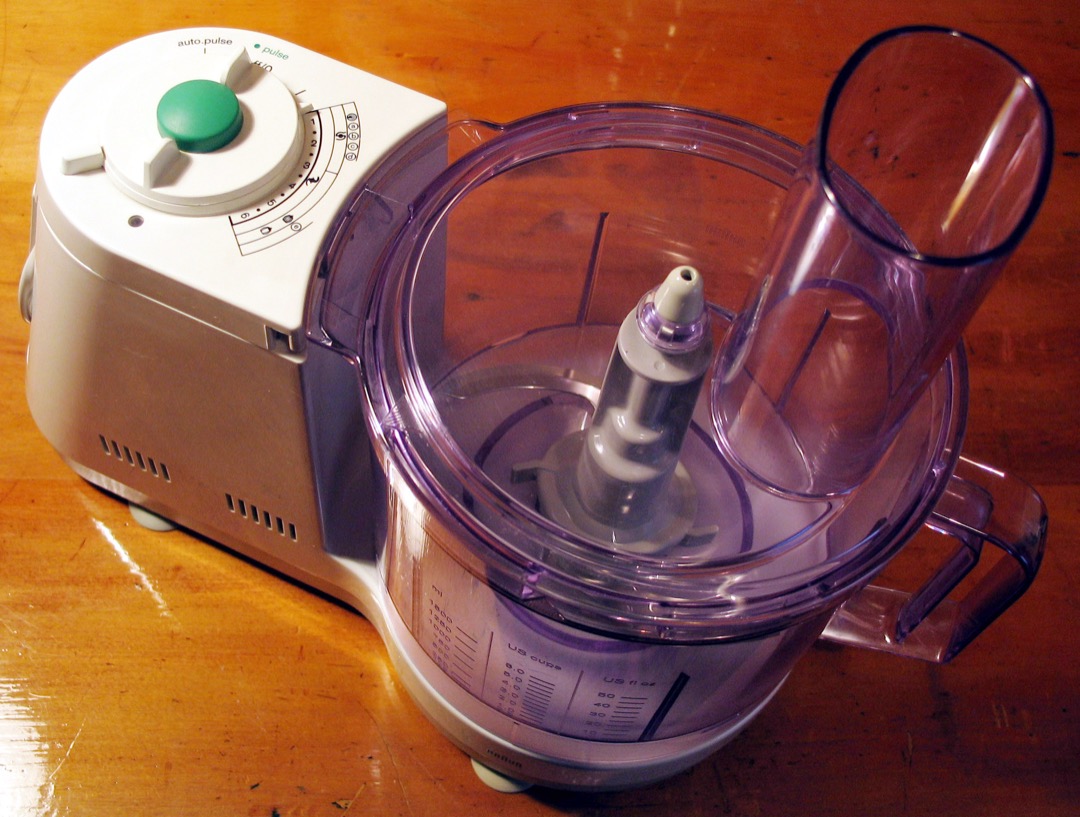
A food processor is the one countertop machine that changes how you cook rather than just what you can make. It collapses the two jobs that eat most of a home cook’s evening, chopping and slicing, from twenty minutes of knife work into about ninety seconds. I spent twelve years in professional kitchens and four of them running a restaurant group’s test kitchen, where my job was deciding which equipment survived a dinner service, and the processors that lasted were never the ones with the biggest number on the box. Choosing the best food processor in 2026 comes down to four things the marketing does not lead with: whether the bowl matches your actual batch size, whether the motor can do the hard jobs you will ask of it, what discs are in the box, and whether assembling the thing is annoying enough that you stop bothering.
That last point sounds trivial and is not. The most common way a food processor fails is that it goes into a cupboard and stays there, because lining up a twist-lock bowl and lid at seven on a Tuesday is more friction than reaching for a knife. Two of the machines below fixed that with a snap-down bowl, and it is a bigger practical upgrade than a hundred extra watts. If you are still deciding whether this is even the right appliance, our food processor vs blender comparison settles the question people ask most.
I looked at the full range for this guide, from a three-cup mini chopper to a sixteen-cup induction-motor machine, and settled on eight. Every ASIN below was checked live, in stock, and buyable at the time of writing, and every price, rating and review count comes from the current listing rather than an old snapshot. The picks span every tier, so there is an honest answer here whether you are equipping a first kitchen or replacing a machine that finally died.
Find the Best Food Processor for Your Need
Different jobs point at different machines. Jump straight to the one that matches what you cook:
- Best food processors overall
- Best food processor for dough
- Best small food processor
- Best food processor for shredding and slicing
- Best food processor for chopping vegetables
- Best food processor for nut butter and hummus
- Best food processor for grinding meat
- Best budget food processor
- Other picks by capacity, brand and job
How We Chose These Food Processors
Every machine here was judged against the same rubric, and every ASIN was confirmed as an active, in-stock listing with a new-condition offer before it made the list. I graded five things. First, usable capacity, which is not the number printed on the bowl: the stated figure is a dry chopping capacity, and the liquid capacity is roughly half, so a machine has to be sized for what you actually put in it. Second, motor power measured against that capacity, because 500 watts behind a 13-cup bowl is a different proposition from 1000 watts behind a 9-cup one. Third, what is in the box, meaning the blade and disc set and specifically whether slicing thickness can be adjusted, since a single fixed-thickness disc is the ceiling on what most processors can prep. Fourth, the feed chute, both its width and whether it can be narrowed, because a chute that cannot hold a slim carrot upright turns coins into wedges. Fifth, assembly and cleanup, which is where a good machine gets abandoned and a merely adequate one keeps earning its counter space. I then weighed those against owner review volume and price, and deliberately spread the picks across every tier so a studio kitchen, a family kitchen, and a serious baker each get a clear answer.
Best Food Processors Overall
These are the eight food processors I would put on a counter in 2026, each reviewed once below with its real strengths and its honest limits. The overall pick leads because it is the machine that does the most jobs correctly for the longest; the use-case sections further down regroup these same machines by what you specifically need, whether that is dough, a small footprint, precision slicing, chopping, nut butter, ground meat, or a low price.
Best Overall: Cuisinart 14-Cup Food Processor
The Cuisinart 14-cup has been the default full-size food processor in American kitchens for a long time, and the reason is not nostalgia. It is the combination of a 720-watt motor with enough torque for stiff dough, a bowl big enough that you stop working in batches, and a warranty structure that tells you what the manufacturer actually believes. Cuisinart covers the motor for five years and the rest of the machine for three. That split is worth reading carefully: it says they expect the plastics and seals to be the wear items and the motor to outlive them, which matches what I saw across four years of test-kitchen use.
Fourteen cups is the capacity at which the bowl stops being the constraint on what you cook. A double batch of pie dough goes in whole. Four cups of hummus comes out in one pass instead of three. A whole head of cabbage shreds down without stopping to empty anything. Below about twelve cups you are constantly working around the machine’s size, and above fourteen you are paying counter space for capacity most home cooks never use. The extra-large feed tube helps here too, because it ships with a bowl sleeve assembly and both a large and a small pusher, so a whole tomato drops in uncut while a single carrot still gets held upright rather than tipping sideways halfway through the slice.
The limits are real and worth naming. The slicing and shredding discs are fixed, 4mm and medium respectively, so a paper-thin potato gratin means buying an extra disc rather than turning a dial. And it is tall, nearly fifteen inches, which puts it above the clearance under a standard upper cabinet. It lives on the counter permanently or it does not live in your kitchen. What you get for that is the detachable disc stem, which lifts the discs cleanly off the shaft so shredded cheese cannot pack into a crevice you cannot reach, and fifteen thousand owner reviews’ worth of evidence that the machine keeps working.
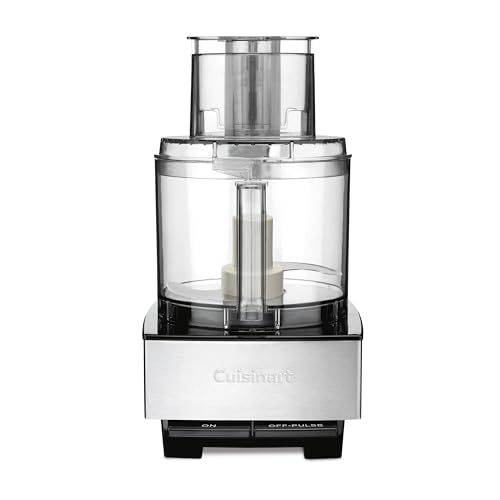
Cuisinart Food Processor, 14-Cup Vegetable Food Chopper for Mincing, Dicing, Shredding, Puree & Kneading Dough, 720-Watt
by Cuisinart
The best food processor overall: the capacity, the motor warranty, and the track record that make it the machine I specified for professional test kitchens and still recommend for a home one.
Pros
- The 720-watt motor carries a five-year warranty against a three-year warranty on the rest of the machine, which tells you exactly where Cuisinart expects the failures to happen and where it does not
- Fourteen cups is the capacity at which the bowl stops being the constraint: a double batch of pie dough, four cups of hummus, or a whole head of cabbage all go through in one pass instead of three
- The extra-large feed tube ships with a bowl sleeve assembly and both a large and a small pusher, so a whole tomato goes in uncut while a single carrot still gets held upright instead of tipping sideways mid-slice
- A detachable disc stem is the small design decision that makes cleanup tolerable, because the discs lift off the shaft and nothing traps shredded cheese in a crevice you cannot reach
Cons
- The slicing and shredding discs are fixed at one thickness each, 4mm for slicing and medium for shredding, so thin gratin slices mean buying an additional disc
- It is a tall, heavy machine at almost 15 inches, so it will not fit under a standard upper cabinet and needs a permanent piece of counter
- The lid and pusher assembly has more separate parts than newer twist-free designs and takes practice to line up quickly
Budget Pick: Hamilton Beach 10 Cup with Bowl Scraper
This is the best value in the category, and it earns that on one design decision more than any specification. A scraper is built into the machine and sweeps the inside of the bowl when you move it side to side, with the lid on and the motor running or stopped. The usual failure on a cheap processor is not the blade. Food gets thrown against the bowl wall and sits there while the blade spins beneath it, and the only fix is to stop, unlock the lid and reach in with a spatula, several times a batch. Here you skip all of that, so a salsa or a slaw comes out evenly chopped in one run.
The rest is more capable than the price suggests. Ten cups is a genuine family-size bowl, enough for a full batch of coleslaw or a pound of shredded cheese. The large feed chute cuts down most of the pre-cutting, there are two speeds plus pulse, and the bowl, lid, pusher, scraper, blade and disc all go in the dishwasher. More than 41,000 owner reviews at 4.5 stars is the deepest ownership record of any machine in this guide. It takes the budget slot from Hamilton Beach’s own twelve-cup Stack & Snap, which Amazon now lists only as a used item.
Where it stops is power and attachments. 450 watts is comfortable with vegetables and hard cheese, and it is not the machine for stiff bread dough or a long run of nut butter, which is also why there is no dough blade in the box. You get two attachments, an S-blade and one reversible stainless slicing and shredding disc, with no thickness adjustment, no julienne and no French fry cut. If your prep is chopping, shredding and mixing, none of that will bother you. If you bake bread or want precision slices, spend more.

Hamilton Beach 10 Cup Food Processor and Vegetable Chopper with Bowl Scraper (70730)
by Hamilton Beach
The best budget food processor: a 10-cup bowl, a built-in scraper that keeps food in the blade's path without stopping the machine, and the deepest owner review record in this guide.
Pros
- A built-in scraper sweeps the inside of the bowl with the lid on and the motor running, so food thrown against the wall goes back into the blade without stopping to dig it out with a spatula
- Ten cups is a genuine family-size bowl, enough for a full batch of coleslaw or a pound of shredded cheese, at the value end of the category
- Two speeds plus pulse give you a real low setting for onions and soft herbs, which is the difference between a chop and a slurry
- More than 41,000 owner reviews at 4.5 stars, the deepest ownership record of any machine in this guide
Cons
- 450 watts handles vegetables and hard cheese, but it is not built for stiff bread dough or a long run of nut butter, and there is no dough blade in the box
- You get two attachments only, an S-blade and one reversible stainless slicing and shredding disc, so there is no julienne, no French fry cut and no thickness adjustment
- The scraper is one more part to fit and wash, and the machine carries a one-year limited warranty, so it is a machine you replace rather than repair
Upgrade Pick: Breville BFP810 Sous Chef 16
The Sous Chef 16 is the only machine here built to a standard I would call professional, and the motor is the reason. It is a 1450-watt induction unit with direct drive, meaning no belt to slip and no brushes to wear down, and Breville warrants it for thirty years. Every other machine in this guide carries between one and five years. That is not a marketing gesture; it is a different class of construction, and it is what lets this processor grind nuts into butter and knead stiff dough without the hot-motor smell that a 450-watt machine gives off after ninety seconds of the same work.
What it does with that power is what actually justifies the price. The adjustable slicer runs twenty-four thickness settings and is set from a dial outside the bowl while the machine is running, so a paper-thin gratin and a thick stir-fry cut come off the same disc without stopping. The accessory set then covers work nothing else here attempts: a French fry disc, a micro-serrated S-blade that saws through tomato skin instead of bruising it, a dough blade, and a 2.5-cup mini bowl with its own blade for a single shallot, which solves the problem where a huge bowl cannot chop a small quantity. The 3-in-1 feed chute opens from 1.7 inches to 5.5 inches, wide enough to stand a whole peeled potato upright and get full-diameter rounds instead of half-moons.
Be honest with yourself about two things before buying it. It is the largest machine here at 17.7 inches tall, and with its disc caddy it claims real territory. And it has only 170 reviews on this listing, a thin sample next to the Cuisinart’s fifteen thousand, so the long-term ownership record is shorter than the warranty implies. If you cook seriously and often, the price makes sense. If you make salsa twice a month, it does not.

Breville BFP810 Sous Chef 16 Cup Food Processor, Brushed Stainless Steel
by Breville
The best upgrade food processor: a 30-year induction motor, a 24-setting adjustable slicer, and the widest accessory set here, which together do work the rest of this category cannot.
Pros
- The 1450-watt induction motor is direct drive with no belt and no brushes, and Breville warrants it for 30 years, which is not a standard anything else in this guide is built to
- The adjustable slicer runs 24 thickness settings and is set from outside the bowl while the machine is running, so a paper-thin gratin and a thick stir-fry cut come off the same disc
- The accessory set covers work no other machine here does: a French fry disc, a micro-serrated S-blade that saws through tomato skin instead of bruising it, a dough blade, plus a 2.5-cup mini bowl and mini blade for a single shallot
- The 3-in-1 feed chute opens from 1.7 inches to 5.5 inches, wide enough to stand a whole peeled potato upright and get full-diameter rounds rather than half-moons
Cons
- It is the largest and heaviest machine here at 17.7 inches tall, and with its disc caddy it needs real counter or cupboard territory
- Only 170 reviews on this listing, so the owner sample is thin next to the Cuisinart and Hamilton Beach machines with tens of thousands
- A full session with the whole disc set fills a sink, because every attachment that earns the price is another thing to wash
Runner-Up: KitchenAid 13-Cup Food Processor KFP1318
The KitchenAid 13-cup is the closest direct alternative to the Cuisinart, and it wins on two things the Cuisinart does not do. The first is the externally adjustable ExactSlice disc, which changes slicing thickness on a lever while the motor runs. This is the single feature that decides whether the slicing disc gets used at all: with one fixed thickness you either accept it or take out a knife, and with a lever you dial in what the recipe wants. The second is the in-bowl storage caddy, which holds every blade and disc inside the machine. Loose discs in a drawer get chipped, get dull, and cut hands, and a caddy is worth considerably more than it looks on a spec sheet.
Assembly is the other genuine advantage. The Snap and Go bowl locks with a one-click, twist-free action and a latched lid, so it goes together without any twist-lock alignment. The leak-resistant seal earns its keep during cleanup too: add warm water and two drops of dish soap, run the machine, and the bowl and blade come mostly clean before they reach the sink. The 3-in-1 feed tube narrows for a single cucumber and opens for a tomato, which is more useful than raw width, because a slim vegetable dropped into a wide chute falls over and comes out as wedges.
The tradeoff is power. 500 watts behind a 13-cup bowl is modest, and while pie dough and soft yeast doughs are fine, a stiff bagel or bread dough is beyond it. At 4.4 stars it also carries the lowest average of the full-size machines here, with the repeat complaints clustering on the drive coupler and the lid latch. It is a very good prep machine and a mediocre dough machine, and knowing which of those you need decides whether it is the right buy.
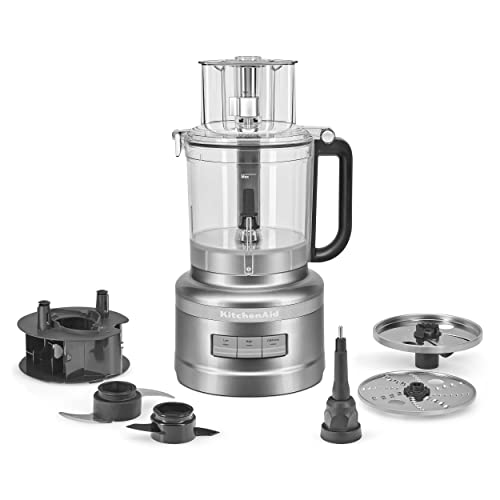
KitchenAid 13-Cup Food Processor, KFP1318, Contour Silver
by KitchenAid
The runner-up: an externally adjustable slicer and an in-bowl caddy that keeps the whole disc set together, in a 13-cup machine that assembles without a twist-lock.
Pros
- The in-bowl storage caddy holds every blade and disc inside the machine, so nothing lives loose in a drawer where discs get chipped and hands get cut
- ExactSlice adjusts slicing thickness on an external lever while the motor runs, which is what separates a processor you actually slice with from one where the disc never leaves the box
- The Snap and Go bowl locks with a one-click twist-free assembly and a latched lid, and the leak-resistant seal means you can add warm water and two drops of soap and pulse the bowl mostly clean before it reaches the sink
- The 3-in-1 feed tube narrows for a single cucumber and opens for a tomato, so slim ingredients stay upright instead of falling over halfway through
Cons
- 500 watts is modest for a 13-cup bowl, so pie dough and soft yeast doughs are fine but a stiff bagel or bread dough is beyond it
- At 4.4 stars it carries the lowest average of the full-size machines here, with the repeat complaints landing on the drive coupler and the lid latch
- No dicing kit and no French fry disc, so the accessory range is narrower than either Breville
Ninja Professional Plus Food Processor BN601
The Ninja has the highest power-to-capacity ratio in this entire guide: 1000 peak watts driving a 9-cup bowl. Nothing else here has that much motor behind that little volume, and it shows on the jobs that stall other machines. Frozen fruit, whole nuts, and pizza dough all go through without the machine begging. If you have ever watched a 450-watt processor slow to a crawl on a dough ball, this is the machine that does not.
The Auto-iQ presets are more useful than preset programs usually are, because they are not just speed settings. Each of the four runs a timed pulse-and-pause pattern for chopping, slicing, pureeing or dough, and the pause is what stops the food packing against the bowl wall and letting the blade spin through air. That is the mistake most people make running a processor manually, holding the button down instead of pulsing, and having the machine handle the rhythm gives you a genuinely more even chop. A dedicated dough blade is included, which processors at twice the price routinely leave out. At 4.6 stars across more than 14,000 reviews, no other machine here holds a rating that high on that many reviews.
The limits are capacity and precision. Nine cups in a tall narrow bowl is the working ceiling, so a double batch of dough or a whole cabbage means running it twice. And there is one reversible slicing and shredding disc with no thickness adjustment, so this is not a precision slicing machine. If you want a processor that does the hard work and you are not chasing gratin-thin potato, this is an excellent buy, and it pairs naturally with the machines in our guide to blender and food processor combinations if you also want to make smoothies.

Ninja Professional Plus Food Processor, 1000PW, 9-Cup, Grey, BN601
by Ninja
The most motor per cup in this guide, with four timed presets and a real dough blade, for cooks who want the machine to run the program rather than run it themselves.
Pros
- 1000 peak watts into a 9-cup bowl is the highest power-to-capacity ratio in this guide, and it shows on the hard jobs: frozen fruit, whole nuts, and pizza dough
- Four Auto-iQ presets run timed pulse-and-pause patterns for chopping, slicing, pureeing and dough, so the machine decides when to stop instead of you guessing over the noise
- A dedicated dough blade is included, which processors at twice the price routinely leave out
- 4.6 stars across more than 14,000 reviews, and no other machine here holds a rating that high on that many reviews
Cons
- Nine cups in a tall narrow bowl is the working ceiling, so a double batch of dough or a whole cabbage means running it twice
- One reversible slicing and shredding disc with no thickness adjustment, so precision slicing is not what this machine is for
- The presets run at fixed speeds, so getting a coarser chop than the program intends means pulsing manually anyway
Breville BFP610 Sous Chef 9
The Sous Chef 9 is here for one capability nothing else in this guide has: it ships with a dicing kit. Dicing is the job home food processors famously cannot do, because an S-blade produces a ragged chop with fine bits and large chunks in the same batch, and a dicing grid cuts the food twice at right angles to give you an even cube. If you make mirepoix, salsa, or anything where uniform dice determines whether the pieces cook at the same rate, this is a genuine capability rather than a bullet point.
It packs that into a body under eight inches wide, which is what makes it interesting for a small kitchen that still wants serious equipment. It uses the same brushless induction direct-drive design as the 16-cup model with the same thirty-year motor warranty, and every accessory stores in a colour-coded caddy inside the bowl, so you reach for the right disc without laying five of them across the counter. The 2-in-1 feed chute opens to 4.7 inches, which takes whole tomatoes and large potatoes on a machine that occupies less counter than most twelve-cup processors.
What you give up is power and value. 625 watts is well under the 16-cup model, so stiff bread dough and long runs of hard cheese sit outside its comfortable range. It has only 112 reviews, the thinnest ownership record in this guide. And you are paying premium money for nine cups, which is less usable capacity than several machines here at a fraction of the price. Buy it because you want dicing and a small footprint, not because you want the most machine for the money.

Breville BFP610 Sous Chef 9 Cup Food Processor, Brushed Stainless Steel
by Breville
The only processor here that dices properly, with Breville's 30-year induction motor and a full accessory caddy packed into a body under 8 inches wide.
Pros
- It is the only machine in this guide that ships with a dicing kit, which produces a true even dice rather than the ragged chop a straight blade gives you
- It uses the same brushless induction direct-drive design as the 16-cup model with the same 30-year motor warranty, in a body under 8 inches wide
- Every accessory stores in an integrated colour-coded caddy inside the bowl, so you reach for the right disc without laying five of them across the counter
- The 2-in-1 feed chute opens to 4.7 inches, wide enough for whole tomatoes and large potatoes on a machine that occupies less counter than most 12-cup processors
Cons
- 625 watts is well under the 16-cup model, so stiff bread dough and long runs of hard cheese sit outside its comfortable range
- Only 112 reviews so far, the thinnest ownership record of any machine in this guide
- You pay premium money for nine cups, which is less usable capacity than machines here at a fraction of the price
Cuisinart 8 Cup Food Processor FP-8SV
This is the Cuisinart for a kitchen that cannot spare fifteen inches of vertical clearance. Eight cups inside a 7.6 by 9.6 inch footprint fits under a standard upper cabinet and still handles a full batch of pesto or a pound of shredded cheese, which is the amount most one and two person households actually process. The size is the point, and it is a sensible piece of engineering rather than a stripped-down version of a bigger machine.
Two details make it better than the size suggests. The rubberised controls give you high, low, off and pulse, and that genuine low speed is what turns onions into dice instead of slurry, since a processor at full speed passes food across the blade faster than the blade can cut it cleanly. The work bowl also carries measurement markings, so a vinaigrette or a dough hydration gets built directly in the bowl without a separate measuring cup, and the integrated feed tube lets you stream oil in while the motor runs, which is how a mayonnaise or an aioli emulsifies rather than breaks. Those are cook’s features, not spec-sheet features.
The honest limits are power and warranty. 350 watts is the lowest of the full-size machines here and it labours on hard root vegetables and any stiff dough. And it carries a two-year warranty against the five-year motor cover on Cuisinart’s 14-cup model, which is a fair reflection of a lighter build. Eight cups also fills faster than the number implies once you start slicing, because sliced vegetables stack loosely and reach the lid early. For a small kitchen doing normal cooking it is well judged; for baking it is not the machine.
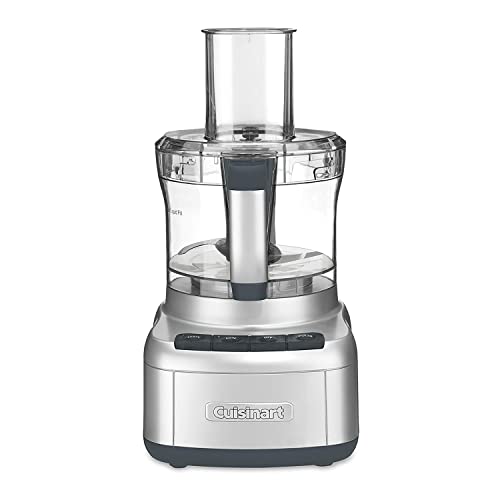
Cuisinart 8 Cup Food Processor, 350-Watt Motor, Medium to Fine Slicing Discs, FP-8SV, Silver
by Cuisinart
A full-featured Cuisinart scaled to a counter that cannot spare 15 inches of height, with a true low speed and a measurement-marked bowl.
Pros
- Eight cups inside a 7.6 by 9.6 inch footprint is the size that fits under a standard upper cabinet and still handles a full batch of pesto or a pound of shredded cheese
- Rubberised high, low, off and pulse controls give you a genuine low speed, which is what chops onions into dice instead of slurry
- The work bowl carries measurement markings, so a vinaigrette or a dough hydration gets built in the bowl without a separate measuring cup
- The integrated feed tube lets you stream oil in while the motor runs, which is how a mayonnaise or an aioli emulsifies rather than breaks
Cons
- 350 watts is the lowest of the full-size machines here and it labours on hard root vegetables and any stiff dough
- A two-year warranty against the five-year motor cover on Cuisinart's 14-cup model, which is an honest reflection of the lighter build
- Eight cups fills faster than the number suggests once you are slicing, because sliced vegetables stack loosely and reach the lid early
- It ships from a third-party seller rather than Amazon, quoted at two to three days to dispatch, so it is not a next-day item
Cuisinart Mini Food Processor, 3-Cup
I recommend this more often than any other single item in the category, and not as a substitute for a full-size machine. It is the companion to one. A 14-cup bowl physically cannot chop a single shallot: the blade sweeps above the food and throws it against the bowl wall without ever cutting it, and you end up with three big pieces and a lot of noise. The full-size machine is also five parts to assemble and wash for thirty seconds of work, which is precisely the friction that stops people using it on a weeknight.
The mechanism is smarter than its price. The blade is reversible, with a sharp edge and a blunt edge, and it changes direction between the chop and grind buttons, so soft herbs get cut on the sharp edge while hard parmesan and nuts get broken on the blunt one. That is why it handles both, where a single-edge chopper does one job well and mangles the other. Twenty-four ounces is the working size a cook actually reaches for: a shallot, a handful of parsley, a garlic paste, a cup of fresh breadcrumbs, the yolks for a tray of deviled eggs. That last one is worth a note: firm yolks blitz into a smooth filling in about four pulses, but only if the eggs were cooked firm enough to crumble rather than smear, which is a timing question before it is a machine question. Our free egg boiling timer works that time out for your egg size and elevation. The whole thing is five by seven inches and light enough to lift one-handed out of a cupboard, which is the real reason it gets used.
Understand what it is not. There are no discs and no feed chute at all, so it chops and it grinds and that is the entire list. 250 watts and a three-cup bowl mean it will not stand in for a full-size processor on anything larger than a side dish. And the plastic bowl scratches over years of use, clouding the measurement window. None of that matters if you buy it for what it does, and more than 25,000 reviews at 4.5 stars on a design Cuisinart has barely changed in two decades says the mechanism does not need changing.

Cuisinart Mini Food Processor, Reversible Blade, 3-Cup Capacity
by Cuisinart
The small food processor worth owning alongside a big one: a reversible sharp and blunt blade that both chops herbs and grinds hard cheese, in a body you can lift with one hand.
Pros
- The auto-reversing blade has a sharp edge and a blunt edge and changes direction between the chop and grind buttons, so soft herbs get cut on one edge and hard parmesan or nuts get broken on the other
- Twenty-four ounces is the size a cook actually reaches for on a weeknight: a shallot, a handful of parsley, a garlic paste, a cup of breadcrumbs
- The whole machine is 5 by 7 inches and light enough to lift one-handed out of a cupboard, which is why it gets used while a 14-cup machine sits under its cover
- More than 25,000 reviews at 4.5 stars on a design Cuisinart has barely altered in two decades, because the mechanism does not need altering
Cons
- There are no discs and no feed chute at all, so it chops and it grinds and that is the complete list of what it does
- 250 watts and a three-cup bowl mean it is a companion to a full-size processor, not a replacement for one
- The plastic bowl scratches over years of use, which clouds the measurement window
Best Food Processor for Dough
Dough is where a weak processor gives itself away, and the giveaway is the smell of a hot motor about ninety seconds in. Kneading is sustained high-torque work, unlike chopping, which is a series of brief loads, so the specification that matters is not peak wattage but whether the motor is built to hold load. A processor kneads pizza and pastry dough faster than a stand mixer, in roughly forty-five seconds, because it works the flour and water in a single continuous action rather than folding it. Three machines here can genuinely do it.
| Product | Price | Buy |
|---|---|---|
| Breville BFP810 Sous Chef 16 Cup Food Processor, Brushed Stainless SteelBest for dough overall A 1450-watt induction direct-drive motor with a 30-year warranty and a dedicated dough blade, the only machine here built to hold that load indefinitely | $499.95 | View on Amazon |
| Cuisinart Food Processor, 14-Cup Vegetable Food Chopper for Mincing, Dicing, Shredding, Puree & Kneading Dough, 720-WattBest for large dough batches A 720-watt motor covered for five years with a 14-cup bowl, so a double batch of pie dough goes in whole rather than in two rounds | $239.99 | View on Amazon |
| Ninja Professional Plus Food Processor, 1000PW, 9-Cup, Grey, BN601Best dough value 1000 peak watts into a 9-cup bowl with a dedicated dough blade and a timed dough preset, the most torque per cup at this price | $99.99 | View on Amazon |
The two full-size machines to leave off a dough shortlist are the KitchenAid 13-cup at 500 watts and the Cuisinart 8-cup at 350, both of which are fine with pie and pastry dough and will struggle with a stiff yeasted bread dough. Whichever you choose, do not over-process: a processor develops gluten fast, and thirty seconds past the point the dough forms a ball is thirty seconds too many. Everything after that is a pan size and an oven temperature, and if the recipe came from a British or Australian book both are stated in units your kitchen does not use: our free kitchen conversion chart puts the gas marks, the pan swaps and the cup weights on one printable sheet, and it separates the exact Celsius conversion from the rounded number on an oven dial.
Best Small Food Processor
Small means two different things and buying the wrong one is a common mistake. A mini chopper handles small quantities: one shallot, a handful of herbs, a garlic paste, and it does that in one part with one wash. A small full-size processor handles normal quantities in a small body: a batch of pesto, a pound of shredded cheese, a bowl of salsa, and it still has a feed chute and discs. If you want the machine to slice and shred, you need the second kind, because no mini chopper has a disc.
| Product | Price | Buy |
|---|---|---|
| Cuisinart Mini Food Processor, Reversible Blade, 3-Cup CapacityBest mini chopper Three cups, one part to wash, and a reversible sharp and blunt blade that chops herbs and grinds hard cheese on the same machine | $39.95 | View on Amazon |
| Cuisinart 8 Cup Food Processor, 350-Watt Motor, Medium to Fine Slicing Discs, FP-8SV, SilverBest small full-size processor Eight cups in a footprint that fits under a standard upper cabinet, with a real low speed and a reversible slicing and shredding disc | $128.56 | View on Amazon |
| Breville BFP610 Sous Chef 9 Cup Food Processor, Brushed Stainless SteelBest compact premium processor Nine cups with a dicing kit, a full disc caddy and Breville's induction motor, in a body under 8 inches wide | $329.99 | View on Amazon |
For most kitchens the right answer is a mini chopper alongside whatever full-size machine you own, not instead of it. The two cover a range neither one covers alone, and the mini is the one that ends up on the counter most nights. If counter space is the binding constraint and you can only own one machine, the eight-cup Cuisinart is the compromise that gives up the least.
Best Food Processor for Shredding and Slicing
This is where fixed-thickness discs quietly limit what a processor can do. Most machines ship with one reversible slicing and shredding disc at a single thickness, which is enough for shredded cheese and salsa vegetables and nothing more precise. If you want two-millimetre potato for a gratin and quarter-inch cucumber for a salad from the same machine, you need an adjustable slicer, and only two here have one.
| Product | Price | Buy |
|---|---|---|
| Breville BFP810 Sous Chef 16 Cup Food Processor, Brushed Stainless SteelBest for precision slicing A 24-setting adjustable slicer set from outside the bowl while running, plus a reversible shredder and a French fry disc | $499.95 | View on Amazon |
| KitchenAid 13-Cup Food Processor, KFP1318, Contour SilverBest adjustable slicer for the money ExactSlice adjusts thickness on an external lever mid-run, with a 3-in-1 feed tube that narrows to hold slim vegetables upright | $179.99 | View on Amazon |
| Cuisinart Food Processor, 14-Cup Vegetable Food Chopper for Mincing, Dicing, Shredding, Puree & Kneading Dough, 720-WattBest for high-volume shredding Fixed 4mm slicing and medium shredding discs, but a 14-cup bowl and a detachable disc stem that makes bulk shredding and cleanup fast | $239.99 | View on Amazon |
Two practical notes from years of doing this at volume. Feed chute shape matters as much as disc quality, because a slim carrot dropped into a wide chute topples and comes out as wedges rather than coins, which is why the narrowing 3-in-1 chutes on the Breville and KitchenAid machines are more useful than raw width. And shred cheese cold, straight from the fridge, because a warm block smears against the disc and packs the shredding holes instead of cutting.
Best Budget Food Processor
Spending less does not have to mean owning a machine that frustrates you, but it does mean choosing which compromise you accept. At the value end you give up motor power, adjustable discs, or capacity, and the mistake is giving up all three at once by buying an unbranded machine with a big number on the box and a 200-watt motor behind it. These three are the value picks worth owning, each compromising on something different.
| Product | Price | Buy |
|---|---|---|
| Hamilton Beach 10 Cup Food Processor and Vegetable Chopper with Bowl Scraper (70730)Best value full-size Ten cups and a built-in bowl scraper that works with the motor running, backed by more than 41,000 owner reviews | $69.95 | View on Amazon |
| Ninja Professional Plus Food Processor, 1000PW, 9-Cup, Grey, BN601Best value for hard jobs Steps up to 1000 peak watts and a dough blade, so it handles frozen fruit, nuts and dough that the 450-watt machines will not | $99.99 | View on Amazon |
| Cuisinart Mini Food Processor, Reversible Blade, 3-Cup CapacityBest value mini chopper Three cups and 250 watts for the small weeknight jobs, with a reversible blade that both chops and grinds | $39.95 | View on Amazon |
If you cook for a family and want one machine, take the Hamilton Beach ten-cup and accept that dough and nut butter are outside its range. If you want the value machine that handles the hard jobs, the Ninja is worth the step up. And if the honest answer is that you chop aromatics and rarely do anything larger, the three-cup Cuisinart will get used more than either.
Best Food Processor for Chopping Vegetables
Chopping is the job every processor claims and the one most owners are quietly disappointed by, because the failure is not the blade. It is that you hold the button down. A continuous run throws the vegetables against the bowl wall, where they sit while the blade spins through air, and you end up with purée at the bottom and knuckle-sized chunks at the top. Pulse in one-second bursts and the same machine gives you an even dice. The other half of the problem is upstream of the bowl: if the chute makes you quarter everything first, you will reach for a knife instead, and the machine stays in the cupboard.
| Product | Price | Buy |
|---|---|---|
| Hamilton Beach 10 Cup Food Processor and Vegetable Chopper with Bowl Scraper (70730)Best budget chopper, no spatula needed The built-in scraper pushes food off the bowl wall and back into the blade while it runs, which fixes the most common cause of an uneven chop | $69.95 | View on Amazon |
| Cuisinart Food Processor, 14-Cup Vegetable Food Chopper for Mincing, Dicing, Shredding, Puree & Kneading Dough, 720-WattBest for high-volume chopping Fourteen cups means a full mirepoix in one pass instead of three, and the extra-large tube ships with both a large and a small pusher | $239.99 | View on Amazon |
| Ninja Professional Plus Food Processor, 1000PW, 9-Cup, Grey, BN601Best for an even chop without babysitting Auto-iQ runs a timed pulse-and-pause pattern, which is the rhythm most people get wrong by hand | $99.99 | View on Amazon |
Two things worth knowing whatever you buy. Cut everything to roughly the same size before it goes in, because a processor chops by collision and a big piece survives while a small one turns to mush. And chop dry ingredients dry: onions and celery hold enough water that a long run steams them, which is why restaurant kitchens pulse aromatics and then tip them straight out rather than letting them sit in the bowl.
Best Food Processor for Nut Butter and Hummus
This is the job that separates motors from marketing numbers. Nut butter takes eight to twelve minutes of continuous running, through a paste stage where the load on the motor is highest, and a machine that is comfortable with vegetables will heat up, smell hot and cut out on thermal protection somewhere in minute four. Hummus is easier but has the opposite problem: it is a wet purée, and the stated bowl capacity is a dry chopping figure, so liquid capacity is roughly half the number on the box. A 14-cup bowl holds about seven cups of hummus before it starts weeping past the seal.
| Product | Price | Buy |
|---|---|---|
| Ninja Professional Plus Food Processor, 1000PW, 9-Cup, Grey, BN601Best for nut butter at the value end 1000 peak watts is the least power I would put behind a full jar of almonds, and only the far pricier Breville 16 carries more | $99.99 | View on Amazon |
| Cuisinart Food Processor, 14-Cup Vegetable Food Chopper for Mincing, Dicing, Shredding, Puree & Kneading Dough, 720-WattBest for large hummus batches 720 watts covered by a five-year motor warranty, and the capacity to do four cups of hummus in a single pass | $239.99 | View on Amazon |
| Breville BFP810 Sous Chef 16 Cup Food Processor, Brushed Stainless SteelBest for long runs without stopping 1450 watts with a sealed bowl, which is the combination that does not need a rest halfway through a batch | $499.95 | View on Amazon |
Scrape down the sides every two minutes on nut butter, and stop the moment the paste goes glossy and starts to flow. Past that point you are heating oil rather than grinding, and the texture goes grainy when it cools. For hummus the order matters more than the machine: tahini and lemon first until it seizes and loosens, then the chickpeas.
Best Food Processor for Grinding Meat
A processor is not a grinder, and it is worth being clear about what that means before you buy one for this. A grinder pushes meat through a plate and cuts it, producing separated strands. A processor chops it by collision, so you get an irregular grind with some strands and some paste. For burgers, meatballs, sausage stuffing and anything bound with egg or breadcrumb, that difference does not show up on the plate. For a coarse chilli grind where you want distinct pieces, it does.
| Product | Price | Buy |
|---|---|---|
| Cuisinart Food Processor, 14-Cup Vegetable Food Chopper for Mincing, Dicing, Shredding, Puree & Kneading Dough, 720-WattBest for grinding meat overall Enough torque to work through part-frozen chuck, and a bowl big enough to grind in one batch rather than three | $239.99 | View on Amazon |
| Ninja Professional Plus Food Processor, 1000PW, 9-Cup, Grey, BN601Best for small batches Pulse control plus a small bowl keeps a single pound from smearing, which is where the grind usually goes wrong | $99.99 | View on Amazon |
| Breville BFP810 Sous Chef 16 Cup Food Processor, Brushed Stainless SteelBest control over grind coarseness The micro-serrated blade and the highest wattage here give the most consistent result on sinewy cuts | $499.95 | View on Amazon |
The technique is the whole game. Cube the meat, spread it on a tray and freeze it for twenty to thirty minutes until firm at the edges but not solid, then pulse in short bursts with the bowl no more than half full. Warm meat smears into paste against the blade and no machine on this page will save you from it. Grinding fat and lean separately and combining afterwards gives you actual control over the ratio.
Other Picks by Capacity, Brand and Job
A few needs are answered by one machine rather than a category, so they are grouped here instead of getting a section of their own.
| Product | Price | Buy |
|---|---|---|
| Breville BFP810 Sous Chef 16 Cup Food Processor, Brushed Stainless SteelBest large-capacity and pro-grade pick Sixteen cups plus a mini bowl, the full disc set and a thirty-year motor warranty, which is the closest thing here to commercial build without commercial price | $499.95 | View on Amazon |
| KitchenAid 13-Cup Food Processor, KFP1318, Contour SilverBest mid-to-large bowl for the money Thirteen cups with an adjustable slicer and a dough blade, sitting between the value tier and the flagships | $179.99 | View on Amazon |
| Breville BFP610 Sous Chef 9 Cup Food Processor, Brushed Stainless SteelBest dicing kit in a small footprint The only machine here with a true dicing kit, in a nine-cup body that clears a standard upper cabinet | $329.99 | View on Amazon |
| Cuisinart Food Processor, 14-Cup Vegetable Food Chopper for Mincing, Dicing, Shredding, Puree & Kneading Dough, 720-WattBest Cuisinart, and best for purees The category default, and the one I reach for on wet purees because the sealed bowl does not weep | $239.99 | View on Amazon |
| Ninja Professional Plus Food Processor, 1000PW, 9-Cup, Grey, BN601Best Ninja One-touch presets and the most peak wattage of the value machines | $99.99 | View on Amazon |
How to Choose the Best Food Processor
Everything above assumes you already know which of these things you care about. If you do not, work through the six factors below in order. They are the same questions I asked when specifying equipment professionally, and they resolve most buying decisions before you get to brand preference. Capacity first, because a bowl that does not match your batch size undermines everything else, and it is worth knowing what your batch actually weighs before you size the bowl: pastry and pie dough are the jobs these machines are bought for, and a cup of flour is 120 g or 142 g depending on nothing more than whether you spoon it in or dip the cup in the bag. Our free grams to cups converter shows both, with the published source for each. Capacity is also the factor that decides itself the moment you scale a recipe, and scaling is where most people find out their bowl is too small: our recipe converter will tell you what a doubled or tripled batch actually weighs before you commit to a machine, and it holds back the leaveners while it does it. Then motor power, but only measured against the specific hard jobs you actually do. Then the disc set, the feed chute, and finally the two things that decide whether the machine stays in use: how it assembles and how it cleans.
Buyer's Guide
I spent four years deciding which equipment could survive a dinner service, and food processors are where the marketing and the reality separate hardest. Cup counts and wattage figures are printed large; the things that actually determine whether a machine gets used are not. These are the six I weigh, in order.
Bowl Capacity and What You Actually Cook
Buy for your normal batch, not your largest imaginable one, because an under-filled bowl works correctly while an over-filled one does not. A processor cuts by sweeping food past a blade at the bottom of the bowl, so food above the blade's reach never gets cut evenly, and a bowl loaded past its line gives you paste at the bottom and chunks at the top. Eight to nine cups covers a household of one or two doing sauces and aromatics. Twelve to fourteen covers baking, cheese in bulk, and family prep. Sixteen cups is large-format and only earns its counter space if you cook in batches. The capacity printed on the box is also the dry chopping capacity, not the liquid capacity, which is typically about half.
Motor Power and What It Really Buys You
Wattage matters at the extremes and almost nowhere in between. Chopping onions, pureeing soup, and shredding soft cheese are easy work that 350 watts handles fine. Kneading stiff dough, grinding nuts into butter, and slicing hard root vegetables in long runs are the jobs that stall an underpowered machine and cook its motor. If those are on your list, do not go below about 700 watts, and pay attention to how the power is delivered: Breville's induction direct-drive motors have no belt and no brushes to wear, which is why they carry a 30-year warranty where most machines carry one to five years. Also read the warranty split. Cuisinart covers the 14-cup motor for five years and the rest of the machine for three, which tells you which part they expect to outlive the other.
The Disc Set, and Whether Slicing Is Adjustable
This is the difference between a machine you chop with and a machine you prep with. Most processors ship with an S-blade and one reversible slicing and shredding disc at a single fixed thickness, which is enough for salsa and shredded cheese and nothing more precise. An externally adjustable slicer, like KitchenAid's ExactSlice or Breville's 24-setting disc, lets you change thickness while the motor runs, so one disc covers a two-millimetre gratin and a thick stir-fry cut. Above that sit the specialist attachments: a French fry disc, a julienne disc, and a dicing kit, which is the one job home processors normally cannot do at all. Count what is in the box, because buying discs individually afterwards is expensive.
Feed Chute Width and Shape
The chute decides how much knife work you still have to do, which is the whole point of owning the machine. A narrow chute means halving and quartering every tomato and potato before it goes in, and it also means half-moon slices rather than full rounds. A wide chute takes whole produce, and the best designs are variable: Breville's 3-in-1 chute opens from 1.7 inches to 5.5 inches and KitchenAid's 3-in-1 tube narrows for a single cucumber. That narrowing matters more than the width. A slim carrot dropped into a wide chute topples and comes out as wedges rather than coins, so a chute that can be made small is doing real work.
Assembly, Cleanup, and Whether You Will Keep Using It
The most common failure of a food processor is not mechanical. It is that assembly is annoying enough that the machine stops coming out. Traditional twist-lock bowls need the bowl aligned to the base and the lid aligned to the bowl before the interlock releases the motor, and getting that wrong in a hurry is genuinely irritating. KitchenAid's Snap and Go drops straight down and clicks, which removes the problem entirely. On cleanup, look for a detachable disc stem, as on the Cuisinart 14-cup, so shredded cheese cannot pack into the shaft, and check whether there is a leak-resistant seal, since an unsealed bowl leaks wet mixtures into the base where you cannot wash them out.
Warranty, Materials, and Storage
Look at what the warranty covers separately, not just its length. A three-year machine warranty with a five-year motor warranty is a different promise from a flat one-year cover, and Breville's 30-year motor warranty is the strongest signal in the category. On materials, every bowl here is BPA-free polycarbonate rather than glass, so all of them will cloud eventually under hot dishwasher cycles. Then think about where the parts will live. Loose discs in a drawer get chipped and are a cut hazard, and an in-bowl storage caddy, which the KitchenAid 13-cup and both Breville machines include, keeps the whole set with the machine. A processor stored complete is a processor you will use.
The Verdict: Which Food Processor Should You Buy?
For most kitchens the answer is the Cuisinart 14-cup. It has the capacity that stops constraining what you cook, a 720-watt motor covered for five years that handles dough and hard vegetables without complaint, and fifteen thousand owner reviews confirming it keeps running. It is tall enough to need permanent counter space and its discs are fixed at one thickness, and neither of those has stopped it being the machine I have recommended most consistently for a decade.
If the budget is the binding constraint, the Hamilton Beach 10 Cup with the built-in bowl scraper is the value pick I would put in a first kitchen without hesitation. It gives up motor power and adjustable discs, and it fixes the thing that most often spoils a cheap processor’s results, which is food stuck on the bowl wall out of the blade’s reach. And if you cook seriously enough that dicing, precision slicing, and stiff dough are regular work rather than occasional, the Breville Sous Chef 16 is a genuinely different class of machine with a thirty-year motor warranty to match. Whichever you choose, add a three-cup mini chopper alongside it, and pair the machine with the rest of your prep setup, whether that is a good knife or a rice cooker doing the starch while the processor does everything else.
Frequently Asked Questions
What size food processor do I need?
Can a food processor knead bread dough?
What is the difference between a food processor and a blender?
Are food processor parts dishwasher safe?
Do I need a mini food processor if I already own a full-size one?
Related Articles
About the Reviewer

Nora Whitfield, CIA Culinary Arts, ServSafe Certified
A.O.S. Culinary Arts, The Culinary Institute of America
Nora Whitfield trained at the Culinary Institute of America and spent twelve years in professional kitchens, the last four running the test kitchen for a regional restaurant group where her job was to decide which equipment could survive a dinner service and which could not. She has seasoned more carbon-steel woks than she can count, boiled water in every kettle worth owning, and broken enough cheap gear to know exactly where manufacturers cut corners. She reviews kitchen equipment the way she specified it professionally: cook on it, clean it, and see what it looks like after a month.