Food Processor vs Blender: What Each Machine Actually Does
Food processor vs blender, settled by mechanism. A blender pulls a vortex and needs liquid. A processor sweeps the whole bowl and does not. Who wins what.
Updated
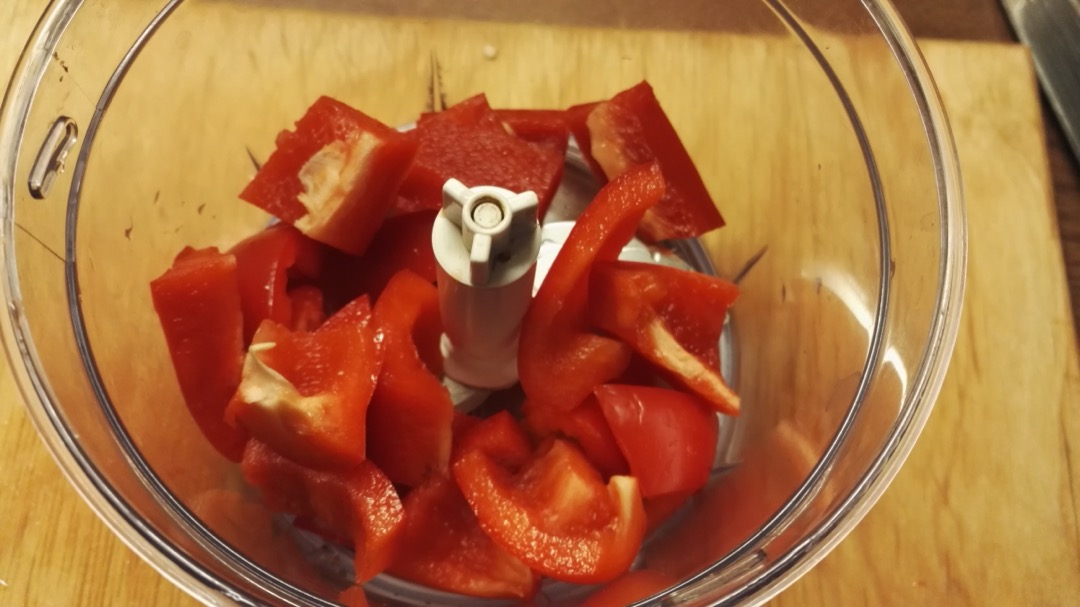
The most common thing I hear about these two machines is that they are roughly the same thing in different shapes, and that a food processor is a blender with a bigger bowl and worse results. That gets the relationship exactly backwards. They are not variations on one design. They solve two different physical problems, and each one is bad at the other machine’s job for a reason you can see the moment you understand how each moves food through a blade.
I ran a restaurant group’s test kitchen for four years, which meant deciding which machine a prep list went to. Nobody on that line ever debated it, because the choice falls out of one variable: whether the job needs recirculation through a small blade, or coverage by a large one. Get that straight and every contested question here answers itself, including the ones the internet cannot agree on.
The Short Answer
A blender makes things liquid. A food processor makes things smaller. If the finished item pours, use the blender. If the finished item still has distinct pieces you could point at, use the food processor.
Reach for the blender:
- Smoothies, shakes, and frozen drinks
- Puréed and creamed soups
- Emulsified dressings, thin sauces, and marinades
- Crushed ice and frozen fruit
- Batters, and anything that must end up perfectly smooth
Reach for the food processor:
- Chopping onions, carrots, celery, garlic, and herbs
- Slicing and shredding with the discs, including cheese and cabbage
- Nut butters and nut flours
- Pesto, chunky salsa, hummus, and tapenade
- Pastry dough, pie crust, and cutting cold butter into flour
| Blender | Food processor | |
|---|---|---|
| Blade | Small, fixed at the base, blade tips angled up and down | Large S-blade spanning nearly the full bowl width, plus removable slicing and shredding discs |
| Vessel shape | Tall and narrow, often tapered toward the bottom | Wide and shallow, straight-sided |
| How food gets back to the blade | A vortex: liquid circulates solids down into the cutting zone | Gravity: solids fall back into a blade path that already sweeps the whole bowl |
| Liquid required | Yes, enough to keep the vortex alive | No, and dry work is what it is built for |
| Effect on texture | Uniform, homogenous, poured | Distinct pieces, controllable coarseness |
| Typical capacity | Around 6 to 8 cups of liquid, less in practice for solids | Around 7 to 16 cups, usable for solids |
| Wins outright | Smoothies, purée soups, emulsions, ice | Chopping, slicing, shredding, dough, nut butter |
How a Blender Actually Works
A blender’s blade is small. On most jars it spans only the middle few inches of the base, and its tips are bent so that some push down and some push up. The jar around it is tall and narrow, sometimes tapered, and none of that is styling. Together they exist to build one thing: a vortex.
Spin that blade in liquid and the mixture is thrown outward, climbs the jar wall, then falls back down the centre because it has nowhere else to go. That circulation drags solids down through the cutting zone again and again. The same piece of frozen mango might pass the blade fifty times in ten seconds. That repetition, not the sharpness of the blade, is what turns fruit fiber and ice into something your tongue reads as smooth.
Take the liquid away and the mechanism collapses. Dry ingredients have nothing to circulate them, so the blade flings them outward and they stay packed against the walls above the cutting zone, where they will never be touched again. The blade then spins in an air pocket, which is the machine screaming while nothing happens. That is the physical reason a blender “needs liquid,” and it is not a rule someone invented for safety. Without a fluid medium the machine has no way to bring food back to its blade.
It is also why blender results are uniform whether you want them to be or not. Anything that stays in the vortex keeps getting cut, so there is no setting for “chopped.” The mechanism cannot stop halfway.
The Wattage Numbers Contradict Each Other for a Reason
You will find one source saying a blender needs a thousand watts and another saying half that is plenty, both stated flatly. They are not arguing about blenders. They are quoting two different measurements.
Peak wattage is the momentary spike a motor draws under maximum load, often for a fraction of a second. Sustained wattage is what it holds continuously through a minute-long blend. Marketing copy prints the first because it is the larger number, while the engineers who care about performance mean the second, and there is no way to convert between them from the outside. Compare a stated wattage only against another figure measured the same way. Load behaviour tells you more than the box does: a motor that bogs down and slows when the jar is full is undersized regardless of what it claims.
How a Food Processor Actually Works
Now look at the processor. The S-blade sits on a central hub and reaches nearly to the bowl wall, so its path sweeps almost the entire floor of the bowl on every rotation. The bowl is wide and shallow rather than tall and narrow.
That combination removes the need for a vortex entirely. Food does not have to be transported to the blade, because the blade already goes everywhere the food is. Anything thrown outward hits the wall, drops back down under gravity, and lands inside the swept path within a fraction of a second. There is no dead zone, because there is no meaningful volume the blade fails to reach.
That single difference produces every practical distinction between the machines. Blade span plus vessel shape determines the recirculation method, the recirculation method determines how much liquid you need, and the liquid determines the texture you can produce. A blender recirculates through liquid, so it produces liquid. A processor recirculates through gravity, so it works bone dry and stops at any coarseness you like.
It also explains the processor’s real weakness. Put a lot of liquid in that shallow bowl and centrifugal force pushes it up the wall toward the lid seal, which is why every manufacturer prints a liquid fill line well below the solid capacity and why an overfilled processor dribbles soup down its base.
The discs are a separate mechanism again. A slicing or shredding disc mounts flat at the top of the bowl and spins horizontally under the feed tube, so food pressed down by the pusher passes across a fixed blade at a fixed height. That is a mandoline running at motor speed, and no blender has an equivalent. Discs and dough blades are most of what separates a capable machine from a basic one in our best food processors roundup.
What Each One Wins Outright
The blender wins smoothies, shakes, puréed soups, emulsified dressings, batters, and crushed ice. Every one of those either requires a fully homogenous end state or contains enough liquid to sustain a vortex. Frozen protein drinks are the extreme case, since ice and frozen fruit need sustained circulation to break down at all, which is what the machines in our best blenders for protein shakes guide are built around.
The food processor wins chopping, slicing, shredding, grating, dough, pastry, and nut butter. All dry or low-liquid work, all requiring pieces rather than purée. A processor’s slicing disc is also the fastest way to prep a stir-fry, since a wok cooks in about four minutes and lives or dies on whether everything was cut to the same thickness beforehand. That prep is worth more to the finished dish than most of what happens in our best woks guide, because uneven pieces in a hot wok means some are raw when others have burned.
The Contested Tasks, Settled by Mechanism
These are the five jobs where good sources genuinely disagree. In each case the mechanism gives a clean answer.
Nut Butter: Food Processor
This is the one that trips people up, because a blender feels like the more powerful machine and nut butter ends up smooth.
Watch the stages. Whole nuts break to coarse pieces, then to a dry meal, and only after several minutes of grinding do the oils release and the mass turn fluid. The dry meal stage is the problem. In a blender jar, ground nuts pack into the dead zone above the blade the moment they lose their free-flowing texture, and there is no free liquid left to build a vortex that would pull them back down. The machine spins in a hole while a wall of nut meal sits above it, heating up and going nowhere, so you scrape the jar every fifteen seconds and cook the motor doing it.
In a wide processor bowl that meal never leaves the swept path, because gravity is the only transport it needs. It grinds continuously through the dry phase and into the oily one, and with a scrape or two it goes from nuts to paste to genuinely pourable butter.
Pesto: Food Processor
Two reasons, and the second is the one nobody mentions.
The obvious one is texture. Real pesto carries visible flecks of basil and pine nut, which is a chopped texture and therefore processor work by definition.
The reason that matters more is heat. Blade tip speed in a narrow jar is high and the load is small, so basil takes hard, repeated hits in a confined space. That shear bruises the leaves and pushes them toward oxidation, which shows up as browning and a bitter edge that was not in the raw leaf. A processor cuts in a wider sweep with less concentrated shear, and pulsing rather than running keeps total contact time down. Add the cheese and oil at the end with a few short pulses and the sauce stays green.
Baby Food: Both, Depending on Stage
The advice online contradicts itself because it treats baby food as one thing. It is three, and the answer changes with the child.
Stage one purée, for a baby just starting solids, has to be genuinely smooth and thin enough to run off a spoon with no lumps at all. That is exactly the job a blender’s vortex was designed for. Stage two and three, once a baby is handling texture, are meant to be lumpier and thicker so the child learns to chew, and that is processor work with pulses so you can stop where you want. Chasing those stages in a blender means fighting a machine whose only mode is smoother, and you overshoot every time.
Salsa and Hummus: Texture Decides
Chunky pico-style salsa is a processor job, pulsed a few times so tomato, onion, and cilantro stay in distinct pieces. Restaurant-style thin salsa, the pourable kind, is a blender job. There is no single correct answer because they are different foods.
Hummus is closer than people admit. A processor is the traditional and generally better choice, because it handles a thick, low-liquid paste without babysitting and the slight texture it leaves is characteristic. A high-powered blender does produce a silkier result, but only with enough added liquid to sustain circulation, which means thinner hummus. Silkier and thicker are not available together from one machine.
Ice: Blender
Not close. Ice has to be struck repeatedly by a fast blade in a jar built to contain the impact, and the vortex is what delivers each cube back for another hit.
A food processor can break ice and should not be asked to. The S-blade is thin and ground for slicing soft matter, so hammering it against ice chips and rolls the edge, which shows up later as a blade that tears herbs instead of cutting them. Slicing discs are thinner still. That is a real cost for a job the machine on the other counter does better anyway.
Can You Use a Blender Instead of a Food Processor?
Sometimes, with three specific workarounds, and there are hard limits worth knowing before you try.
What works. Small dry batches, pulsed. Fill the jar no higher than the blade’s working zone, which is much less than you think, and pulse in one-second bursts rather than running. Stop and scrape the walls every few pulses to bring the material trapped above the blade back into range. Done that way, a blender gives an acceptable rough chop of onion, garlic, herbs, breadcrumbs, or nuts. Work in three small batches instead of one large one and the results improve dramatically, because a smaller load means less material sitting in the dead zone.
What works with a trick. Some chopping jobs can be floated. Cover the ingredients with cold water, pulse three or four times, then drain through a colander. The water acts as the missing transport medium so pieces circulate, and you get a surprisingly even chop of onion or celery this way. It only suits ingredients that do not mind getting wet and that you are about to cook anyway, and you need something to drain into, which is where a decent colander stops being an afterthought.
What does not work, at all. Slicing to a uniform thickness, shredding cheese or vegetables, grating hard cheese, kneading bread dough, cutting cold butter into flour for pastry, or grinding nut butter. Those depend on the discs, the dough blade, or the wide bowl, and no technique substitutes for hardware that is not in the jar. Large volumes are also out, since a blender’s usable solid capacity is a fraction of its liquid rating.
The failure mode to expect. Uneven results from a single batch. Whatever sits above the blade never gets cut, so you get purée at the bottom and whole pieces on top. If your chopped onion looks like both mush and chunks at once, that is the dead zone, and no amount of extra run time fixes it. Only scraping does.
Do You Need Both, or Will a Combo Do?
If you have the counter space and cook across both territories, own both. They overlap on maybe a fifth of what a kitchen actually does, and each covers a set of jobs the other genuinely cannot.
If you have space for one machine, the honest question is which failure you would rather live with. Blender only, and you hand-chop, hand-slice, and hand-shred forever, plus no pastry. Processor only, and you never get a properly smooth smoothie or purée soup. Neither is a small compromise, which is why combination machines exist and why they are worth a serious look rather than a sneer. A combo pairs a real processor bowl with a proper blender jar on a shared motor base, and the good ones do both jobs well rather than doing one job twice; we walk through which models actually deliver that in our guide to the best blender and food processor combinations.
One thing neither machine is, and this catches people out: neither one is a juicer. Both keep the pulp, because both are cutting food finer rather than separating fiber from liquid. Blend fruit and you get juice with all of the fruit still in it, which is a smoothie. If you want actual juice you need a machine built to separate, either a stainless steel juicer for produce generally or a hand press juicer for citrus. Straining blended fruit through a cloth is a poor substitute and wastes most of what you put in.
Safety and Technique
Do Not Put Hot Liquid in a Food Processor
This is the one genuine safety difference between the machines and it is rarely stated plainly.
A blender jar is designed to handle hot contents. It vents, usually through a removable centre cap in the lid, so steam has somewhere to go rather than building pressure under a sealed top. That is why the standard instruction for hot soup is to remove the centre cap, cover the hole with a folded towel, and start slow.
A food processor bowl is not built to the same specification. The lid seals against the bowl and the feed tube is a filling port, not a vent. Add hot liquid and the steam has nowhere to escape, so pressure builds against a lid held on by a twist lock and hot contents can force past it. That is a burn to the hands and forearms, and it happens fast.
Let anything hot cool before it goes into a processor bowl, or move it to a blender jar and vent the lid. If you purée soup regularly, use an immersion blender in the pot and skip the transfer entirely.
Pulse, Do Not Run
Everyone knows a food processor chops onions. Almost nobody says how, which is why so many people conclude the machine turns onions to slop.
It does, if you hold the button down. Running continuously means every piece keeps getting cut long after the first ones reached the size you wanted, and the onion cells rupture and release their water, so you finish with a wet, bruised purée that steams in the pan instead of browning.
Pulse instead. Quarter the onion, drop the pieces in, and give five or six one-second pulses, checking after each. Each pulse spins the load, drops it, and lets the pieces resettle in a new orientation, so the cut spreads evenly rather than repeatedly hitting whatever is against the blade. You get a clean dice with the cell walls mostly intact. The same technique handles mirepoix, herbs, garlic, and breadcrumbs, and pulsing is the only way pastry works at all, since cold butter has to stay in visible pieces rather than being ground into the flour. Fill level matters as much: a bowl loaded past halfway will not tumble, so the top never reaches the blade while the bottom is destroyed.
One last thing. Processor S-blades and discs are sharper than most home cooks expect and they disappear in soapy water. Wash them separately and immediately, held by the plastic hub, and never reach blind into a full sink. It was the most common injury I saw in four years of running a test kitchen, and the cause was always a blade left at the bottom of a bowl of suds. Clean everything right away rather than letting starch and nut oil dry onto the plastic, on the same principle as cleaning cast iron: ninety seconds warm, twenty minutes cold.
Two machines, two mechanisms, one dividing line. If the recipe needs food carried back to a small blade by moving liquid, that is a blender. If it needs a big blade sweeping a wide bowl with gravity doing the returning, that is a food processor. Everything else follows from that.
Frequently Asked Questions
Can a regular blender be used as a food processor?
What can a food processor do that a blender cannot?
Do I need a food processor if I already have a blender?
What are the disadvantages of a food processor?
Is a food processor or blender better for smoothies?
Related Articles
About the Reviewer

Nora Whitfield, CIA Culinary Arts, ServSafe Certified
A.O.S. Culinary Arts, The Culinary Institute of America
Nora Whitfield trained at the Culinary Institute of America and spent twelve years in professional kitchens, the last four running the test kitchen for a regional restaurant group where her job was to decide which equipment could survive a dinner service and which could not. She has seasoned more carbon-steel woks than she can count, boiled water in every kettle worth owning, and broken enough cheap gear to know exactly where manufacturers cut corners. She reviews kitchen equipment the way she specified it professionally: cook on it, clean it, and see what it looks like after a month.