What Is a Food Processor Used For?
A chef's list of what a food processor is actually used for, grouped by technique, plus the four jobs it does badly and why its bowl holds less than the box says.
Updated
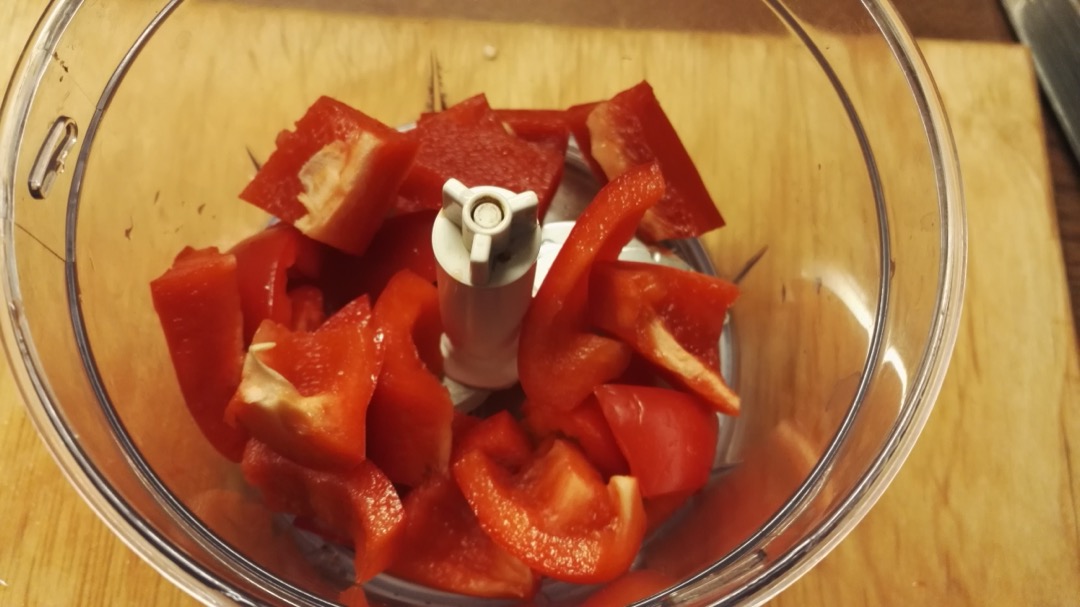
A food processor is a motor-driven bowl fitted with a wide S-shaped blade that cuts food into smaller pieces, plus removable discs that slice and shred, and it is built to work on dry or barely wet food rather than in liquid. That single sentence answers most of what people want to know about what a food processor is used for. The rest is knowing which jobs sit inside that description and which ones only look like they do.
I ran a restaurant group’s test kitchen for four years, and the processor was the busiest plug on the prep bench. It earned that spot on a narrow set of tasks: reducing solids to a chosen size, quickly, in volume. Nobody on that line asked it to make anything perfectly smooth, nobody asked it to whip anything, and nobody handed it a hot pot. Home guides present it as a thirty-use miracle machine. It does about eight things exceptionally well and a handful badly enough to cost you a blade or a burn.
The One Number That Explains the Whole Machine
Blade speed. A food processor’s S-blade turns in the low thousands of RPM. A blender’s blade turns in the tens of thousands. That order-of-magnitude gap explains every behaviour of the machine, and almost nobody writing about food processors leads with it.
At that speed the blade shears. It strikes a piece of food, cuts it, and moves on, and the piece falls back for another pass a fraction of a second later. It never builds the sustained, high-frequency pulverizing that reduces plant fiber to a suspension your tongue reads as smooth. The processor gives you control over size, which is what chopping means, and never the fully homogenous texture a blender produces whether you want it or not.
The same number explains the limits. It cannot aerate, because shearing at moderate speed does not fold air into a protein network. It struggles with ice, because breaking ice needs repeated fast impacts in a vessel built to contain them. And it will never give a restaurant-smooth purée on its own, however long you run it.
The Six Techniques a Food Processor Is Actually For
1. Chopping and Mincing
The core job. Onions, carrots, and celery for a mirepoix, garlic by the head rather than the clove, soft herbs, nuts to a coarse or fine chop, stale bread into crumbs. What takes ten minutes at a board takes fifteen seconds in the bowl.
It also minces raw meat. Grinding your own beef for burgers or pork for sausage gives control over the cut and the fat ratio no supermarket pack offers. A pedantic point that matters: a processor minces by shearing rather than grinding through a plate, so an overrun batch turns slightly pasty instead of staying in distinct strands. Pulse it and stop early.
Handle the meat properly. Chill the meat, the bowl, and the blade, work in small batches, and cook or refrigerate promptly. A blade creates far more cut surface area than a whole muscle has, and cut surface is where bacteria multiply, so home-ground meat has a much shorter safe window than the steak it came from. Two of the biggest recipe sites recommend grinding your own and mention none of this.
2. Purées, Dips, and Pastes
Hummus, pesto, salsa, guacamole, romesco, baba ganoush, tapenade. The machine wins these for the same reason it will not make a smoothie: it stops short of liquefying. Pesto with visible flecks of basil and pine nut is a chopped texture, and so is chunky salsa. Retained texture is the feature.
Order carries the technique. Solids first, pulsed to size. Liquids last, in a short run to bring the sauce together. Cheese and oil into pesto at the very end, three or four pulses, so the leaves take as little blade contact as possible.
3. Emulsions Through the Feed Tube
Mayonnaise, aioli, thick vinaigrettes. Most full-size machines have a small hole in the pusher or a drip insert in the feed tube that meters oil in as a thin stream while the motor runs. That slow addition is what an emulsion needs, because oil droplets have to be broken small and coated with egg or mustard as they arrive rather than dumped in as a slug. Run the motor continuously here rather than pulsing. It is also the job most likely to fail in an oversized bowl, for the reason covered further down.
4. Slicing and Shredding With the Discs
The discs are a separate mechanism from the S-blade and half the value of the machine. A disc mounts flat near the top of the bowl and spins horizontally under the feed tube, so food pressed down by the pusher crosses a fixed cutting edge at a fixed height. That is a mandoline running at motor speed.
Slicing discs handle potatoes for gratin, cucumbers for pickles, onions for a tart, apples for a pie, pepperoni for a pizza. Shredding discs turn cabbage into slaw, carrots into a salad base, potatoes into hash browns, and a block of cheese into shreds in about ten seconds. Pre-shredded cheese carries anti-caking starch that melts badly, so shredding your own genuinely improves a lasagne. Consistency is the real gain: a stir-fry or a gratin lives or dies on whether every piece is the same thickness, and no skill at the stove fixes uneven prep.
5. Dough and Pastry
Two jobs, two attachments, two reasons.
Pie crust and biscuits are the machine’s most underappreciated strength. Cutting cold butter into flour means reducing the butter to small distinct pieces coated in flour without warming or smearing it, because those pieces melt in the oven and leave the steam pockets that make pastry flaky. Hands warm the butter, and a pastry blender is slow enough that it softens. The processor does it in about eight pulses with no heat transfer at all. If you bake pastry, this alone justifies owning one.
Bread and pizza dough use the blunt plastic dough blade, and the bluntness is the point. Kneading develops gluten, a network of protein strands stretched and folded to build strength. The metal S-blade’s sharp edges cut those strands as fast as they form, so dough kneaded with it comes out slack and weak. The dough blade has no cutting edge. It pushes and folds the mass around the bowl, close to what your hands do, and builds structure instead of destroying it.
6. Grinding
Nuts to meal or flour, oats to flour, hard cheese to a powder, dry spices in a small bowl, cauliflower to rice, and nuts all the way to butter. Nut butter is the flagship. Whole nuts break to coarse pieces, then to a dry meal, and only after several minutes do the oils release and the mass turn fluid. That dry meal phase is where a blender gives up, because ground nuts pack above the blade with no liquid left to circulate them. In a wide processor bowl the meal never leaves the swept path, so it grinds straight through to a pourable butter.
| Job | Attachment | Technique |
|---|---|---|
| Onion, mirepoix, herbs, garlic | S-blade | Pulse, 1 second per pulse, check between |
| Raw meat | S-blade | Chilled, small batches, pulse, stop early |
| Pesto, salsa, hummus | S-blade | Solids pulsed first, oil and cheese last |
| Mayonnaise, aioli | S-blade | Continuous run, oil through the feed tube |
| Potatoes, cucumbers, pepperoni | Slicing disc | Continuous run, steady pressure on the pusher |
| Cheese, cabbage, carrots | Shredding disc | Continuous run, pack the tube snugly |
| Pie crust, biscuits | S-blade | Frozen butter, 6 to 10 pulses, stop at pea size |
| Bread and pizza dough | Dough blade | Continuous run, 45 to 90 seconds |
| Nut butter, nut flour | S-blade | Continuous run, several minutes, scrape twice |
Pulse, Do Not Run
The highest-value technique on this page, and none of the big sites explain it.
Pulse means short bursts of one to two seconds with a full stop between them. Every time the blade stops, the load drops back and resettles in a new orientation, so the next burst hits different faces of different pieces. That is what produces an even dice. Continuous running does the opposite: centrifugal force climbs the food up the bowl wall and holds it out of the blade’s reach, while whatever stayed at the bottom keeps getting cut. The result is a bowl holding both purée and untouched chunks from the same batch, which is what makes people conclude the machine “turns everything to mush.”
Onions punish this most. Held under a continuous run they rupture, release their water, and finish as a wet slurry that steams in the pan instead of browning. Quartered and given five or six one-second pulses, they come out as a clean dice with the cell walls mostly intact.
Fill level interacts with this. A bowl loaded past halfway cannot tumble, so the top of the pile never reaches the blade however many pulses you give it.
The exceptions are the jobs needing sustained action: nut butter, dough, emulsions, and disc work.
The Bowl Holds Less Than the Box Says
This is the most useful practical fact about food processors and I have never seen it stated on a manufacturer’s page. The number on the box, the “14-cup” or “9-cup” on the front, is a rated dry volume: what the bowl would hold filled to the brim with dry ingredients and no blade in the way. Look inside your own bowl and you will find a printed MAX line sitting noticeably below that number, because the blade needs room to move food and a mounded load stops tumbling.
Liquids cap lower still, and there is usually a separate lower liquid line. The reason is the lid, a splash seal rather than a liquid seal. Spin liquid in a shallow bowl and centrifugal force pushes it up the wall to that seal, where it finds the join and runs down the outside of the base.
Cook to the printed MAX line on your own bowl, never to the number on the box, and use the lower line for anything pourable.
The Orphaned Food Problem, and Why a Mini Bowl Exists
Bigger is not automatically better, and the reason is mechanical rather than about counter space.
The S-blade sweeps a specific path near the floor of the bowl. A large volume forms a pile deep enough that food keeps falling back into that path. A very small volume, one garlic clove or two tablespoons of dressing, does not form a pile at all. Centrifugal force flings the little that is there to the outer wall, below the blade’s effective sweep, where it spins untouched. You open the lid after twenty seconds and find the clove exactly where you left it.
That is the real argument for a three to four cup mini bowl, and it is mechanical rather than about convenience: a small bowl keeps a small volume inside the blade’s reach. A mini handles a single shallot, a handful of herbs, a small batch of aioli, a spice blend, and a fourteen-cup bowl cannot do any of those. Anyone cooking for two is better served by a mini used daily than by a large bowl alone. Some full-size units ship with a nesting small bowl, which is the neatest answer, and our roundup of the best food processors flags which models include one.
Four Things It Does Badly, and Why
Aeration
Whipped cream, meringue, egg whites to stiff peaks. A whisk drags thin wires through a liquid and folds air bubbles into a protein or fat network that holds them. A processor blade shears through the load in a flat plane and folds nothing. Some models ship a plastic egg-whip attachment, most do not, and even with one the volume and stability fall well short of a stand mixer. Cream will thicken in a processor bowl and it will not hold.
Crushing Ice
The machine can break ice and should not be asked to. The S-blade is thin and ground for cutting soft matter, so hammering it against ice chips and rolls the edge, and the damage shows up later as a blade that tears herbs instead of slicing them. It also stresses the drive hub, the part that eventually strips and ends the machine’s life. Crushed ice is blender work, and our quiet blender guide covers the models that do it without waking the house, since ice is the loudest thing any kitchen machine does.
Hot Liquid
This is a genuine safety flag and I will state it as plainly as I can. Do not process hot food in a food processor bowl.
Hot liquid gives off steam. In a tall blender jar the steam has somewhere to go, because the lid has a removable centre cap and the standard instruction is to take it out, cover the hole with a folded towel, and start slow. A food processor lid is a wide splash seal on a twist lock with a feed tube as a filling port, and it is not built to vent pressure. Steam builds under it and hot contents can force past the seal onto your hands and forearms. The burn is not minor.
Let anything hot cool first, work in smaller batches, never fill past the line with anything warm, and if you purée soup often use an immersion blender in the pot. For a countertop machine that handles heat, a heavy glass-jar blender is the better vessel, since the vented lid is designed for it.
Restaurant-Smooth Purées
A processor gets a bisque most of the way there and does not finish the job. The blade shears rather than pulverizes, so fibrous material comes through as fine grit instead of dissolving. In a professional kitchen the machine is step one, and the purée then goes through a chinois or a tamis, pushed with a ladle. What stays in the sieve is the difference between good and velvety. If a restaurant soup has a texture you cannot reproduce at home, straining is usually the missing step.
Food Processor Versus Blender, Settled Correctly
There is a factual disagreement in the search results on this and it is worth resolving, because one popular claim is simply wrong.
One widely-read food magazine states that a food processor produces silkier hummus, pesto, and guacamole than a blender. That gets the physics backwards. Harold McGee’s On Food and Cooking describes processors as slicing food rather than crushing it, and a blender as the more effective tool for a smooth purée. Blade speed says the same: tens of thousands of RPM in a vortex will always beat low thousands in a shallow bowl at reducing fiber.
The rule has two halves. A blender wins liquid-forward purées, meaning soup, smoothies, thin sauces, and stage-one baby food, because the vortex recirculates the same material through the blade until the fiber is gone. A food processor wins textured preparations, meaning pesto, chunky salsa, tapenade, and a hummus with some body, precisely because it does not fully liquefy. Its advantage on those dishes is the texture it leaves behind, and calling that “silkier” describes the wrong machine. The full job-by-job breakdown is in our guide to a food processor vs a blender.
Four Misconceptions Worth Correcting
“They are basically interchangeable.” The dividing line is clean. If the finished item pours, use a blender. If it still has distinct pieces you could point at, use a processor. Most blenders will rough-chop dry ingredients in small pulsed batches if you scrape between pulses, and our guide on how to use a Ninja blender covers that workaround, but no blender slices, shreds, or kneads.
“A bigger bowl is always better.” A large bowl cannot process small volumes at all, for the orphaned-food reason above. Buy for the batch you cook most nights and add a mini.
“You can whip cream or egg whites in it.” Technically possible with a whip attachment, poor without one, and inferior to a hand whisk either way.
“Fourteen cups means fourteen cups.” It means fourteen cups of dry ingredients in an empty bowl. Your working capacity is the printed MAX line, and your liquid capacity is lower again.
If You Only Have Room for One Machine
The honest question is which failure you would rather live with. Processor only, and you never get a properly smooth smoothie or purée soup. Blender only, and you hand-slice, hand-shred, and hand-cut pastry forever. That trade is why combination machines exist and why they deserve more than a sneer. A good combo pairs a real processor bowl and a proper blender jar on one motor base, so you get both mechanisms in one footprint. The usual compromise is a motor tuned closer to one job than the other, which our guide to the best blender and food processor combinations is mostly about sorting out. If you make protein shakes daily, buy for that first, because a dedicated machine built for ice and frozen fruit beats a combo at it, and our protein shake blender picks exist for that buyer.
One last habit, whichever machine you end up with. S-blades and slicing discs are sharper than most kitchen knives and they vanish in soapy water. Wash them separately and immediately, held by the plastic hub, and never reach blind into a full sink. Every serious injury I saw in four years of running a test kitchen was a blade left at the bottom of a bowl of suds, and it was always somebody who knew better.
Frequently Asked Questions
When would you use a food processor instead of something else?
What is the difference between a blender and a food processor?
Do I really need a food processor, or is it worth it?
What are the disadvantages of a food processor?
What can I use if I do not have a food processor?
Related Articles
About the Reviewer

Nora Whitfield, CIA Culinary Arts, ServSafe Certified
A.O.S. Culinary Arts, The Culinary Institute of America
Nora Whitfield trained at the Culinary Institute of America and spent twelve years in professional kitchens, the last four running the test kitchen for a regional restaurant group where her job was to decide which equipment could survive a dinner service and which could not. She has seasoned more carbon-steel woks than she can count, boiled water in every kettle worth owning, and broken enough cheap gear to know exactly where manufacturers cut corners. She reviews kitchen equipment the way she specified it professionally: cook on it, clean it, and see what it looks like after a month.