How to Use a Rice Cooker
What the machine is actually doing, what every button means, how long a real cycle takes, and the three parts nobody cleans. A chef's operating guide.
Updated
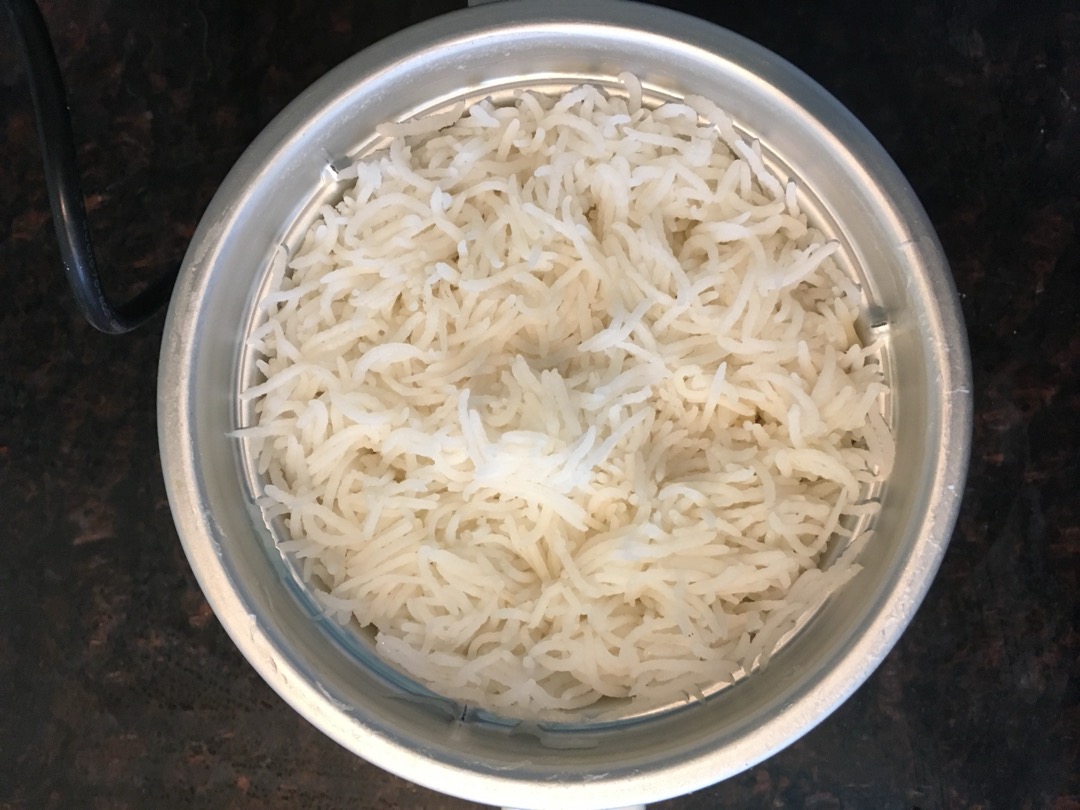
A rice cooker is the least demanding appliance in a home kitchen and still the one I saw misused most often, including by cooks who could hold a hollandaise together under pressure. The reason is that it hides its work. There is one button, or on a nicer model a menu of them, and the machine gives you no feedback at all between pressing it and the click twenty minutes later. When the rice comes out wrong there is nothing to observe and nothing to correct mid-cycle, so people change the water and try again, and the water was usually not the problem.
I ran a restaurant group’s test kitchen for four years, which meant standing over commercial cookers that ran six or eight cycles a day, every day, for years. That volume surfaces the failure modes fast. Almost all of them come down to not knowing what the machine is doing while the lid is shut, which button does what, or which three parts need washing.
This guide is about operating the appliance. The water math is a separate and genuinely large subject, and we have the full chart by grain and by vessel in our rice to water ratio guide. Everything below assumes you have the numbers and want the machine to actually deliver them.
What the Machine Is Doing Behind That Lid
There are three different mechanisms sold under the same name, and they behave differently enough that advice written for one is often wrong for another.
The one-switch cooker. The classic design, and still what most inexpensive cookers are. Under the inner pot sits a spring-loaded switch held down against a small magnet made of a ferromagnetic alloy. Every such alloy has a Curie point, a temperature at which it abruptly stops being magnetic. This one is chosen to sit just above the boiling point of water, somewhere around 217 to 221F depending on the material.
That single fact is the entire brain of the machine. While there is free water in the pot, the contents cannot exceed 212F, because boiling water pins the temperature there no matter how much energy you pour in. The magnet stays magnetic and the switch stays down. The moment the last free water is absorbed or boiled off, there is nothing holding the temperature down, the pot spikes past 212F within seconds, the alloy crosses its Curie point, the magnet lets go, and the spring pops the switch to warm. The cooker never knows what rice is, how much is in there, or how long it has been running. It knows only that the water is gone.
Two consequences follow, and both matter. A one-switch cooker cannot be fooled or improved by timing, and it cannot recover from anything you do to the pot mid-cycle. It also means these cookers are essentially indifferent to batch size, since a larger batch takes only slightly longer to run its water off.
The fuzzy-logic cooker. A microprocessor, a real temperature sensor, and a stored cooking curve for each grain. Instead of one blunt event it runs stages: a warm soak that hydrates the grain before boiling ever starts, a boil, a steam stage after the free water is gone where residual heat finishes the center, and a rest. It reads the temperature against the expected curve, and when the pot deviates it adjusts, which is how these models cope with a lid opened at the wrong moment, an odd batch size, or moderate altitude. The soak and steam stages are the reason a fuzzy cooker takes twice as long as a cheap one and produces noticeably better rice.
Induction heating. The premium tier, mostly Japanese and Korean. Rather than a hot plate under the base, the inner pot itself is the heating element, energized by a magnetic field across its whole surface. Heat comes from the sidewalls as well as the bottom, so there is no hot spot at the base, and the machine can change power instantly rather than waiting for a plate to cool. It matters most for brown rice and for large batches. Which mechanism a given model uses is the single biggest driver of both price and result, and we break the tiers down by machine in our best rice cookers roundup.
Reading the Buttons
Menu labels vary by brand, but they map to a small number of real behaviors.
| Setting | What it actually changes |
|---|---|
| White / Regular | The default curve. Soak, boil, steam, rest. |
| Quick / Rapid | Cuts the soak and shortens the steam. Saves 15 to 20 minutes, costs some evenness in the grain. |
| Brown / Whole grain | A much longer warm soak so water can get past the bran layer, then a longer boil. |
| Sushi | Slightly less water absorbed and a firmer finish, so the grain holds up to seasoning and handling. |
| Porridge / Congee | Holds a long, low simmer well below a hard boil so the grain breaks down rather than staying intact. |
| Steam | Runs the element for a set time with no done-ness logic at all. A timer, not a cooking program. |
| GABA / Sprouted | Holds the grain at roughly 100F for hours to germinate it before cooking. Two to four hours total. |
| Keep Warm | Holds around 140 to 165F indefinitely. Not a cooking stage. |
| Extended Keep Warm | A lower hold temperature intended for long waits. Slower to dry the rice out. |
The one that surprises people is Steam. It has no feedback loop, so it will happily run past done. Treat it as a timer you are responsible for.
A Full Cycle, Step by Step
Measure the rice, then drain it properly. Measure dry, before rinsing. If your cooker has fill lines etched inside the inner pot, they are calibrated to the plastic cup that shipped with it, which holds 180 ml rather than the roughly 240 ml of a US measuring cup. Mixing the two systems is the most common way to get mush, and it is covered in detail in the ratio guide. Pick one system and stay inside it.
Rinse until the water runs nearly clear. Three or four changes of cold water, swirling with your hand and pouring off. Then drain it well. This is where a fine mesh insert earns its place over a wide-holed pasta model, and our colander roundup separates the two, because rice slips straight through anything sized for spaghetti. Rice that goes into the pot still dripping is carrying water you did not measure.
Level the rice before adding water. Shake the pot flat. A sloped bed of rice means one side is under more water than the other, and since the machine reads a single temperature it cannot tell that half the pot is done and half is not.
Add the water, then seat the pot properly. Wipe the outside and the bottom of the inner pot dry before it goes in. A wet exterior sitting on the heating plate causes a loud pop and, over time, corrosion on the plate. Turn the pot a few degrees to make sure it is sitting flush rather than perched on a grain of rice, which is a genuinely common cause of an early shutoff.
Choose the setting and start it. Match the setting to the grain rather than defaulting to White for everything. Brown rice on the white setting comes out chalky in the center every time, because the bran never got its soak.
Leave the lid alone. No stirring, no peeking. On a one-switch model this is not a preference, it is the whole design. See the FAQ below for what actually happens when you open it.
Let it rest after the switch, then fluff. Ten minutes on warm with the lid closed. The grains at the top are still finishing on residual steam, and the whole pot is redistributing moisture from the wetter bottom to the drier top. Fluffing immediately at the click gives you a wetter bottom layer and a drier top layer permanently. When you do fluff, use the paddle that came with the machine or a wooden spatula, cut down through the rice and lift rather than stirring in circles, and never use metal on a coated inner pot.
The Failures, and What Each One Means
Scorched brown layer on the bottom. Not enough water for the batch, or an unrinsed batch whose dissolved starch settled and caramelized on the plate. On a one-switch cooker it can also mean the pot was not seated flat. Worth saying that in Korean cooking this layer is nurungji and is deliberately produced, so if you like it, some cookers have a setting for it.
Firm or chalky center. The grain never got enough time at temperature. Brown or parboiled rice cooked on the white setting is the usual cause. At elevation it is the ambient boiling point, since water boils about two degrees cooler per thousand feet and the grain hydrates more slowly at that lower temperature. A fuzzy-logic model will extend its cycle to compensate; a one-switch model will not, so add a little extra water above three thousand feet.
Gluey, clumped rice. Under-rinsed, over-watered, or fluffed too late so the bottom third steamed itself into paste. Work through those in that order.
The cooker clicks off after only a few minutes. The pot is not sitting flat on the plate, there is debris on the heating plate, or the pot went in with a wet bottom. Check all three before assuming the machine is broken.
Water spitting from around the lid. A clogged steam vent, which brings us to the part almost nobody does.
Cleaning: the Three Parts Nobody Washes
Everyone washes the inner pot. Almost nobody touches the other three, and they are where cookers actually fail.
The inner lid. On most fuzzy-logic and induction models the inner lid unclips entirely. Starch condensate collects on it every cycle, dries into a film, and eventually starts smelling. It comes out in seconds and washes in the sink.
The steam vent cap. Usually a small removable plastic assembly on the top of the lid. Starchy steam passes through it every single cycle and dries into a hard varnish that narrows the opening. A restricted vent is the leading cause of boil-over on a cooker that never used to boil over. Pull it apart and wash it monthly if you cook rice often.
The heating plate and the temperature sensor. With the pot out, wipe the plate and the small spring-loaded sensor button in the center with a barely damp cloth. Grains of rice welded onto either one prevent the pot from sitting flush, which is the mechanical cause of an early shutoff.
For the inner pot itself, hand wash it. Most non-stick inner pots are not dishwasher safe regardless of what the pot looks like it could survive, and detergent plus a heated dry cycle shortens the coating’s life considerably. No metal utensils, no abrasive pads.
If you have hard water you will eventually see chalky white deposits on the plate and inside the pot. It is the same mineral scale that furs up the inside of a stovetop kettle, and it insulates the plate from the pot, which slowly makes cycles run long. Most manufacturers specify citric acid rather than vinegar for descaling, because vinegar is harsher on aluminum and on coatings. Dissolve a spoonful in water to the lower fill line, run a normal cycle, then rinse thoroughly and run a plain water cycle. Check your manual first, since a few brands prohibit it outright.
What Else the Pot Will Cook
The machine holds a wet environment at a fixed temperature and shuts off when the liquid is gone, which describes a great many dishes that are not rice. Quinoa, farro, and pearl barley all work on the white setting with their own liquid ratios. Steel-cut oats work well on the porridge setting, which is really just a long low simmer. The steam basket that ships with many models does vegetables, dumplings, and fish fillets over the water while grain cooks underneath, and it is the most underused accessory in the box.
Where it will not help you is anything that needs browning, since the pot never exceeds boiling while there is liquid in it. That is a different machine and a different technique. Day-old rice out of the cooker, cold and dried out overnight in the fridge, is the correct starting material for fried rice, but the frying itself needs a hot wok or, if your stove cannot deliver the heat, a dedicated electric wok with the element wrapped around the bowl. Rice straight from a warm cooker is too moist and will steam rather than fry.
For short-grain rice destined for sushi, the cooker handles the cooking and the seasoning happens after, in a separate bowl, with a specific technique and timing that we cover in how to make sushi rice.
The Short Version
Learn which of the three mechanisms you own, because it determines almost everything else. Measure with one system and do not mix the cooker’s 180 ml cup with a US cup. Rinse, drain, level. Match the setting to the grain. Leave the lid shut. Rest ten minutes before fluffing. Wash the inner lid, the vent cap, and the plate, not just the pot. Rice from a cooker goes wrong for a small number of reasons, and after four years of watching it go wrong professionally, none of them were mysterious once the lid came off.
Frequently Asked Questions
How long does a rice cooker take?
Is it safe to leave rice in a rice cooker on keep warm overnight?
Why does my rice cooker boil over?
Can you open a rice cooker while it is cooking?
Do you have to rinse rice before putting it in a rice cooker?
Related Articles
Rice to Water Ratio: The Chart for Every Type of Rice (Stovetop, Rice Cooker, Instant Pot)
small-appliances
How to Make Sushi Rice: Ratios, the Sushi-zu, and the Four Minutes That Matter
small-appliances
The 9 Best Rice Cookers of 2026, Tested by a Chef
small-appliances
How to Use an Aroma Rice Cooker
small-appliances
How to Cook Brown Rice in a Rice Cooker
small-appliances
About the Reviewer

Nora Whitfield, CIA Culinary Arts, ServSafe Certified
A.O.S. Culinary Arts, The Culinary Institute of America
Nora Whitfield trained at the Culinary Institute of America and spent twelve years in professional kitchens, the last four running the test kitchen for a regional restaurant group where her job was to decide which equipment could survive a dinner service and which could not. She has seasoned more carbon-steel woks than she can count, boiled water in every kettle worth owning, and broken enough cheap gear to know exactly where manufacturers cut corners. She reviews kitchen equipment the way she specified it professionally: cook on it, clean it, and see what it looks like after a month.