Household Uses of Vinegar
A chef's guide to cleaning with white vinegar: what acid dissolves, what it cannot touch, the surfaces it ruins, and the mixtures you should never make.
Updated
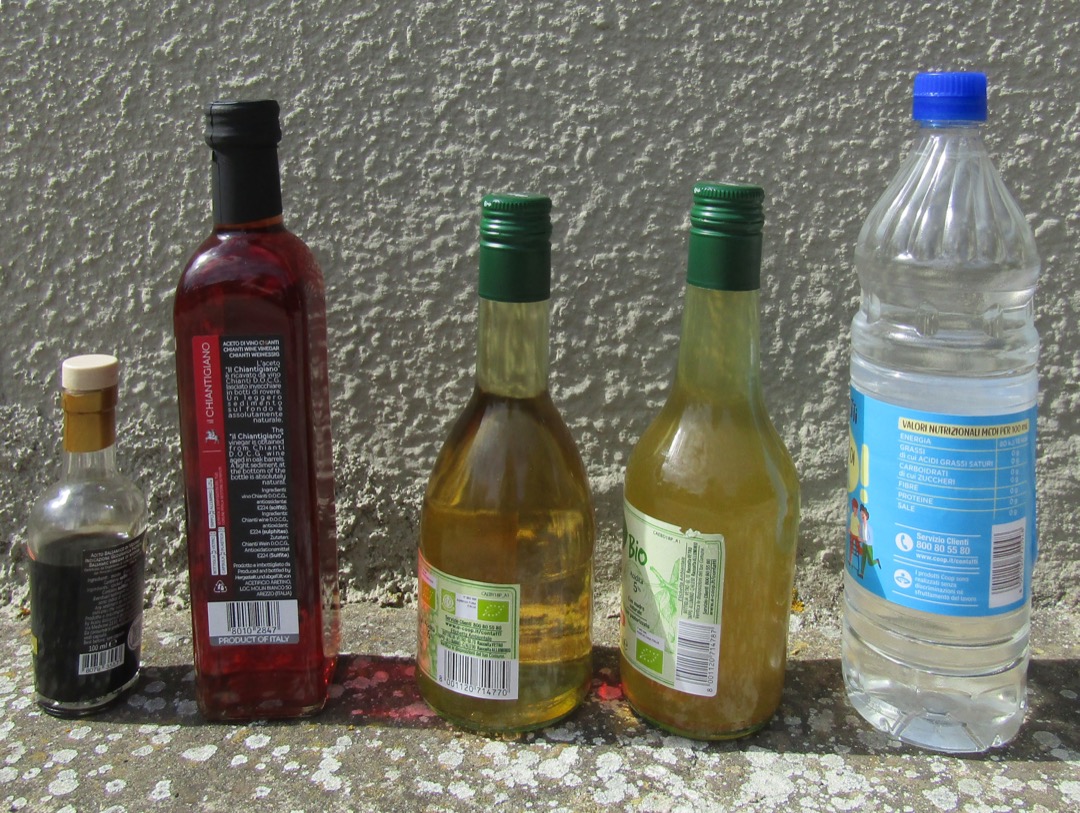
Every restaurant kitchen I have worked in kept a gallon jug of white vinegar somewhere near the dish station, and it was used for about a dozen jobs that had nothing to do with salad dressing. It cleared the crust off the kettles, put the shine back on the water glasses, took the smell out of the fish station, and lifted the chalky ring from every pot that held water for a long shift. It was also, on a regular basis, used for jobs it could not do, by people who believed it was a disinfectant, a degreaser, or a drain cleaner. It is none of those.
I ran a restaurant group’s test kitchen for four years, in a building with genuinely hard water, and I have spent a lot of time watching what vinegar actually does to a surface and what it only appears to do. This guide is organised around that difference. It starts with the one-minute chemistry that predicts nearly every use, works through the kitchen jobs where vinegar is the right tool, covers the rest of the house more briefly, and then gives proper space to the surfaces it damages and the mixtures you should never make.
What Vinegar Actually Does
Ordinary white distilled vinegar is water with about 5 percent acetic acid, at a pH of roughly 2.4. That single fact predicts almost every use on this page. Vinegar is good at any job where the problem is alkaline and bad at any job where it is not.
The alkaline problems in a house are mostly minerals. Limescale is calcium carbonate. The grey film on shower glass is soap scum, which is soap bound to the calcium and magnesium in hard water. The cloudy bloom on a drinking glass is the same minerals dried in place. Acid converts all of these into soluble salts that rinse away. That is the whole trick, and it is a very good one.
Odors are the second category. The smell of fish comes largely from trimethylamine, which is a base. Acid converts it to a salt that does not evaporate, which is why lemon has always been served with fish and why a vinegar wipe takes the smell off a cutting board or your hands. Ammonia-type smells respond the same way.
Then there is everything vinegar does poorly. Grease and oil are not alkaline and do not dissolve in a weak acid. They need a surfactant, which is what dish soap is. Burnt-on food needs time, heat and abrasion. And germs need a registered sanitizer at a tested concentration, which vinegar is not.
| Job | Does vinegar work? | Why |
|---|---|---|
| Limescale on kettles, faucets, shower heads | Yes, very well | Acid dissolves calcium carbonate |
| Soap scum on glass and tile | Yes | Acid breaks the calcium soap |
| Cloudy glassware from hard water | Yes | Same mineral film |
| Fish, onion and garlic smells | Yes | Acid locks basic odor compounds into salts |
| Rainbow heat tint on stainless steel | Usually | Removes the thin discoloured oxide layer |
| Light rust | Slowly | Acid dissolves iron oxide, and also attacks the metal |
| Grease and cooking oil | Poorly | Needs soap, not acid |
| Hair and food clogs in drains | No | Nothing for the acid to react with |
| Disinfecting raw-meat surfaces | Not reliably | Not a registered disinfectant |
Keep that table in mind and you can reason out any use you read about elsewhere, including the ones on this page.
In the Kitchen: Where Vinegar Earns Its Place
Descaling kettles and anything that boils water
This is vinegar’s best job and the one most people do too late. Hard water deposits calcium carbonate on the hottest surface it touches, which in a kettle is the element. A 1 to 3 mix of white vinegar and water, brought to the boil, left to stand, then rinsed out with two or three clean boils, clears most of it. Our full guide to descaling a kettle covers the ratios, the soak times, and why citric acid is the better tool when you have it.
The reason to care goes beyond looks. Scale between the element and the sensor throws off the readout on a temperature control kettle, so the setting you chose for green tea stops being accurate. On a glass tea kettle the scale is the first thing anyone sees, and a monthly vinegar cycle is what keeps the glass looking like glass. If you would rather have nothing in the water path that acid could degrade, the kettles in our no-plastic stainless steel kettle roundup are all-steel inside and take a vinegar descale without complaint.
The same method works on anything else that heats water: a coffee maker reservoir, an espresso machine (check the manual first, since several brands want their own descaler), and the steam reservoir of a countertop steam oven.
Clearing cloudy glass
Glassware that comes out of the dishwasher with a white haze has one of two problems, and vinegar tells you which. Soak a cloudy glass in white vinegar for five minutes. If it comes out clear, the haze was hard water minerals and vinegar is your fix. If it stays cloudy, the glass is etched, which is permanent surface damage from soft water and too much detergent, and nothing will bring it back.
Blender jars are the case I see most. A blender with a glass jar is the better choice for anyone avoiding plastic, but glass shows every mineral spot that plastic would hide. Fill the jar halfway with warm water, add a cup of white vinegar, run it for thirty seconds, let it stand for fifteen minutes, then wash as normal. Do it once a month in a hard-water house and the jar stays clear.
I would soak glassware rather than pour vinegar into the dishwasher’s rinse-aid compartment. Some dishwasher makers advise against regular vinegar use because of what repeated acid exposure can do to rubber seals and gaskets, and a commercial rinse aid does that job better anyway. If you are replacing the machine anyway, a model with a built-in water softener deals with the film at the source, and several on our panel-ready dishwasher shortlist have one. If you are buying on Amazon instead, our guide to the best dishwashers covers the models that are actually in stock there.
Lifting the white ring from a slow cooker crock
Anyone who owns a slow cooker knows the chalky line that forms at the water level of a stoneware or ceramic insert. It is mineral deposit, and scrubbing it with an abrasive is the wrong move on a glazed surface. Fill the crock with water to just above the line, add a cup of white vinegar, cover, and run it on low for two or three hours. Let it cool, then wash. The ring wipes away with a soft sponge.
That approach matters more on the inserts reviewed in our non-toxic slow cooker guide, because a large part of choosing a ceramic or stainless crock is avoiding coatings, and the last thing you want is to start scouring the glaze you chose it for.
Removing heat tint from stainless steel
Stainless pans and pots that have been run hot develop a blue, gold or rainbow sheen. That is heat tint, a slight thickening of the chromium oxide layer that makes stainless stainless. It is harmless and does not affect cooking, but it bothers people. A wipe with white vinegar on a soft cloth, followed by a rinse and a dry, usually clears it. For stubborn tint, an oxalic acid cleanser such as Bar Keepers Friend does the job faster.
The same wipe handles the white mineral spots that form when water dries on a stainless rice cooker pot. If you chose a rice cooker with a stainless steel inner pot precisely to avoid a nonstick coating, vinegar is the gentle way to keep it looking new. Check the manual first on other models, because rice cooker makers genuinely disagree here: Cuckoo suggests vinegar for odors, while Zojirushi lists it among the things to avoid. Our guide to cleaning a rice cooker sets out exactly where each brand stands.
Juicer screens and small parts
The fine mesh screen on a juicer clogs in two ways: fibrous pulp, which a brush handles, and a stiff mineral film from hard water and produce acids, which a brush does not. Soak the screen and the parts that touch juice in a 1 to 1 vinegar and water solution for fifteen to twenty minutes, then scrub with the brush the juicer came with and rinse. On the stainless steel juicers we recommend, the steel parts tolerate this soak without trouble. On models with plastic augers or housings, keep the soak short and rinse thoroughly.
Deodorizing boards, hands and the microwave
For fish, onion or garlic smell on a cutting board, wipe it with undiluted white vinegar, let it sit a few minutes, then wash with hot soapy water. On wooden boards, keep this occasional and re-oil the board afterwards, since acid and repeated wetting dry out the wood. For hands, a splash of vinegar rubbed in before washing removes fish smell better than soap alone.
The microwave trick is real but slightly oversold. A bowl of water with a few tablespoons of vinegar, heated for three to five minutes until the window steams, loosens dried spatter so it wipes off easily. Most of that work is done by the steam. The vinegar helps with lingering smells, such as burnt popcorn. Leave the door closed for a few minutes afterwards and handle the bowl carefully, because it will be very hot.
Rinsing produce
The FDA’s guidance is to rinse produce under plain running water and skip soap and commercial produce washes. A brief soak in diluted vinegar, about 1 part vinegar to 3 parts water, followed by a rinse, does reduce some bacteria on the surface in published studies, and some cooks like it for berries. It is optional, not a safety step, and it can leave delicate fruit tasting faintly sour if you skip the final rinse. Whatever you do, finish under running water in a good colander and let the produce drain fully before storing it, since trapped moisture is what spoils berries fastest.
Cast iron rust: the one exception
Vinegar and seasoned cast iron do not mix, with one deliberate exception. A pan or wok with real rust, the kind that flakes or covers the cooking surface, can go into a 50/50 vinegar and water soak, checked every fifteen minutes and pulled out the moment the rust lifts. Leave it too long and the acid starts eating the iron itself. The pan then needs a full re-seasoning. Our guides to cleaning a cast iron skillet and seasoning a cast iron skillet walk through both halves, and the same rules apply to a cast iron wok.
Cooking With Vinegar
The pantry uses are as old as the cleaning ones, and several of them rest on the same chemistry.
- Buttermilk substitute. One tablespoon of white vinegar or lemon juice in a measuring cup, topped up to one cup with milk, left for five to ten minutes. The acid curdles the milk slightly and gives baking soda something to react with in pancakes and quick breads.
- Poached eggs. A small splash in the poaching water helps the whites set faster, so they wrap the yolk rather than feathering through the pan. Fresh eggs matter more than the vinegar, but the vinegar helps.
- Sushi rice. Seasoned rice vinegar is what gives sushi rice its flavour and its gloss, and it also lowers the rice’s pH. Our sushi rice guide gives the ratios and explains the food-safety side.
- Quick pickles and canning. For anything you plan to store on a shelf, use vinegar labelled at 5 percent acidity and follow a tested recipe exactly. The acid level is what makes a canned pickle safe, so do not dilute it beyond what the recipe says, and do not swap in homemade vinegar of unknown strength.
- Finishing. A few drops of a good vinegar at the end of cooking brighten a braise, a pot of beans or a lentil soup the way salt sharpens flavour. Sherry vinegar is my default.
Drains, Sinks and Faucets
The page that sent many readers here describes vinegar and hot water as a household measure for dissolving debris in kitchen plumbing, and that is worth a precise answer, because drains are where vinegar advice goes most wrong.
Vinegar will dissolve the mineral crust and soap scum that build up on a sink stopper, around the drain flange, inside a faucet aerator and in the first stretch of an old pipe. It will also neutralize the sour smell that rises from a drain trap. Pouring a cup of white vinegar followed by a kettle’s worth of hot tap water down a slow, smelly kitchen drain once a month is a reasonable maintenance habit for those two problems.
What it will not do is clear a clog. Kitchen clogs are mostly congealed fat, food scraps and coffee grounds, and bathroom clogs are hair bound up in soap. Acid does almost nothing to either. The baking soda and vinegar volcano does nothing extra either: the two neutralize each other into salty water and a satisfying fizz.
For an actual slow drain, work up this ladder:
- Hot tap water with a good squeeze of dish soap, which softens and emulsifies grease.
- A cup plunger, with the overflow or the second sink basin blocked so the pressure goes down the pipe.
- A plastic barbed drain snake for hair, or removing and emptying the P-trap under the sink.
- A plumber, if all of that fails, because the blockage is beyond the trap.
Two cautions. Many plumbers advise against pouring a full kettle of boiling water into plastic drain lines, because repeated boiling water can stress PVC joints, so hot tap water is the safer default. And never pour vinegar into a drain where a chemical drain cleaner is still sitting. Mixing an acid with a strong alkaline cleaner can produce heat and spattering, and with a chlorine-based product it can release chlorine gas.
Faucet aerators are the easy win. Unscrew the aerator, soak it in white vinegar for an hour, brush it out, and refit it. Low pressure at the kitchen tap is very often nothing more than scale in the aerator screen.
Around the Rest of the House
Outside the kitchen the same rule applies: vinegar for minerals and odors, something else for grease and germs.
| Where | Use | Method |
|---|---|---|
| Shower head | Limescale on the nozzles | Tie a bag of white vinegar over it for an hour or more, then run hot water. Keep it to an hour on brass, gold or bronze-finish heads |
| Shower glass and tile | Soap scum and water spots | Spray 1:1 vinegar and water, leave 10 minutes, wipe, rinse |
| Windows and mirrors | Streaks and hard water spots | 1:1 spray, microfiber cloth. Vinegar does not cut fingerprint grease, so add a drop of dish soap for that |
| Laundry | Stiff towels and detergent residue | Half a cup in the rinse cycle, occasionally. Never in the same load as bleach |
| Pet accidents | Ammonia smell | Vinegar neutralizes the smell, but an enzymatic cleaner is needed to break down the source |
| Garden weeds | Young weeds in paving cracks | Household vinegar on a sunny day burns the leaves of young annual weeds. It does not kill roots, so perennials regrow |
| Sticker residue | Glue on jars and glass | Soak the label in warm vinegar for ten minutes, then peel |
On laundry, go easy if you have a front-loader. Several appliance makers caution that frequent vinegar can be hard on rubber door seals, so treat it as an occasional rinse rather than a fixture in every load.
On weeds, do not be tempted by horticultural vinegar sold at 20 percent or more. At that strength it can cause chemical burns to skin and serious eye injury, and it needs gloves and eye protection. It belongs in a shed with the other garden chemicals, not under the kitchen sink.
Where Vinegar Does Damage
This is the section most vinegar lists leave out, and it is the one that saves you money. Acid that dissolves calcium carbonate will dissolve any surface made of calcium carbonate, and it will slowly wear down anything that relies on a protective film.
- Marble, limestone, travertine and onyx. All calcium-based stone. Vinegar etches them on contact, leaving dull, rough patches that only a professional refinisher can polish out. This includes marble pastry slabs and cheese boards.
- Granite and quartz countertops. Granite itself is acid-resistant, but its sealer is not, and repeated vinegar wears it away. Some quartz manufacturers exclude acidic cleaners in their care guidance. Use dish soap and water for daily wiping.
- Seasoned cast iron and carbon steel. Vinegar strips the seasoning. Keep it to a deliberate rust soak, then re-season.
- Knives. A long soak can pit or discolour carbon steel blades. Wipe and dry knives straight after cutting anything acidic.
- Aluminum. Prolonged acid contact darkens and pits uncoated aluminum pans and parts.
- Finished wood and hardwood floors. Acid dulls wax and oil finishes, and many polyurethane floor makers recommend against it.
- Screens. Phone, laptop and television screens carry anti-glare and oil-repellent coatings that acid can damage.
- Rubber seals, gaskets and unsealed grout. Occasional contact is fine. Frequent or long exposure degrades them.
- Copper and tin-lined cookware interiors. Acid promotes copper leaching and attacks tin linings. Use the cleaner the maker specifies.
Never Mix These With Vinegar
Three combinations come up again and again, and two of them are dangerous.
| Mixture | What happens | Verdict |
|---|---|---|
| Vinegar and bleach | Releases chlorine gas, which harms the lungs even at low concentrations | Never, including one after the other in the same sink or drain |
| Vinegar and hydrogen peroxide in one container | Forms peracetic acid, which is corrosive to skin, eyes and lungs | Never in the same bottle. Using them one after the other on a surface, rinsed between, is a different thing |
| Vinegar and baking soda | Neutralize each other into water, salt and carbon dioxide | Harmless, and mostly useless |
The bleach case is the one that sends people to the emergency room, and it usually happens by accident: a toilet bowl cleaner containing bleach followed by a vinegar spray, or two products poured down the same drain. Read the label of anything you use alongside vinegar, and if a product contains sodium hypochlorite, keep vinegar well away from it.
Which Vinegar for Which Job
| Vinegar | Acidity | Best for | Avoid for |
|---|---|---|---|
| White distilled | About 5% | All cleaning, pickling, cooking | Nothing in this list |
| Cleaning vinegar | Usually 6% | Heavier scale and soap scum | Food, unless the label says it is food grade |
| Apple cider | About 5% | Cooking, dressings, pickles | Cleaning, since it can stain and its smell lingers |
| Rice, wine, sherry, malt | 4 to 7% | Cooking and finishing | Cleaning, since it costs more and leaves residue |
| Balsamic | Varies | Finishing and dressings | Cleaning of any kind |
| Horticultural | 20% and up | Weed control, with protective gear | Anything in the kitchen |
For cleaning, buy the cheapest large jug of white distilled vinegar you can find. It is colourless, so it stains nothing. It contains no sugar to leave a sticky film, and its acid strength is consistent from bottle to bottle, which is what makes a dilution ratio mean anything.
The Short Version
Reach for vinegar when the problem is a mineral deposit, soap scum or a fishy smell. Reach for dish soap when the problem is grease, a plunger when the problem is a clog, and a registered sanitizer when the problem is raw chicken. Keep vinegar off stone, seasoning, screens and finished wood, and never let it share a bottle, a bucket or a drain with bleach.
Used that way, a jug of white vinegar is still the cheapest, most useful cleaning product in the house. It just has a narrower job description than most lists suggest.
Frequently Asked Questions
Is vinegar a disinfectant?
Can you mix vinegar and baking soda for cleaning?
Is cleaning vinegar the same as white vinegar?
Does vinegar unclog drains?
What should you never clean with vinegar?
Related Articles
Best Panel Ready Dishwashers
dishwashing-cleanup
Best Blenders with Glass Jars of 2026
small-appliances
10 Best Glass Tea Kettles of 2026, Tested by a CIA-Trained Chef
kettles-boiling
The 11 Best Non-Toxic Slow Cookers of 2026
small-appliances
The 9 Best Stainless Steel Rice Cookers of 2026, Tested by a Chef
small-appliances
About the Reviewer

Nora Whitfield, CIA Culinary Arts, ServSafe Certified
A.O.S. Culinary Arts, The Culinary Institute of America
Nora Whitfield trained at the Culinary Institute of America and spent twelve years in professional kitchens, the last four running the test kitchen for a regional restaurant group where her job was to decide which equipment could survive a dinner service and which could not. She has seasoned more carbon-steel woks than she can count, boiled water in every kettle worth owning, and broken enough cheap gear to know exactly where manufacturers cut corners. She reviews kitchen equipment the way she specified it professionally: cook on it, clean it, and see what it looks like after a month.