Finding Sustainable Seafood: A Chef's Pocket Guide to the Fish Counter
How a chef buys sustainable fish: a pocket guide to Seafood Watch ratings, what MSC, ASC and BAP labels mean, frozen-at-sea fish, and what to ask the fishmonger.
Updated
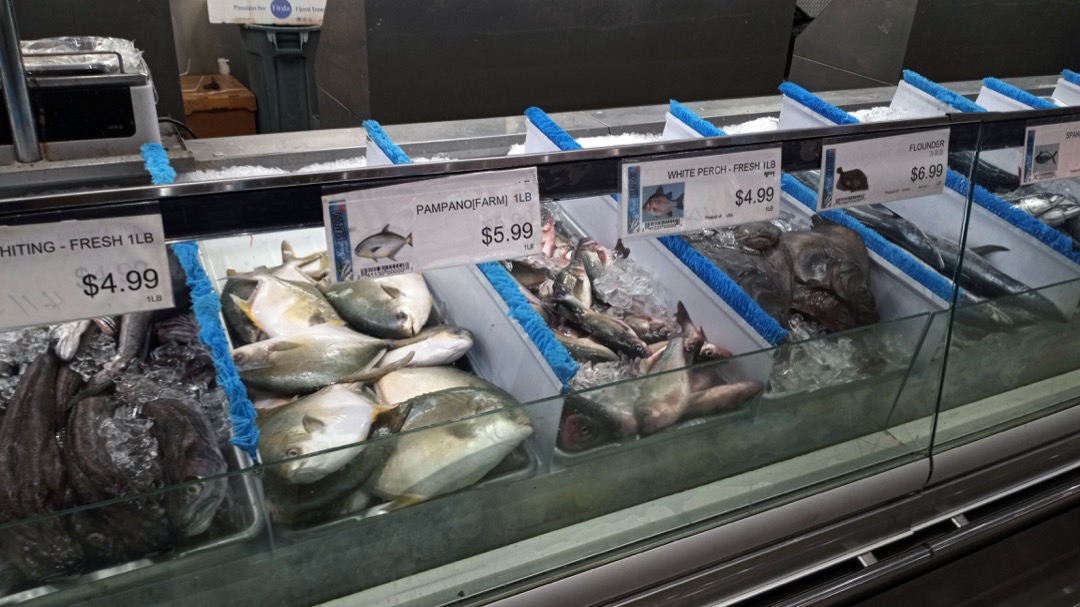
When I ran a restaurant test kitchen, I bought fish twice a week from the same two suppliers, and I learned more about sustainability from those phone calls than from any poster on a wall. The useful questions were never abstract. Where was this caught? How? When did it come off the boat? Was it frozen, and when? A supplier who answered all four without hesitation was one I trusted. One who got vague on any of them usually had a reason.
Home cooks get a harder version of that conversation. The supermarket case is full of labels, logos, and words like “natural” and “responsibly sourced” that sound reassuring and often mean nothing. This guide is the version I give friends: a pocket guide you can check at the counter, what each label actually guarantees, what the price card is legally required to tell you, and the handful of questions that sort the good fish from the vague.
The Short Version
If you only remember three things at the fish counter:
- Sustainability belongs to a source, not a species. Salmon, shrimp, tuna, and cod can each be a great choice or a poor one depending on where and how they were caught or farmed. “Is salmon sustainable?” has no answer. “Is this salmon sustainable?” does.
- Look for a label you can verify. The blue MSC tick for wild fish, ASC or BAP for farmed fish. Ignore unverified words like “natural”, “fresh”, and “sustainably sourced” on their own.
- Ask two questions. Where is it from, and was it wild-caught or farmed? In a US supermarket the price card should already tell you both. If it does not, ask.
The free Seafood Watch app from Monterey Bay Aquarium settles most of the rest in about ten seconds.
A Pocket Guide to the Fish Counter
This is the cheat sheet I keep for the species people actually buy. It follows Seafood Watch’s ratings and logic, which score each source on stock health, bycatch, habitat damage, and management (for farms: feed, waste, disease, escapes, and chemical use). Ratings vary by region and fishing gear and are updated over time, so treat this as the starting point and check the app for anything you buy often.
| Species | Buy this | Skip this |
|---|---|---|
| Salmon | Wild Alaska salmon (widely MSC certified); salmon farmed in indoor recirculating tanks (Best Choice) | Ocean net-pen farmed salmon with no eco-label |
| Shrimp | Shrimp with an ASC or BAP label; US wild shrimp (check the app for the region) | Imported farmed shrimp with no certification |
| Tuna | Skipjack and albacore caught by pole-and-line or troll | Bluefin of any kind, including farmed or ranched bluefin |
| White fish | Alaska pollock and Alaska Pacific cod (both MSC certified) | Uncertified Atlantic cod, especially New England stocks |
| Catfish | US farmed catfish (Best Choice) | Unlabeled imported catfish until you check the source |
| Trout | Rainbow trout farmed in indoor recirculating tanks (Best Choice) | Nothing common to skip; just check origin |
| Oysters and mussels | Farmed, from almost anywhere (Best Choice) | Nothing; farmed bivalves filter water and need no feed |
| Chilean sea bass | Only with an MSC label | Anything uncertified |
| Eel (unagi) | Swap in broiled mackerel with the same glaze | Imported farmed freshwater eel (Avoid) |
Two patterns explain most of that table. Farmed shellfish is almost always a good buy, because oysters, mussels, and clams eat what is already in the water and actually clean it. And the fish that end up on the Avoid list tend to be long-lived, slow-growing predators (bluefin, eel, some sea bass stocks) or products from open-water farms with poor waste and disease control.
How Seafood Watch Rates Fish
Seafood Watch sorts every source into one of three bands. Best Choice (green) means buy first: well managed and caught or farmed in ways that cause little harm. Good Alternative (yellow) means buy, but with some concerns about how it was caught or farmed. Avoid (red) means the source is overfished, or caught or farmed in ways that harm other marine life or the environment.
Its printed consumer guides also show eco-certified seafood as its own category, which is why wild Alaska salmon often appears under “Certified” rather than as a single color. In practice that means the label on the package can stand in for a lookup when you are in a hurry.
The reason I trust the program for day-to-day shopping is that the assessments are published. You can open the report behind any rating and see how a fishery scored on each criterion, which is more than any brand on a freezer bag will show you.
Reading the Labels: What Each One Guarantees
Labels are the fastest shortcut at the counter, and also the easiest place to get fooled. Here is what the main ones mean.
| Label | Covers | What it guarantees | The honest caveat |
|---|---|---|---|
| MSC (blue tick) | Wild-caught | Independently assessed fishery for stock health, environmental impact, and management, plus chain of custody to the shelf | Conservation groups have formally objected to some certifications as too lenient |
| ASC | Farmed | Farm audited against standards for water quality, feed, disease, escapes, and labor | Some groups dispute how strict the salmon standard is |
| BAP (stars) | Farmed | Audited supply chain; the stars count how many stages are certified: processing plant, farm, hatchery, and feed mill | One star covers only the processing plant, so look for more stars |
| Fair Trade USA | Wild and farmed | Social standards: worker conditions and community benefit | Mainly a labor label, not an ecological rating |
| “Natural”, “responsibly sourced”, “ocean friendly” | Anything | Nothing verifiable on their own | Marketing copy unless a named standard backs it |
The BAP star count is the detail most shoppers miss. A four-star BAP product has a certified processing plant, farm, hatchery, and feed mill behind it. A one-star product only tells you the plant that packed it was audited, which says very little about the farm.
What the Price Card Has to Tell You
Under USDA country-of-origin labeling rules, supermarkets in the US must label fish and shellfish with two facts: the country of origin and the method of production, meaning wild-caught or farm-raised. The fish counter in the photo at the top of this page does exactly that, with “farm” and “fresh” printed on each tray card.
The rule has gaps worth knowing. Restaurants are exempt. So are standalone fish markets that do not fall under the rule’s definition of a retailer, and so are processed items: anything smoked, cooked, breaded, or mixed into another product, such as crab cakes or seafood salad. That is why the same shrimp that carries a country and “farm-raised” on a raw bag can lose both once it is breaded.
If a supermarket card is blank on origin or method, ask. It should not be blank, and a counter that cannot fill it in is telling you something about how closely it tracks its supply.
Wild vs Farmed Is the Wrong Question
People ask me which is better, and the honest answer is that the question is too broad to be useful. Some of the best choices in the case are farmed: US catfish, tank-farmed salmon and trout, and nearly all farmed oysters and mussels. Some of the worst are wild: bluefin tuna and long-lived species pulled from overfished stocks.
What matters for farmed fish is the system. Indoor recirculating tanks keep waste, parasites, and escaped fish out of open water, which is why Seafood Watch rates them highly. Open ocean net pens can do the opposite, especially in crowded coastal waters where sea lice and disease move between farmed and wild fish. For wild fish, what matters is the stock and the gear. A pole-and-line skipjack and a longline bluefin are both “wild tuna”, and they are nowhere near each other on the scale.
So I skip the wild-vs-farmed debate entirely and ask the two questions the price card is supposed to answer: where, and how.
Frozen at Sea Is Often the Better Fish
The most useful thing restaurant work taught me about fish is that a “fresh” label only tells you the fish was never sold frozen. It tells you very little about quality. A fillet frozen at sea is cleaned and frozen on the boat within hours of the catch. The fresh fillet beside it may have spent days on ice in transit, and a good share of the fresh-looking fish in supermarket cases has been frozen and thawed already, which stores should mark as “previously frozen”.
Frozen fish also tends to be the lower-impact choice. It can travel by ship or truck instead of air freight, and it keeps for months, so far less of it is binned unsold. For a home cook, a frozen fillet you thaw yourself the night before is fresher in every sense that matters than a previously frozen fillet that has already been sitting thawed in the case.
Thaw it slowly in the refrigerator on a rack set over a plate, so the fish is not soaking in its own liquid. Pat it completely dry before it goes into the pan. That one step makes more difference to the sear than anything else on this page.
Six Questions I Ask the Fishmonger
A good fishmonger is happy to answer these. A vague answer is information too.
- Where was it caught or farmed? Country, and ideally the region or fishery.
- Wild or farmed, and how? For wild fish, the gear: hook-and-line, pole-and-line, troll, trawl. For farmed, whether it came from tanks or ocean pens.
- When did it come in? Fresh fish should have arrived within the last day or two.
- Was it previously frozen? Not a problem, but you want to know so you do not refreeze it.
- What is good today? This is where you hear about the catch that came in that morning, often better value than what you planned to buy.
- If I’m eating it raw, was it frozen for parasite destruction? “Sushi-grade” means nothing legally. The FDA Food Code sets specific freezing times and temperatures, and a counter selling fish for raw eating should know which method it used.
How to Check the Fish Itself
Labels tell you where a fish came from. Your senses tell you how it was handled.
- Smell: clean and briny, like the sea. A sour, fishy, or ammonia smell means it is past its best.
- Eyes on whole fish: clear, bright, and slightly domed. Cloudy, sunken eyes mean age.
- Gills: bright red to deep pink. Brown or grey gills mean the fish has been out of the water a while.
- Flesh: firm and springy; it should bounce back when pressed. Fillets should look moist and translucent, with no gaping between the muscle flakes.
- Shellfish: live oysters, clams, and mussels should be closed, or close when tapped. Discard any with cracked shells.
Rinse clams and mussels in cold water in a colander just before cooking, scrub off grit, and pull the beards from mussels. Never let live shellfish sit in fresh water, which kills them.
Seafood Fraud and the Swaps to Watch For
Sustainable buying only works if the fish is what the label says, and often it is not. Oceana’s 2013 national study DNA-tested 1,215 samples from 674 outlets in 21 states and found 33 percent mislabeled. Snapper was the worst at 87 percent, and only 7 of 120 samples sold as red snapper were actually red snapper. Tuna was mislabeled 59 percent of the time, and 84 percent of “white tuna” turned out to be escolar, a fish that causes digestive trouble for many people. Sushi venues mislabeled 74 percent of samples, other restaurants 38 percent, and grocery stores 18 percent.
A later Oceana review of more than 200 studies covering over 25,000 samples in 55 countries put the global rate at about one in five. The figures are a decade old, but the pattern is consistent: the swaps almost always run from cheaper fish sold as pricier fish.
The defenses are practical. Buy whole fish when you can, since a whole fish is much harder to fake than a skinless fillet. Be skeptical of red snapper and white tuna in particular, and of any “wild” fish priced like farmed. Certified products help here too, because MSC chain-of-custody tracking makes substitution much harder.
Buy in Season
Seasonality matters for fish as much as for produce, and the in-season catch is usually the best value at the counter.
- Alaska salmon runs through summer, with the famous Copper River opener in mid-May. Frozen-at-sea Alaska salmon covers the rest of the year very well.
- Pacific halibut is fished commercially from roughly spring through fall.
- Florida stone crab season opens October 15, and only the claws are harvested.
- Soft-shell crabs arrive in late spring and early summer.
- Dungeness crab seasons on the West Coast open in late fall and winter, though openers are often delayed by crab quality or whale-safety rules.
A good fishmonger will tell you what is running this week, which brings us back to question five above.
Cook the Whole Purchase
The last part of buying sustainably happens in your kitchen: wasting less of what you bring home. A few habits from restaurant cooking help.
Learn to substitute. Recipes name a species, but most fish cooking is really about texture. Firm, flaky white fish such as Alaska pollock, Pacific cod, and US catfish swap for each other in most recipes. Rich, oily fish like salmon and mackerel swap for each other too. If the counter is out of what you planned, the in-season fish of the same texture will cook the same way.
Pull pin bones instead of trimming them out. Run your fingertips along the center of a salmon or trout fillet, and pull each bone out in the direction it points with a pair of kitchen tweezers. It takes two minutes and saves the meat a careless knife would cut away.
Match the method to the fish. Shrimp, squid, and firm white fish chunks are made for high-heat stir-frying in a wok; a cast iron wok holds its heat when cold seafood hits the pan, which keeps shrimp searing instead of stewing. For a weeknight piece of salmon, an electric skillet gives steady, controllable heat with room for four fillets at once. Whole fish and thick fillets roast beautifully in a sheet pan or baking dish; our guide to non-toxic bakeware covers pans that handle a hot oven without any coating worries.
Handle it gently on the grill. Fish sticks and breaks on grates. A long pair of grill tongs is right for shrimp skewers and whole small fish, while a fillet needs a wide spatula underneath; a grill tongs and spatula set covers both jobs.
Choose the right fat. Searing fish needs an oil that will not smoke before the pan is hot enough. Our oil smoke point chart lists which oils hold up to a hard sear and which belong in a dressing.
Use it raw with care. If you are buying fish for sushi or poke at home, confirm the parasite-freezing method first, then make the rice properly: our guide on how to make sushi rice covers the seasoning and timing, and a good rice cooker takes most of the guesswork out of the batch.
Sources
- Monterey Bay Aquarium Seafood Watch, How we develop our recommendations and Sustainable salmon buying guide
- Oceana, Oceana study uncovers widespread seafood fraud nationwide (2013)
- USDA, Mandatory country of origin labeling of fish and shellfish, Federal Register
- FDA Food Code, section 3-402.11, parasite destruction
- SeafoodSource, Expanded Seafood Watch ratings say to avoid most farmed salmon
Frequently Asked Questions
What does it mean when seafood is considered sustainable?
Is farmed salmon sustainable?
Is frozen fish less sustainable than fresh?
Is the MSC label reliable?
What does sushi-grade fish actually mean?
Related Articles
About the Reviewer

Nora Whitfield, CIA Culinary Arts, ServSafe Certified
A.O.S. Culinary Arts, The Culinary Institute of America
Nora Whitfield trained at the Culinary Institute of America and spent twelve years in professional kitchens, the last four running the test kitchen for a regional restaurant group where her job was to decide which equipment could survive a dinner service and which could not. She has seasoned more carbon-steel woks than she can count, boiled water in every kettle worth owning, and broken enough cheap gear to know exactly where manufacturers cut corners. She reviews kitchen equipment the way she specified it professionally: cook on it, clean it, and see what it looks like after a month.