Best Electric Skillets of 2026
The best electric skillets and electric frying pans of 2026, tested against the flaw nobody writes about: the dial is not a thermometer. 12 pans compared by CIA-trained chef Nora Whitfield.
Updated
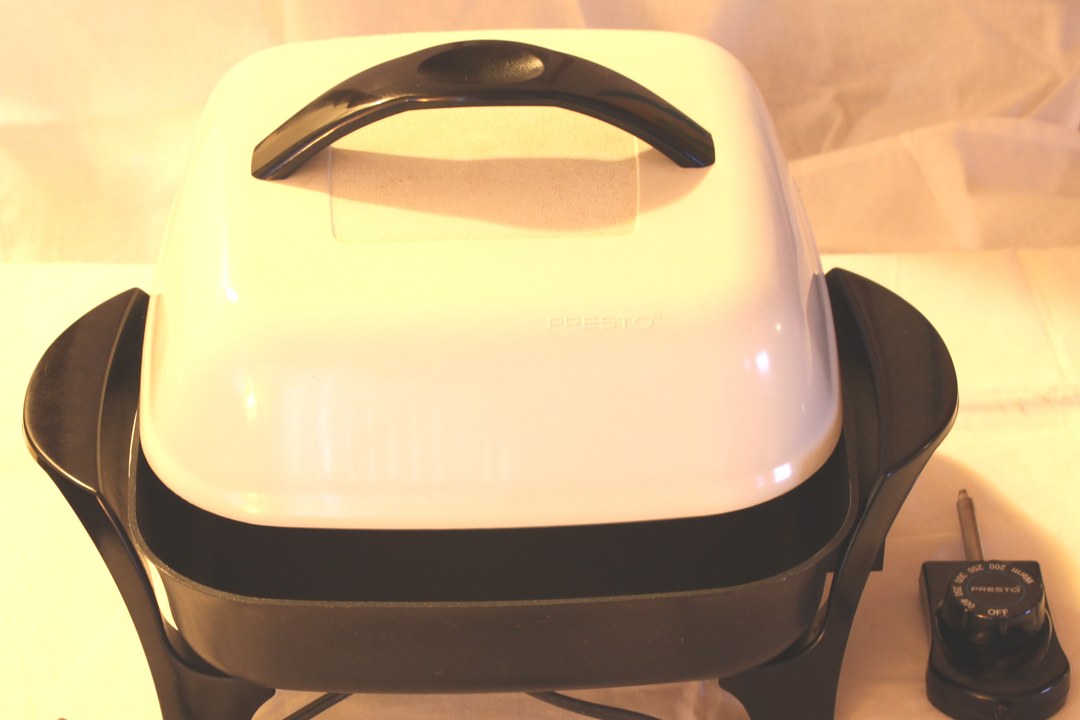
Best Electric Skillets of 2026
An electric skillet is the appliance people buy for one reason and keep for another. They buy it because the stovetop is full at Thanksgiving, and they keep it because a thermostatically controlled pan holds a simmer better than any burner in the house. It is the single most underrated thing in an American kitchen, and it is also the category where the specification sheet tells you the least about what you are getting.
I am Nora Whitfield. I trained at the Culinary Institute of America and spent years running a restaurant group’s test kitchen, where large electric pans held sauces and braises at service temperature for hours at a stretch. So I know what these are genuinely good at, and I know the flaw that almost nobody writing about them mentions: on an electric skillet, the number on the dial is a target the thermostat aims at, not the temperature of the pan floor. The gap between the two is frequently fifty degrees or more, in either direction, on pans at every price on this page.
That single fact reorganises the whole buying decision, and it is the frame this page uses. Below are twelve electric skillets and electric frying pans, each reviewed once, compared on the four things that actually decide whether you keep using one: how big the cooking floor really is, how deep the pan is, what the cooking surface is made of, and whether the base comes apart so you can wash it. If you are weighing this against a different large electric pan, our guide to electric woks covers that side of the decision.
Find the Best Electric Skillet for Your Need
Jump to whichever situation matches yours.
- Best electric skillets overall
- Best Stainless Steel Electric Skillets
- Best Nonstick Electric Skillets
- Best Large Electric Skillets
- Best Cast Iron Electric Skillets
- Best Small Electric Skillets
- Best Ceramic Electric Skillets
- Best Electric Skillet for Frying Chicken
- More use cases
How We Chose These Electric Skillets
This is a review of published specifications, manufacturer claims and the owner record, combined with years of cooking on large thermostatically controlled pans in a professional kitchen. It is not an in-house temperature test, and I want to be direct about why. A meaningful accuracy measurement needs a calibrated probe, a fixed measurement point on the pan floor, a stated ambient temperature, a controlled load and a protocol repeated across every unit. I have none of that, and a number produced without it would look like evidence while being decoration.
So where a figure appears on this page, it comes from the manufacturer’s own listing, and where a pan’s behaviour is described, it comes from the pattern in the owner record rather than from one review. Two findings emerged that are worth stating up front because they apply to every pan here rather than to any one of them. The first is the dial problem: reports of actual pan temperatures landing well below the setting appear on budget pans and premium ones alike, and the pans that publish a stated temperature band are no more exempt than the ones with an unmarked knob. The second is that these appliances almost never fail electrically. They fail in two specific ways, warping and coating wear, neither of which is repairable and neither of which the typical one-year limited warranty covers.
Those two findings did most of the sorting. I weighted construction that resists warping, bases that come apart for cleaning, and depth, which is the specification buyers skip and then regret. I weighted peak wattage less than most roundups do, because a thermostat that cuts the element at its setting caps what any of these can sear regardless of what the plate is rated for.
Best Electric Skillets Overall
Twelve pans, each reviewed once below, in the order I would recommend them.
Best Overall: Elite Gourmet 10.5Qt Extra-Deep Skillet
This is the pan I would put in most kitchens, and the reasoning is unglamorous. Sixteen by thirteen inches of rectangular floor is the size that actually changes how you cook: it takes a full batch of pancakes, or eight chicken thighs laid out with air between them, which is the only way they brown rather than steam. Rectangular matters more than it sounds, because a round pan of the same nominal width wastes its corners, and corners are where the last two pieces go.
Two construction details do the real work. The heating element is embedded across the entire pan floor rather than coiled under one part of it, which is the difference between a surface that cooks evenly and one with a hot ring and cold edges. And the body is thick cast aluminium, which resists the warping that permanently ruins these appliances. A warped electric skillet is not a pan with a problem, it is a pan that is finished: it never sits flat again and oil runs to one end for the rest of its life.
Where it disappoints some owners is peak heat. The complaint that recurs most often on the listing is that it does not get hot enough, and that is a fair reading of what a thermostatically controlled pan capped at 400F does. It holds a simmer and a shallow fry beautifully and it will not give you a hard restaurant sear. The other caveat is chemical rather than mechanical: the honeycomb coating is conventional nonstick, not ceramic and not PFAS-free, so if avoiding fluoropolymers is why you are here, the ceramic section further down is your section.

Elite Gourmet 10.5Qt Nonstick Electric Skillet, Extra-Deep 16"x13"
by Elite Gourmet
The best balance on this page of cooking area, price and a coating that behaves, with an embedded element and a cast aluminium body doing the two things that decide whether an electric skillet is worth owning.
Pros
- The pan goes straight into a full sink once the temperature probe is pulled, and both the skillet and the glass lid are rated for the dishwasher's top rack, so the cleanup is genuinely hands-off
- Sixteen by thirteen inches is a real family footprint, enough floor to lay out a full batch of pancakes or a row of chicken breasts without anything steaming its neighbour
- The heating element is embedded across the whole pan floor rather than run as a coil under part of it, which is the construction that gives an electric skillet any chance of an even surface
- The thick cast aluminium body resists warping, and a warped base is a permanent injury on these pans because it never sits flat again and oil pools at one end forever
Cons
- Owners are split on whether it gets hot enough, and that is the complaint that recurs most often on the listing, so it is the wrong pan if you want a hard sear
- The tempered glass lid is the weak point here as it is across the whole category, and breakage is reported often enough to treat a replacement lid as a running cost
- The honeycomb coating is conventional nonstick, not ceramic and not PFAS-free, so this is not the pan to buy if avoiding fluoropolymers is why you are shopping
Best Budget: GreenLife 12-Inch Ceramic Electric Skillet
The interesting thing about this pan is not that it is cheap, it is what it does not give up to get there. The low-spend end of this category is almost entirely conventional nonstick, and this one arrives with a PFAS-free ceramic interior, which is a genuine specification rather than a marketing line. It is also a full twelve-inch square pan rather than a shrunken personal one, which is the other corner most cheap electric skillets cut.
The flat twelve-inch square is the shape I would choose for the things most people actually cook in these: pancakes, eggs, grilled sandwiches, burgers. There is no sidewall curve eating into the floor, so a turner can get under anything at any point in the pan. The single-knob control is the simplest interface here, with nothing to misalign and nothing to lose.
The reason it is the budget pick and not a higher one is durability, and on this listing durability is a named negative rather than a mixed signal. Owners report the coating wearing through inside a couple of months. GreenLife also makes no immersible claim, so cleaning is a wipe rather than a soak, which is exactly the convenience the better pans here are sold on. Buy it understanding that you are buying a surface with a shorter life than the appliance under it.

GreenLife 12" 5QT Electric Skillet, Turquoise
by GreenLife
The sensible low-spend choice and the cheapest way onto a PFAS-free surface, bought on the clear understanding that the coating is the part most likely to give out first.
Pros
- It pairs a PFAS-free ceramic interior with a full twelve-inch square floor, a combination the low-spend end of this category almost never offers
- The ceramic interior is PFAS-free, which at this spend is unusual, since the cheap end of the category is almost entirely conventional nonstick
- A flat twelve-inch square is the most useful shape for pancakes, grilled sandwiches and anything else you flip, because there is no sidewall curve stealing floor space
- The one-knob control is the simplest interface in this roundup, with nothing to lose and nothing to reseat wrongly
Cons
- Durability is a named negative rather than a mixed one on this listing, with owners reporting the coating wearing through inside a couple of months
- GreenLife does not claim the base is immersible, so cleaning means wiping rather than filling the sink, which is the one thing the pricier pans here get right
- At 1,200 watts it is the second-lowest-powered pan in this roundup, and it recovers slowly when cold food hits it
Best Large Capacity: Presto 06852 16-Inch Electric Skillet
This is the pan that comes out for a crowd, and it has been essentially unchanged for long enough that its quirks are thoroughly documented. A sixteen-inch round floor with high sidewalls is a different appliance from a wide flat griddle: the walls mean you can braise, stew and simmer in it without anything going over the rim, and they turn it into a buffet server once the cooking is done.
Presto states the ceramic nonstick is PFAS-free inside and out, which is a broader claim than a surface-only one, and describes the heavy cast aluminium base as virtually warp-proof. Given that warping is the terminal failure for these pans, a manufacturer willing to make that claim on a model this old is worth taking seriously. It is fully immersible once the heat control is removed, stated plainly in the listing rather than hinted at.
The honest counterweight is heat distribution. A sixteen-inch floor is a lot of area for one element to serve, and a meaningful group of owners report it running unevenly across that span. The glass cover also breaks often enough here to be a known weakness rather than misfortune. And it is physically large: measure your counter before ordering, because this is not a pan that disappears into a cupboard between uses.

Presto 06852 16-Inch Electric Skillet with Glass Cover
by Presto
The large-format workhorse of the category: a properly big round pan with sidewalls deep enough to braise in, on the oldest and most settled platform Presto sells.
Pros
- Presto states the ceramic nonstick is PFAS-free inside and out, which is a stronger claim than a surface-only one and rare at this price
- The high sidewalls turn it into a braiser rather than just a big frying surface, so a stew or a pot of chilli does not slop over the rim
- Presto calls the heavy cast aluminium base virtually warp-proof, and warping is the failure that permanently ruins these pans
- It is fully immersible with the heat control removed, stated plainly in the listing rather than implied
Cons
- Heat distribution draws mixed reports, with a meaningful group of owners saying the surface runs unevenly across a sixteen-inch floor
- The glass cover is reported breaking often enough to be a known weakness rather than bad luck
- A sixteen-inch round pan needs a lot of countertop and does not tuck into a standard cabinet easily
Best Uncoated Stainless Surface: CucinaPro 18/10 Stainless Electric Skillet
Search for a stainless steel electric skillet and almost everything you find is a stainless housing wrapped around a coated cooking floor. The word describes the outside of the appliance, not the surface touching your food. This pan is the exception, and it is close to the only one: polished 18/10 stainless, uncoated, with nothing sprayed onto it that can ever wear through. If a non-toxic electric skillet with no coating at all is what you came for, this is the answer, and the list of alternatives is essentially empty.
What you get for that is a surface with no expiry date and no rules. Metal utensils are fine. High heat is fine. A proper scrub with an abrasive is fine. Every other pan on this page fails at least one of those. You also get browning: bare steel forms fond in a way no nonstick surface can, and fond is where a pan sauce comes from.
Two things temper the recommendation and I would rather state both. Food sticks to bare stainless unless the pan is properly preheated and the fat goes in before the food, which is a technique to learn rather than a fault to complain about. And it carries the lowest rating of any pan in this roundup, with the complaints clustering on temperature control and on the pan not reaching high heat. Buy it for the surface, knowing the rest is a compromise.

CucinaPro Electric Skillet, 18/10 Stainless Steel Pan, Tempered Glass Lid
by CucinaPro
The honest answer to whether a bare stainless electric skillet exists: it does, this is essentially the only one sold in volume, and you pay for it in price, patience and preheating technique.
Pros
- This is the only genuinely uncoated cooking surface in the roundup: polished 18/10 stainless with nothing sprayed onto it, so there is no coating that can ever wear through
- Because there is no coating to protect, metal utensils, high heat and a proper scrub are all fair game, none of which any other pan here tolerates
- A bare stainless surface browns and forms fond in a way no nonstick pan can, which is the whole argument for cooking on steel
- The temperature probe is removable and the pan carries seven settings rather than a vague low-to-high sweep
Cons
- Food sticks to bare stainless unless the pan is properly preheated and the fat is in before the food, which is a technique change, not a fault
- It carries the lowest rating of any pan in this roundup, and the complaints cluster on temperature control and on the pan not reaching high heat
- The pan is hand wash rather than immersible, so the easiest-cleaning claim in the category does not apply here
Best Deep Pan for Braising: Elite Gourmet 12.5Qt Ceralast Skillet
Four inches of depth over a fifteen by twelve floor is the specification that makes this pan useful in a way the shallow ones are not. At two inches you have a griddle with a rim, and the moment liquid is involved it slops. At four inches you can braise a pot roast, simmer a curry, or shallow-fry chicken without oil climbing the wall. That is the difference between an appliance used twice a year and one that stays on the counter.
The surface is Ceralast, Elite Gourmet’s PFAS-free ceramic, and the company specifically rates it as resistant to cracking and peeling, which is the exact way ceramic coatings usually give out. The probe is adjustable across a stated 200 to 400F band rather than an unlabelled low-to-high sweep, so a target temperature is something you can actually aim at. The rapid-heat element runs through the pan floor, which is what stops a deep pan developing a cold ring at the edge.
Temperature control and heat distribution both draw mixed reports, and that matters more in a deep pan than a shallow one because food at the rim sits further from the element. A handful of owners report sticking despite the ceramic, which is consistent with how ceramic behaves as it ages. And it is a large, tall object that will not slide onto a normal shelf with its lid on.

Elite Gourmet 12.5Qt Ceralast PFAS-Free Ceramic Electric Skillet, 1500W (EG2615)
by Elite Gourmet
The pan to buy if you actually cook with liquid: deep enough for a braise or a shallow fry, on a PFAS-free ceramic surface, with a probe that names its temperatures instead of implying them.
Pros
- Four inches of depth over a fifteen by twelve floor is the combination that lets you shallow-fry, braise and simmer without liquid climbing the rim
- The Ceralast ceramic is PFAS-free and Elite Gourmet rates it as resistant to cracking and peeling, which is the specific way ceramic coatings usually fail
- The probe is adjustable across a stated 200 to 400F band rather than an unlabelled dial, so a target temperature is something you can actually set
- The embedded rapid-heat element runs through the pan floor, which is what keeps a deep pan from developing a cold ring at the edges
Cons
- Temperature control and heat distribution both draw mixed reports, which matters more in a deep pan because the food at the edge is further from the element
- A handful of owners report food sticking despite the ceramic surface, and ceramic does lose its release faster than fluoropolymer does
- It is a large, tall appliance that will not slide onto a normal shelf with the lid on
Best for Storage and Cleaning: Presto 06857 Foldaway Skillet
This is the same big Presto pan as the fixed-base model above with one change that genuinely alters how often you use it. The handles fold down and the base lifts away completely, so cleaning stops being a careful wipe around a live component and becomes putting a pan in the sink. Anyone who has owned an electric skillet knows that this single difference decides whether the thing stays in the rotation or migrates to the back of a cupboard.
The storage trick is the other half of it. With the handles folded in, the base nests inside the pan, so a sixteen-inch skillet stores in roughly the space the pan alone would take. For an appliance whose main drawback is bulk, that is the most useful engineering on this page. The cooking surface is the same PFAS-free ceramic Presto uses on its fixed-base sibling, inside and out, and the high sidewalls make it a buffet server as readily as a frying pan.
The trade is predictable: more moving parts, more to go wrong. Owners report the nonstick lifting at the sidewalls specifically, which is where a folding pan takes the most handling stress. It costs noticeably more than the fixed-base version of the same pan, and that premium buys storage and cleaning rather than any cooking advantage. If counter space and cupboard space are not your constraint, the cheaper sibling cooks identically.
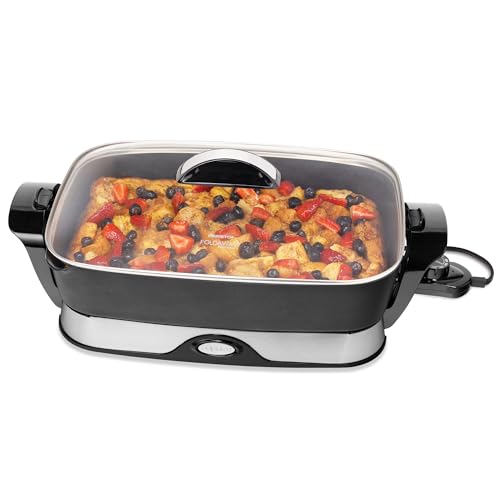
Presto 06857 16-Inch Electric Foldaway Skillet
by Presto
The same big Presto pan as its fixed-base sibling with the one change that alters how often you reach for it: it comes fully apart, washes like ordinary cookware, and stores inside itself.
Pros
- The handles fold down and the base lifts away completely, which turns cleaning from a careful wipe into putting a pan in the sink
- With the handles folded in, the base nests inside the pan, so a sixteen-inch skillet stores in roughly the space of the pan alone
- The ceramic nonstick is PFAS-free inside and out, the same surface Presto uses on its fixed-base sibling
- High sidewalls on a sixteen-inch floor make it a buffet server as readily as a frying pan, which is why it earns its counter space at a gathering
Cons
- Owners report the nonstick lifting at the sidewalls specifically, which is where a folding pan takes the most handling stress
- It costs noticeably more than the fixed-base version of the same pan, and that premium buys storage and cleaning rather than any cooking advantage
- The folding mechanism is one more thing that can fail on an appliance whose other parts are already known to wear
Best Removable Pan for Serving: Hamilton Beach Durathon Electric Skillet
The pan lifts clean off its base here, which sounds like a convenience feature and is actually a different way of using the appliance. The pan that cooked the food is the dish that goes to the table, with no transfer, no second bowl and no trivet. For one-pan meals, which is what this thing is for, that removes the only remaining step.
Hamilton Beach states the Durathon ceramic surface is PTFE and PFOA free and rates it as four times more durable than conventional nonstick. The adjustable range is printed as 200 to 400F rather than implied by an unmarked dial. And the cord fits either side of the unit, which sounds like a trivial detail right up until your only free outlet is at the wrong end of the counter.
The durability record is the weak point and it is a named negative rather than a mixed one: owners report the ceramic flaking and the plastic handle breaking away from the pan. Several also report actual temperatures landing well below the dial setting, which is the category’s defining flaw showing up here as it does everywhere else. Stock is currently limited, so price and availability are less settled than on the long-running Presto models.

Hamilton Beach Large Electric Skillet With Lid
by Hamilton Beach
The pan to choose if the skillet has to reach the table, with a genuinely PTFE-free ceramic surface and a printed temperature band, set against a durability record that is the weakest thing about it.
Pros
- The skillet lifts clean off its base, so the pan that cooked the food is the dish that goes to the table without a trivet or a transfer
- Hamilton Beach states the Durathon ceramic surface is PTFE and PFOA free and rates it four times more durable than conventional nonstick
- The stated 200 to 400F band is printed rather than implied, so the dial means something you can aim at
- The cord can be fitted to either side, which sounds trivial until you have an outlet on the wrong end of the counter
Cons
- Durability is a named negative on this listing, with owners reporting the ceramic flaking and the plastic handle breaking away
- Several owners report the actual pan temperature landing well below the dial setting, which is the category's defining flaw showing up here too
- The unit is currently in limited stock, so the price and availability are less settled than on the long-running Presto models
Best Deep Pan for One or Two: NESCO ES-12
Most of this category is built around feeding four or more people, which leaves couples and single cooks choosing between a pan that is too big and a personal one that is too small. This is the pan that fits between them. The footprint is a modest twelve-inch square, but it is four inches deep, so the usable volume is far larger than the counter space it occupies.
Die-cast construction is the reason to pick it over something lighter. Mass in the base is what holds a temperature steady when cold food lands in a hot pan, and in an appliance whose thermostat is the weakest link, physical mass compensates for electronic imprecision. It carries a full 1,500 watts despite the small footprint, so it recovers quickly for its size. Owners consistently describe it as the right scale for one or two people, which is a harder thing to find here than it should be.
There is a real caveat and it is worth taking seriously. A significant group of owners report the pan barely climbing above room temperature, which is a thermostat failure rather than a slow pan, and it is common enough to be a pattern. Temperature control draws mixed reports even from owners whose units heat properly. Test it hard in the first week. NESCO also makes no immersible claim, so cleaning is a wipe-down.

NESCO ES-12 Electric Skillet, Black, 12 inch
by NESCO
The deep pan for a small household: genuinely compact in footprint but four inches deep, with die-cast mass behind it, provided you check the thermostat works in the first week.
Pros
- Four inches of depth on a twelve-inch square floor gives it more usable volume than its footprint suggests, so a small kitchen is not stuck with a shallow pan
- Die-cast construction puts real mass in the base, and mass is what holds a temperature steady when cold food goes in
- It carries a full 1,500 watts despite the compact footprint, so it recovers quickly for its size
- Owners consistently describe it as the right scale for one or two people, which is the hardest fit to find in a category built around family-sized pans
Cons
- A significant group of owners report it barely climbing above room temperature, which points to a thermostat failure rather than a slow pan
- Temperature control draws mixed reports even from owners whose units heat properly
- NESCO makes no immersible claim, so cleaning is a wipe-down rather than a soak
Best Compact Single-Serve: Elite Gourmet 7-Inch Personal Skillet
Seven inches square is a genuinely personal pan rather than a shrunken family one, and that distinction is the whole point. It is the right size for two eggs, a grilled sandwich, or one chop, and the wrong size for anything you would describe as a meal for two. At 600 watts it also runs in places a 1,500-watt appliance is unwelcome: a dorm room, an office, a caravan, anywhere the circuit is shared or the space is small. The detachable locking handle means it stores in a drawer.
It is the lowest price on this page by enough that it is competing with a decent stovetop pan rather than with the other electric skillets here, and judged on that basis it is good value.
One thing must be said plainly, because the listing does not. Elite Gourmet’s bullets advertise an adjustable temperature dial, but the listing’s own specification sheet records a single setting, and the dominant complaint from owners is that there is no meaningful temperature adjustment at all. Those two things agree with each other and disagree with the marketing. Buy this as a fixed-heat hotplate with sides, which is a genuinely useful object, and you will be happy with it. Buy it expecting temperature control and you will not.

Elite Gourmet 7" Personal Electric Skillet, 600W, Compact Design (EFS059)
by Elite Gourmet
A genuinely single-serve pan at a price that makes it an easy second appliance, as long as you buy it as a fixed-heat hotplate with sides rather than as a small version of the pans above it.
Pros
- Seven inches square is a true single-serve pan rather than a shrunken family one, which makes it the right tool for eggs, a grilled sandwich or one chop
- It is the lowest price on this page, by enough that it competes with a decent stovetop pan rather than with the other electric skillets
- The handle detaches and locks, so it stores in a drawer and cleans without a protruding arm in the way
- At 600 watts it runs on circuits and in spaces where a 1,500-watt pan is not welcome, which is the real case for it in a dorm, an office or a van
Cons
- Elite Gourmet's bullets advertise an adjustable dial, but the listing's own specification sheet records a single setting, and the dominant complaint from owners is that there is no meaningful temperature adjustment at all
- 600 watts will not sear, and it stalls when cold food goes in
- There is no immersible claim, and on a pan this cheap a failed seal is not worth arguing about
Best Mid-Size All-Rounder: BLACK+DECKER 12x15 Electric Skillet
Twelve by fifteen inches is the most broadly useful size in this roundup. It is big enough for a family meal and small enough to live on a normal counter without dominating it, which is the compromise most people actually want and few of these pans strike. If you are unsure what size you need, this is the safe answer.
The cleaning arrangement is the better kind: the temperature dial releases with a quick-release catch and the whole pan then goes under water. The coating is stated PTFE and PFOA free, which most conventional nonstick pans at this price cannot claim, and cool-touch side handles mean the pan can be carried to the table rather than plated in the kitchen.
What it gives up is control. BLACK+DECKER publishes a maximum of 400F across only two settings, where several larger pans on this page offer more, so precise temperature work is not on offer. And the coating is not ceramic, which leaves it sitting between the conventional and the PFAS-free options rather than clearly in either camp. It is a good pan bought for its size and its cleaning, not its spec sheet.

BLACK+DECKER 12x15-Inch Electric Skillet with Glass Lid
by BLACK+DECKER
The safe middle choice: a properly sized rectangular pan that comes apart for cleaning, from a brand people already trust, though several pans here offer more depth or more surface.
Pros
- The temperature dial releases with a quick-release catch and the whole pan then submerges, which is the cleaning arrangement the best pans here use
- Twelve by fifteen inches is the most broadly useful size in this roundup: big enough for a family meal, small enough to live on a normal counter
- The coating is stated PTFE and PFOA free, which is not something most conventional nonstick pans at this price can claim
- Cool-touch side handles mean the pan can be carried to the table rather than plated in the kitchen
Cons
- BLACK+DECKER publishes a maximum of 400F and only two settings, so precise temperature work is not on offer
- Several larger pans here publish more heat settings, so the case for it rests on size and cleaning rather than the spec sheet
- The nonstick is not ceramic, so it sits between the conventional and the PFAS-free options rather than fully in either
Best Round Pan for Hot Pot: Zojirushi EP-PBC10
This is the specialist on the page and it is worth being clear about what it specialises in. A round pan with a low, even wall is the correct geometry for cooking at the table: hot pot, shabu-shabu, sukiyaki, anything where several people reach into the same pan while it is running. A rectangular pan with tall sides is worse at this for reasons that are obvious the moment you try it.
The coating is titanium and ceramic enhanced rather than plain fluoropolymer, which is a harder surface than most pans here carry. Stay-cool side handles let the cooking pan lift straight out of its housing so the part that touches food washes separately. And owners single out its temperature holding specifically, which is both the thing a table-cooked meal depends on and the thing this category is worst at. That is the argument for the price.
At 10.5 inches the cooking surface is smaller than pans costing half as much, so you are buying control and build rather than capacity. Reports on how long the nonstick lasts are genuinely split, which is harder to accept at this end of the market than at the budget end. Stock is limited, so availability is less dependable than on the long-running models.
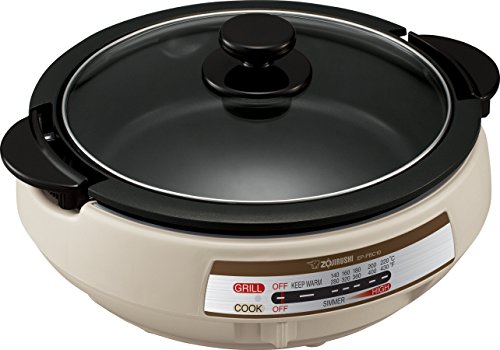
Zojirushi EP-PBC10 Gourmet d'Expert Electric Skillet
by Zojirushi
The specialist: a round, shallow, temperature-steady pan built for cooking at the table rather than at the stove, and the only pan here bought primarily for how it holds a setting.
Pros
- A round pan with a low, even wall is the correct shape for hot pot, shabu-shabu and anything else cooked and eaten at the table by several people at once
- The coating is titanium and ceramic enhanced rather than plain fluoropolymer, which is a harder surface than most pans here carry
- Stay-cool side handles let the cooking pan lift straight out of the housing, so the part that touches food washes separately
- Owners single out its temperature holding, which is precisely what a table-cooked meal needs and what most of this category does worst
Cons
- At 10.5 inches it is a smaller cooking surface than pans costing half as much, so you are paying for control and build rather than for capacity
- Reports on how long the nonstick lasts are genuinely split, which is a harder thing to accept at this price
- Stock is limited, so availability is less dependable than on the long-running budget models
Best Upgrade: All-Clad Electrics 7-Quart Skillet
Two specifications separate this from everything else here. At 1,800 watts it is the most powerful pan in the roundup, and power is what stands between a pan that sears and a pan that steams. And the cooking insert is rated for an oven or broiler up to 600F, so a dish can be started on the counter and finished under direct heat. Nothing else on this page can do that, and it turns the appliance from a hob substitute into something closer to a braiser you can also brown in.
The construction is the other half of the argument. Bonded metal spreads heat in a way a single cast plate does not, the insert is dishwasher safe, and riveted stainless handles are the fixing least likely to snap off, which matters in a category where broken plastic handles are a recurring complaint.
Now the part the name obscures. Despite being sold as a stainless steel skillet, the cooking surface is nonstick-coated, not bare stainless, and All-Clad’s own product bullets state this outright. It is stainless in body and in handles, coated where the food goes. It is also by a wide margin the most expensive pan on this page, and owners are genuinely split on whether it earns that. Temperature accuracy draws criticism here too, which tells you how stubborn that problem is right across the category.

All-Clad Electrics Stainless Steel and Nonstick Surface Skillet, 7 Quart
by All-Clad
The most powerful and best-built pan here, and the only one that can go under a broiler, on the clear understanding that its cooking surface is coated like everything else in this roundup.
Pros
- At 1,800 watts it is the most powerful pan in this roundup, and power is what separates a pan that sears from a pan that steams
- The cooking insert is rated for an oven or broiler up to 600F, so a dish can be started on the counter and finished under heat, which nothing else here can do
- Bonded-metal construction is the real All-Clad argument: layered metal spreads heat in a way a single cast plate does not
- The insert is dishwasher safe, and riveted stainless handles are the fixing least likely to snap off
Cons
- Despite the name, the cooking surface is nonstick-coated, not bare stainless, and All-Clad's own bullets say so plainly
- It is by a wide margin the most expensive pan on this page, and owners are split on whether it earns that
- Temperature accuracy draws criticism even here, which tells you how stubborn that problem is across the whole category
Best Stainless Steel Electric Skillets
This is the section most people arrive at from a search that is really about coatings, so let me be blunt about what the market actually offers. A stainless electric skillet almost always means a stainless housing wrapped around a coated cooking floor. The phrase describes the outside of the appliance, not the surface your food touches. One pan in this roundup breaks that pattern: the CucinaPro is bare polished 18/10 steel with no coating of any kind, which is why it is here despite the lowest rating on the page. The All-Clad is the honest near-miss, and it is worth understanding why it misses: stainless body, riveted stainless handles, and a nonstick coating on the floor, which the listing states in its own words. If what you want is a non-toxic electric skillet with no fluoropolymer anywhere near the food, the third option is the compromise most people end up making, which is a ceramic surface that is PTFE and PFOA free rather than no coating at all.
| Product | Price | Buy |
|---|---|---|
| CucinaPro Electric Skillet, 18/10 Stainless Steel Pan, Tempered Glass LidBest genuinely uncoated stainless Polished 18/10 steel with nothing sprayed on it, so there is no coating that can wear through | $134.99 | View on Amazon |
| All-Clad Electrics Stainless Steel and Nonstick Surface Skillet, 7 QuartBest stainless body with a coated floor Bonded metal and riveted steel handles, but All-Clad's own bullets confirm the cooking floor is coated | $249.95 | View on Amazon |
| Hamilton Beach Large Electric Skillet With LidBest coated pan with no PTFE in it Durathon ceramic that Hamilton Beach states is PTFE and PFOA free, on a pan that lifts off its base | $75.45 | View on Amazon |
Best Nonstick Electric Skillets
Nonstick is the default in this category, so the real question is not whether a pan is nonstick but which kind of nonstick and how long it lasts. There are three answers on the shelf. Conventional fluoropolymer coatings release best and hold that release longest. Ceramic coatings avoid fluoropolymers entirely and are usually the ones marketed as PFAS-free, but as a class they lose their slip sooner. Reinforced coatings sit in between. Whichever you pick, the thing that actually determines its life is not the coating chemistry but whether the pan warps and whether anyone ever takes a metal utensil to it, and those failures show up in owner reviews across every price point here.
| Product | Price | Buy |
|---|---|---|
| Elite Gourmet 10.5Qt Nonstick Electric Skillet, Extra-Deep 16"x13"Best conventional nonstick Honeycomb coating over a thick cast aluminium body with the element embedded through the floor | $59.90 | View on Amazon |
| Presto 06852 16-Inch Electric Skillet with Glass CoverBest PFAS-free nonstick Ceramic nonstick that Presto states is PFAS-free on both the inside and the outside of the pan | $69.99 | View on Amazon |
| BLACK+DECKER 12x15-Inch Electric Skillet with Glass LidBest nonstick that fully submerges A quick-release dial that pulls out so the whole pan goes under water, with a stated PTFE-free coating | $98.23 | View on Amazon |
Best Large Electric Skillets
Large means two different things here and it is worth separating them before you buy. A round sixteen-inch pan gives you the most volume, because the sidewalls are tall and the shape holds liquid well, which is what you want for a stew, a chilli or a pot of sauce. A rectangular pan of similar width gives you more usable flat floor, because circles waste their corners, and flat floor is what matters when you are laying out chops, pancakes or chicken pieces that must not touch. Measure your counter before ordering either. A sixteen-inch pan with a lid is a large object that will not disappear into a cupboard between uses, and the pans in this section mostly end up living out on the worktop.
| Product | Price | Buy |
|---|---|---|
| Presto 06852 16-Inch Electric Skillet with Glass CoverBest large pan overall A sixteen-inch round floor with sidewalls high enough to braise in rather than just fry on | $69.99 | View on Amazon |
| Elite Gourmet 10.5Qt Nonstick Electric Skillet, Extra-Deep 16"x13"Best large rectangular pan Sixteen by thirteen inches of rectangular floor, which fits more flat items than a round pan of the same width | $59.90 | View on Amazon |
| Hamilton Beach Large Electric Skillet With LidBest large pan you can carry to the table A hundred and eighty square inches on a pan that lifts clean off its base for serving | $75.45 | View on Amazon |
Best Cast Iron Electric Skillets
There is no such thing as a cast iron electric skillet in any meaningful sense, and I would rather say that plainly than sell you something close to it. Cast iron works because it is a thick slab of seasoned metal that stores heat; an electric skillet works because a thermostat cycles an element on and off. Bolt an element to cast iron and you get an appliance that is enormously heavy, slow to respond, and impossible to immerse without ruining the seasoning. What the market sells instead, and what genuinely delivers most of what people want from the phrase, is heavy cast aluminium or die-cast construction. That gives you the mass that steadies a temperature when cold food hits the pan, without the weight or the rust. If you specifically want iron, what you want is a stovetop pan, and our guides on seasoning a cast iron skillet and using cast iron on a glass-top stove cover that side of it properly.
| Product | Price | Buy |
|---|---|---|
| Presto 06852 16-Inch Electric Skillet with Glass CoverBest heavy cast aluminium pan Presto describes the heavy cast aluminium base as virtually warp-proof, which is the specific failure to worry about | $69.99 | View on Amazon |
| NESCO ES-12 Electric Skillet, Black, 12 inchBest die-cast pan Die-cast construction puts real mass in the base, and mass is what holds a temperature when cold food lands | $69.99 | View on Amazon |
| Elite Gourmet 12.5Qt Ceralast PFAS-Free Ceramic Electric Skillet, 1500W (EG2615)Best deep cast aluminium pan Cast aluminium with the heating element embedded through the floor rather than coiled beneath part of it | $69.99 | View on Amazon |
Best Small Electric Skillets
Small is the hardest fit in this category, because almost everything is built around feeding four or more people. Three different things get called a small electric skillet and they suit completely different buyers. A genuinely personal pan is seven inches or so, runs on low wattage, and is the right answer for a dorm room, an office, a caravan or one person cooking one thing. A compact round pan is small in footprint but built for two or three people eating together at the table. And a small-footprint deep pan gives a couple real cooking volume without a large appliance on the counter. Decide which of those three you are before you shop, because the price range across them is wide and the pans are not interchangeable.
| Product | Price | Buy |
|---|---|---|
| Elite Gourmet 7" Personal Electric Skillet, 600W, Compact Design (EFS059)Best true single-serve pan Seven inches square at 600 watts, with a handle that detaches so it stores in a drawer | $21.99 | View on Amazon |
| Zojirushi EP-PBC10 Gourmet d'Expert Electric SkilletBest small pan for cooking at the table A 10.5-inch round pan that owners single out for holding its setting steadily | $152.00 | View on Amazon |
| NESCO ES-12 Electric Skillet, Black, 12 inchBest small pan with real depth A twelve-inch footprint that is four inches deep, so the volume is far larger than the floor suggests | $69.99 | View on Amazon |
Best Ceramic Electric Skillets
Ceramic is what almost every pan marketed as non-toxic actually means. It is a silica-based coating rather than a fluoropolymer one, which is a real chemical difference and the reason these pans can claim to be free of PFAS, PTFE and PFOA. What it is not is more durable. Across every ceramic pan in this roundup, at every price, owners report the surface losing its release sooner than a conventional coating would, and that pattern is consistent enough to plan around rather than to gamble on. Two habits extend it considerably: keep the heat moderate, because ceramic degrades faster when run hot and empty, and never put a metal utensil near it. If you are working through the non-toxic question across your whole kitchen, our guides to non-toxic air fryers and non-toxic bakeware apply the same test to the other appliances.
| Product | Price | Buy |
|---|---|---|
| Elite Gourmet 12.5Qt Ceralast PFAS-Free Ceramic Electric Skillet, 1500W (EG2615)Best ceramic pan overall Ceralast ceramic that Elite Gourmet rates as resistant to cracking and peeling, on a pan four inches deep | $69.99 | View on Amazon |
| GreenLife 12" 5QT Electric Skillet, TurquoiseBest low-cost ceramic pan A PFAS-free ceramic interior over a full twelve-inch square floor, at the low-spend end of the category | $49.99 | View on Amazon |
| Presto 06857 16-Inch Electric Foldaway SkilletBest ceramic pan that comes apart PFAS-free ceramic inside and out on a pan whose base detaches completely for washing | $89.99 | View on Amazon |
Best Electric Skillet for Frying Chicken
Frying chicken is the job that separates these pans, because it asks for the two things the category is worst at: depth and a temperature that holds. You need at least three inches of clearance so the oil does not climb the rim when wet chicken goes in, and you need enough mass and wattage that the oil recovers between batches rather than dropping and staying down. The pans here that are only two inches deep are genuinely unsuitable for this, whatever else they do well. One warning that applies to every pan on this page: the dial is not a thermometer. Clip a probe thermometer to the rim and set your target by that, not by the mark on the knob, and check our oil smoke point chart before you pick a frying fat, because a shallow electric pan run past its oil’s smoke point is both unpleasant and avoidable.
| Product | Price | Buy |
|---|---|---|
| Elite Gourmet 12.5Qt Ceralast PFAS-Free Ceramic Electric Skillet, 1500W (EG2615)Best for frying chicken overall Four inches of depth over a fifteen by twelve floor, with a probe that names 200 to 400F rather than implying it | $69.99 | View on Amazon |
| NESCO ES-12 Electric Skillet, Black, 12 inchBest deep pan for small batches Four inches deep on a twelve-inch square floor, with die-cast mass that steadies the oil temperature | $69.99 | View on Amazon |
| Presto 06852 16-Inch Electric Skillet with Glass CoverBest high-sided pan for a crowd A sixteen-inch floor with high sidewalls, which is the most pieces you can fry at once on this page | $69.99 | View on Amazon |
Best Electric Skillets by Use Case
The narrower requests, each matched to the pan on this page that actually fits it.
| Product | Price | Buy |
|---|---|---|
| Presto 06857 16-Inch Electric Foldaway SkilletBest round electric skillet A sixteen-inch round pan with high sidewalls, and the base detaches so it washes like ordinary cookware | $89.99 | View on Amazon |
| Presto 06852 16-Inch Electric Skillet with Glass CoverBest 16 inch electric skillet The classic sixteen-inch Presto, fully immersible once the heat control is pulled | $69.99 | View on Amazon |
| BLACK+DECKER 12x15-Inch Electric Skillet with Glass LidBest 14 inch class electric skillet Twelve by fifteen inches, the nearest thing here to a fourteen-inch pan, and it submerges for cleaning | $98.23 | View on Amazon |
| Elite Gourmet 12.5Qt Ceralast PFAS-Free Ceramic Electric Skillet, 1500W (EG2615)Best deep electric skillet Four inches of depth over a fifteen by twelve floor, on a PFAS-free ceramic surface | $69.99 | View on Amazon |
| Hamilton Beach Large Electric Skillet With LidBest electric skillet with a removable pan The skillet lifts clean off its base so the cooking pan is also the serving dish | $75.45 | View on Amazon |
| Elite Gourmet 10.5Qt Nonstick Electric Skillet, Extra-Deep 16"x13"Best family size electric skillet Sixteen by thirteen inches of flat floor, which lays out a full batch without crowding | $59.90 | View on Amazon |
| GreenLife 12" 5QT Electric Skillet, TurquoiseBest electric skillet for pancakes A flat twelve-inch square with no sidewall curve stealing floor space, which is what a turner needs | $49.99 | View on Amazon |
| Elite Gourmet 7" Personal Electric Skillet, 600W, Compact Design (EFS059)Best camping electric skillet 600 watts and a detachable handle, so it runs where a 1,500-watt pan is unwelcome and packs flat | $21.99 | View on Amazon |
| Zojirushi EP-PBC10 Gourmet d'Expert Electric SkilletBest electric skillet for hot pot A round, shallow, temperature-steady pan built for several people eating from it at the table | $152.00 | View on Amazon |
| All-Clad Electrics Stainless Steel and Nonstick Surface Skillet, 7 QuartBest dishwasher safe electric skillet The cooking insert is rated for the dishwasher and for an oven or broiler up to 600F | $249.95 | View on Amazon |
How to Choose the Best Electric Skillet
Start with depth, because it is the specification that decides what the pan can do and the one buyers most often skip. Two inches makes a griddle with a rim; three or four makes a braiser. If anything you cook involves liquid, do not buy a shallow pan however good its other numbers look.
Then decide the surface, and decide it on how you cook rather than on the marketing. Conventional nonstick releases best and lasts longest. Ceramic avoids fluoropolymers, which is what every PFAS-free claim in this category rests on, and gives up some coating life in exchange. Bare stainless never wears out and asks you to learn to preheat. All three are defensible; what is not defensible is buying a coating and then attacking it with metal utensils, which is how most of the failures in the owner record begin.
Last, check for the words fully immersible or removable pan in the listing, and read their absence as the manufacturer telling you something. Having cooked on all three kinds, the pan you cannot put in the sink is the pan that ends up at the back of the cupboard, no matter how well it cooks.
Buyer's Guide
Electric skillets are a category where the specification sheet tells you surprisingly little and the failure modes tell you almost everything. These are the six things I weigh, in the order that has actually mattered in kitchens I have run.
The dial is not a thermometer, and this is the category's defining flaw
If you take one thing from this page, take this. On an electric skillet the number on the knob is a target the thermostat aims at, not a measurement of the pan floor, and the gap between the two is often large. Owners of pans across the whole price range in this roundup report actual temperatures well below the setting, some by fifty degrees or more, and independent testing of these pans has found thermostats overshooting their marks by similarly wide margins in the other direction. This is not a defect in one brand; it is how cheap bimetallic thermostats work, and the premium pans here are criticised for it too. The practical response is to stop treating the dial as precise. Buy an inexpensive probe or infrared thermometer, measure your own pan once at two or three settings, write the offsets on a sticker, and cook by those. Ten minutes of work makes any pan on this page dramatically more predictable, and no amount of spending substitutes for it.
Depth decides what you can cook, and it is the spec people skip
Surface area gets the headline and depth does the work. A pan two inches deep is a griddle with a rim: fine for pancakes, eggs, sandwiches and chops, useless the moment liquid is involved, because anything simmering will slop over the side and anything fried will push the oil up past the rim. A pan three or four inches deep is genuinely a braiser, and that is the difference between an appliance you use twice a year and one that earns its counter space. Worth clearing up a related search: an electric deep frying pan with a basket is a different machine. A basket fryer holds several inches of oil at a regulated temperature and lifts the food out of it, which is a job no skillet on this page does. If you want to deep fry properly, buy a fryer. If you want to shallow-fry, braise and simmer in one wide pan, buy depth here.
A lid is not an accessory, and the one it ships with is the one you get
Every pan in this roundup includes a tempered glass lid and it is doing more than keeping splatter down: it is what makes the appliance a braiser, a steamer and a warmer rather than just a hot surface. It is also, consistently, the first part to break. Lid breakage appears in the review record of pan after pan here, on models years apart from different manufacturers, and replacement lids are frequently either unavailable or priced close to absurdity relative to the pan. So treat the lid as a consumable and handle it as one. Lift it away from you and set it down on a folded towel rather than on a cold worktop, because tempered glass fails from thermal shock as readily as from impact. If you have a choice between two otherwise similar pans, take the one whose lid the manufacturer will actually sell you separately.
Coating type matters less than how you treat it
There are three coatings on this page. Conventional fluoropolymer nonstick releases best and holds that release longest. Ceramic avoids fluoropolymers entirely, which is what every PFAS-free and non-toxic claim in this category rests on, and in exchange loses its slip noticeably sooner. Bare stainless has no coating at all, never degrades, and demands that you actually learn to preheat properly before food goes in. What the review records show, across all three, is that the coating chemistry predicts a pan's lifespan far less well than the owner's habits do. Metal utensils end coatings. So does running a pan empty on the highest setting, which is also the most common way people preheat. Use wood, silicone or nylon, bring the pan up with fat already in it, and any of these surfaces lasts years longer than the reviews would suggest.
Whether the base comes apart decides how often you use it
This is the least glamorous specification here and the one that most reliably predicts whether an appliance stays in the rotation. Electric skillets fall into three groups. Some are fully immersible once the temperature probe is pulled, so the pan goes into the sink like any other. Some have a cooking pan that lifts entirely off its base, which is better still, because the part that touched food washes separately and can go to the table. And some make no immersible claim at all, which means cleaning is a careful wipe around a live electrical component you must not soak. Having cooked on all three, the third kind gets used least, every time, regardless of how well it cooks. Check for the words fully immersible or removable pan in the listing before you buy, and treat their absence as the manufacturer telling you something.
Warping and coating wear are how these pans actually die
Almost no electric skillet fails electrically. They die in two specific ways and both are worth understanding before you spend. The first is warping: the base deforms, the pan stops sitting flat, and oil pools permanently at one end. This is why cast aluminium and die-cast construction are worth paying for, and why the manufacturers that make a warp-resistance claim tend to be the ones with the longest-running models. The second is coating wear, which is the more common complaint and shows up in the review record of every coated pan here within a couple of years for some proportion of owners. Neither failure is repairable and neither is covered by the typical one-year limited warranty these pans carry. So buy on the base rather than the surface, because you can change how you treat a coating but you cannot fix a warped pan.
Final Verdict
The Elite Gourmet 10.5Qt Extra-Deep is the electric skillet I would send most people to. Sixteen by thirteen inches of rectangular floor is the size that changes how you cook, the element is embedded across the whole pan rather than coiled under part of it, and the cast aluminium body resists the warping that permanently ends these appliances. Accept that it holds a simmer rather than delivering a hard sear, which is true of every thermostatically controlled pan here.
If you are spending as little as possible, the GreenLife gets you a PFAS-free ceramic surface on a full twelve-inch square floor, on the clear understanding that the coating is what will give out first. If you want the most pan for a crowd, the Presto 06852 is the sixteen-inch workhorse, and its foldaway sibling is worth the extra if cupboard space and easy cleaning are what actually stop you using these things. And the All-Clad is the upgrade, the only pan here that goes under a broiler, as long as you read its name correctly: stainless body, coated cooking floor, which All-Clad states plainly in its own bullets.
One closing caveat that applies to all twelve. Whichever you buy, spend ten minutes with a probe or infrared thermometer measuring what your pan floor actually does at two or three dial settings, and write the offsets down. That is the single thing that will make any pan on this page more predictable, and no amount of money spent substitutes for it. If frying is why you are here, our oil smoke point chart is the companion piece, and wok versus skillet covers the shape question if you are still deciding what kind of large pan you want.
Frequently Asked Questions
What temperature should an electric skillet be for pancakes?
What temperature should an electric skillet be for bacon?
What can you actually use an electric skillet for?
What is the healthiest electric skillet, and is nonstick a problem?
Is a cast iron skillet on an electric stove the same as an electric skillet?
Related Articles
About the Reviewer

Nora Whitfield, CIA Culinary Arts, ServSafe Certified
A.O.S. Culinary Arts, The Culinary Institute of America
Nora Whitfield trained at the Culinary Institute of America and spent twelve years in professional kitchens, the last four running the test kitchen for a regional restaurant group where her job was to decide which equipment could survive a dinner service and which could not. She has seasoned more carbon-steel woks than she can count, boiled water in every kettle worth owning, and broken enough cheap gear to know exactly where manufacturers cut corners. She reviews kitchen equipment the way she specified it professionally: cook on it, clean it, and see what it looks like after a month.