Best Panel Ready Dishwashers
A chef's shortlist of panel-ready dishwashers from Bosch, Thermador, Miele, KitchenAid, Fisher & Paykel and ASKO, plus the custom panel specs dealers rarely explain.
Updated
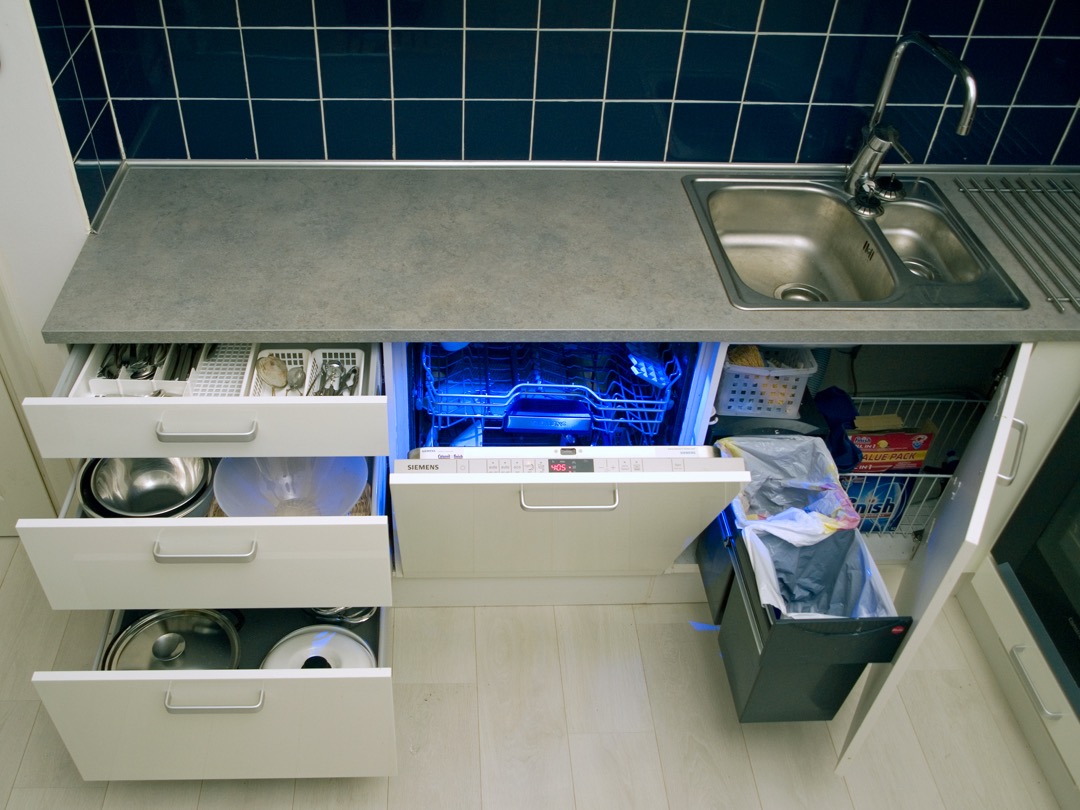
Somebody linked here asking for the best panel-ready dishwashers on the market, and the honest first answer is about where to buy one rather than which one to buy. These machines are installed appliances sold through appliance dealers, kitchen showrooms and the manufacturers themselves. Amazon carries very few, and when we checked this autumn the panel-ready units on offer there were mostly thinly reviewed listings from smaller brands, and most of the names below were missing or available only used. So this page gives no buy buttons. If a standard stainless front is fine and you would rather order online, our guide to the best dishwashers covers the machines Amazon actually stocks and ships. It is a shortlist to take to a dealer, built from the manufacturers’ own spec sheets, plus the part of the job most guides skip: the panel itself.
I ran a restaurant group’s test kitchen for four years, and I have loaded, unloaded and cursed more dishwashers than most people will own. A commercial machine and a panel-ready home dishwasher have almost nothing in common mechanically, but the things that matter in daily use are the same: what fits on the racks, whether plastic comes out dry, how loud it is from the next room, and whether you can tell it is running. A panel-ready machine adds one more: whether the door, carrying a heavy slab of cabinetry, still opens and closes the way it should for fifteen years.
What Panel Ready Actually Means
A panel-ready dishwasher ships without a finished front. You, or your cabinetmaker, supply a panel that matches the surrounding cabinets, and the dishwasher disappears into the run. To make that possible, the controls move to the top edge of the door, where you see them only when the door is open. Manufacturers call this fully integrated, top control, custom panel or panel ready, and for practical purposes those terms describe the same thing.
A semi-integrated or front-control dishwasher keeps a strip of controls visible on the door. A panel can cover the rest, but it never fully disappears, and KitchenAid’s own guidance is that semi-integrated models are generally not panel ready.
One more distinction is worth knowing before you shop. Some panel-ready models sit flush with the cabinet faces and some stand slightly proud of them. Yale Appliance, a large Boston dealer, warns that many US panel-ready models sit about two inches forward of the cabinet line once installed. Whether that bothers you depends on your kitchen, but confirm the installed depth on the spec sheet rather than assuming flush.
The Shortlist
These are the full-size, 24 inch models we would take to a showroom, all checked against the manufacturer’s own pages or spec sheets. Noise is in dBA as the manufacturer rates it. Lower is quieter, and every machine here is quiet enough to talk over.
| Model | Noise | Place settings | Third rack | Drying | Running indicator |
|---|---|---|---|---|---|
| Bosch 800 Series SHV78CM3N | 42 dBA | 16 | Yes | CrystalDry (zeolite) | InfoLight on the floor |
| Bosch Benchmark SHV9PCM3N | 39 dBA | 16 | Yes | CrystalDry (zeolite) | TimeLight, time remaining on the floor |
| Thermador Star Sapphire DWHD661EPR | 42 dBA | 16 | Yes, Chef’s Tool Drawer | StarDry (zeolite) | PowerBeam, time remaining on the floor |
| Miele G 7186 SCVi AutoDos | 42 dBA (39 in Extra Quiet) | 16 | Cutlery tray | AutoOpen plus condensation | Optical and acoustic |
| KitchenAid KDTF924PPA | 39 dBA | 14 | Yes, FreeFlex | Door-open dry | LED countdown on the floor |
| Fisher & Paykel DD24DHTI9 N DishDrawer | 43 dBA (top drawer) | 14 (7 per drawer) | No, two drawers | Fan-assisted | Hidden, knock to pause |
| ASKO DFI564 | About 42 dBA | 16 | Yes | Turbo Combi with auto door opening | Status light |
Bosch 800 Series SHV78CM3N: the default choice
If someone asked me to pick one panel-ready dishwasher without knowing anything else about their kitchen, this would be it. It holds 16 place settings, has a flexible third rack, runs at 42 dBA, and dries with CrystalDry, Bosch’s zeolite system. Zeolite is a mineral that heats up as it absorbs moisture, which is why it gets plastic containers drier than a plain condensation system without a heating element baking the bottom rack. Bosch’s stainless tub and the PowerControl spray arm round it out. Every dealer stocks it, and every installer has fitted one, which matters more than it sounds when the job is hanging a custom panel.
Bosch Benchmark SHV9PCM3N: the quiet upgrade
The Benchmark adds what you would hope for at the top of the Bosch line: a 39 dBA rating, a built-in water softener, interior lighting and TimeLight, which projects the time remaining on the floor rather than a simple dot. The softener is the feature I would pay for in a hard-water area. Hard water leaves the white film on glassware and slowly scales the machine itself, and a softener deals with it at the source.
Thermador Star Sapphire DWHD661EPR: the entertainer’s machine
Thermador is Bosch’s luxury sister brand, and this model shares the same panel specifications and zeolite drying approach (StarDry here). What sets it apart is the Adjustable Chef’s Tool Drawer, an interior light Thermador calls Star Glow, a water softener, Push to Open so the panel needs no handle, and a rack designed to hold 18 wine glasses. If you host often and wash stemware by hand because you do not trust it in a machine, this is the one built around that problem.
Miele G 7186 SCVi AutoDos: the one that doses itself
Miele’s headline feature is AutoDos, which holds a PowerDisk of detergent inside the machine and doses each load automatically. It sounds like a gimmick until you have lived with a household that alternates between too much detergent and too little. The machine is rated at 42 dBA, or 39 in its Extra Quiet mode, and Knock2open lets you open the door by knocking on the panel, so you can skip the handle entirely. Wirecutter notes that Miele parts and service can be harder to source than for American-sold brands, so ask your dealer who services Miele locally before you commit.
KitchenAid KDTF924PPA: flush to the cabinet
KitchenAid rates this model at 39 dBA and markets it as flush to the cabinet, which addresses the stand-proud problem above. It has a FreeFlex third rack, a water softener, an interior LED light and a countdown projected on the floor. The panel and handle are not included, as with every machine here. Wirecutter has criticised KitchenAid’s rack layouts on other models, so load your own dishes into the floor model before you buy.
Fisher & Paykel DishDrawer DD24DHTI9 N: two machines in one opening
The DishDrawer replaces a single door with two independent drawers, each holding seven place settings. You can run a half load in one drawer, keep clean dishes in the other, and the top drawer sits close to counter height, so there is far less bending. That makes it the best choice here for anyone with back trouble or a small household that rarely fills a full machine. It takes two panels instead of one, and Fisher & Paykel’s installation guide is strict about them, which is covered below.
ASKO DFI564: the tall-kitchen option
ASKO’s distinguishing feature is a sliding door that moves up as it opens and down as it closes. ASKO says this lets the dishwasher carry a taller custom door with a flush plinth and avoids the door striking the toe kick. If your cabinets are taller than standard and you want the panel to line up with the drawers beside it, ASKO is the one brand we found with a documented mechanism for it. ASKO also claims the largest interior load height on the market, which helps with stockpots and sheet pans.
Cove, the dishwasher from the Sub-Zero and Wolf group, deserves one line. The DW2451 is well built and rated at 41 dBA, and it makes the most sense when it comes bundled with a Sub-Zero and Wolf kitchen package. On its own, Wirecutter judged it poor value against the machines above.
The Panel: What Dealers Rarely Explain
The dishwasher is half the purchase. The other half is a panel made by your cabinetmaker, and most problems with panel-ready installs trace back to it.
Weight
Every panel-ready door is balanced by springs, and those springs are set for a panel within a specific weight range. Too heavy and the door drops open; Miele’s older installation instructions warn that an overweight panel will distort the springs and cause the door to fall. Too light and the door springs back up or flies open. Here is what the manufacturers publish.
| Brand | Panel weight | Thickness |
|---|---|---|
| Bosch (current) | 7 to 24 lb accepted, springs set for 11 to 18 lb | 3/4 inch recommended |
| Thermador (current) | 7 to 24 lb accepted, springs set for 11 to 18 lb | 3/4 inch recommended |
| Fisher & Paykel DishDrawer | 20 lb maximum per panel, including the handle | 5/8 to 13/16 inch |
| Miele G 5482 (18 inch) | 2 to 8 kg, roughly 4.4 to 17.6 lb | Per installation guide |
Some dealer guides describe real wood panels at 25 to 40 pounds. That is above every manufacturer limit we found. Solid hardwood with a thick frame can get heavy fast, so weigh the panel, handle included, before it is mounted. If it falls outside the factory spring setting, the springs need adjusting at install. Bosch publishes a support line for panels outside its 11 to 18 pound range, and ASKO’s springs adjust from the front.
Size and shape
Panels can be one piece, or two pieces arranged to look like a drawer above a door so the dishwasher matches the drawer bank next to it. Bosch and Thermador include a template. Miele’s older guide gives the formula plainly: panel height equals the counter height, minus the height of the control panel, minus the toe kick. Fisher & Paykel specifies minimum panel sizes and a minimum gap between the two drawer panels, so give the cabinetmaker the installation guide, not a photo of the kitchen.
Moisture
A dishwasher door is a warm, wet environment. Fisher & Paykel’s guide requires the back and sides of the panel to be sealed with a waterproof finish such as polyurethane, and says the panel must not rest on the surrounding cabinetry. That is good practice on any brand. An unsealed MDF panel will swell at the edges within a year.
Clearance
The most common fit problem is the open door hitting something: a thick drawer pull on the cabinet beside it, an island set too close, or a corner cupboard. Fisher & Paykel specifies a minimum of 1/16 inch to an adjacent door and 1/2 inch to a corner cupboard. Thermador’s planning guide tells you to allow room to open the door fully in a corner. Lay it out on paper with your actual handles before the cabinets are ordered.
Handles
No panel-ready dishwasher includes a handle. You choose one to match the cabinets, or you go handleless with Thermador’s Push to Open or Miele’s Knock2open.
What Panel Ready Costs
There is no fixed premium. Panel-ready versions of a given dishwasher are often priced close to the stainless version of the same model, sometimes lower, because you are not paying for a finished front. The real extra cost is the panel itself, which your cabinetmaker quotes separately, plus the installer’s time to hang it and balance the springs. Expect the panel to cost more in a premium wood species or a complex profile.
There is one long-term cost to consider. Fifteen years from now, when the dishwasher is replaced, the old panel can usually move to the new machine if the new one accepts the same weight and size. Dishwashers make this easier than refrigerators, because the 24 inch opening is standardised. But if the panel gets damaged, a replacement may not match cabinets that have aged and darkened in the meantime. Ask your cabinetmaker for a spare if the finish is unusual.
Reliability
Yale Appliance publishes service rates from its own installed base, which is the closest thing to independent reliability data in this category. In its most recent figures, Miele came in lowest at 5.6 percent, Bosch at 7.7 to 7.8 percent, Thermador at 8.1 percent and KitchenAid at 8.2 percent. Fisher & Paykel and Café were higher at 16.6 percent across all their dishwashers, though Yale notes that only 2 of 12 panel-ready DishDrawers needed a service call, both related to installation. This is one dealer’s customer base, not a controlled study, but the pattern matches what I hear from installers.
18 Inch Panel-Ready Options
For a small kitchen or an apartment, two 18 inch panel-ready machines stand out. The Bosch 800 Series SPV68C73UC is 17 5/8 inches wide, rated at 44 dBA, holds 10 place settings and keeps the third rack and InfoLight of its full-size siblings. The Miele G 5482 SCVi SL is also rated at 44 dB and accepts a 2 to 8 kilogram panel, but it signals the end of the cycle with sound only, with no floor light. Neither is cheaper than a full-size model, so choose 18 inches for the space, not the budget.
How I Would Load Any of These
Whichever machine you choose, the habits are the same, and they matter more than the badge on the front.
Glass blender jars, food processor bowls and lids go on the top rack, away from the heating element and the strongest spray. If you bought a blender with a glass jar to get away from plastic, the dishwasher is the easy part. The blade assembly is the part to check, since many makers want it washed by hand. The same goes for the bowls of a food processor: the bowls and lids are usually top-rack safe, and the blades stay sharper washed by hand.
Glass and stainless bakeware go on the bottom rack without fuss. Coated pans are another matter, because dishwasher detergent is abrasive and alkaline, and it shortens the life of nonstick and some ceramic coatings. That is one reason our non-toxic bakeware picks lean toward glass, stainless and uncoated steel. A stainless colander is one of the easiest things in the kitchen to put through a machine, and it comes out cleaner than it does by hand, because the spray gets into every perforation.
Seasoned cast iron and carbon steel never go in, nor do good knives, wooden boards or anything with a wooden handle. A dishwasher strips seasoning in a single cycle. Our guide to cleaning a cast iron skillet covers what to do instead.
If your glasses start coming out cloudy, soak one in white vinegar for five minutes. If it clears, the film is hard water minerals, and a water softener, rinse aid or a model with a built-in softener will fix it. If it stays cloudy, the glass is etched, which is permanent. Our guide to household uses of vinegar explains why vinegar soaks beat pouring it into the rinse-aid compartment.
The Short Version
For most kitchens, start with the Bosch 800 Series and work up from there. Choose the Benchmark or the Thermador if you want a quieter machine, a water softener and a time-remaining display. Choose Miele if automatic detergent dosing appeals and you have a good local Miele service agent. Choose the Fisher & Paykel DishDrawer if bending is a problem or you run small loads, and ASKO if your cabinets are taller than standard. Then give the spec sheet’s panel weight and size limits to your cabinetmaker before they cut anything, because the panel decides whether the installation works.
Frequently Asked Questions
What is the difference between panel ready, fully integrated and semi-integrated dishwashers?
Can any dishwasher take a custom panel?
How do you know a panel-ready dishwasher is running?
How heavy can the custom panel on a dishwasher be?
Do panel-ready dishwashers come in 18 inch widths?
Related Articles
About the Reviewer

Nora Whitfield, CIA Culinary Arts, ServSafe Certified
A.O.S. Culinary Arts, The Culinary Institute of America
Nora Whitfield trained at the Culinary Institute of America and spent twelve years in professional kitchens, the last four running the test kitchen for a regional restaurant group where her job was to decide which equipment could survive a dinner service and which could not. She has seasoned more carbon-steel woks than she can count, boiled water in every kettle worth owning, and broken enough cheap gear to know exactly where manufacturers cut corners. She reviews kitchen equipment the way she specified it professionally: cook on it, clean it, and see what it looks like after a month.