The 12 Best Non-Toxic Cookware Picks of 2026
Chef Nora Whitfield ranks the best non-toxic cookware of 2026 by what food touches: clad stainless, cast iron, carbon steel, enamel and named-claim ceramic.
Updated
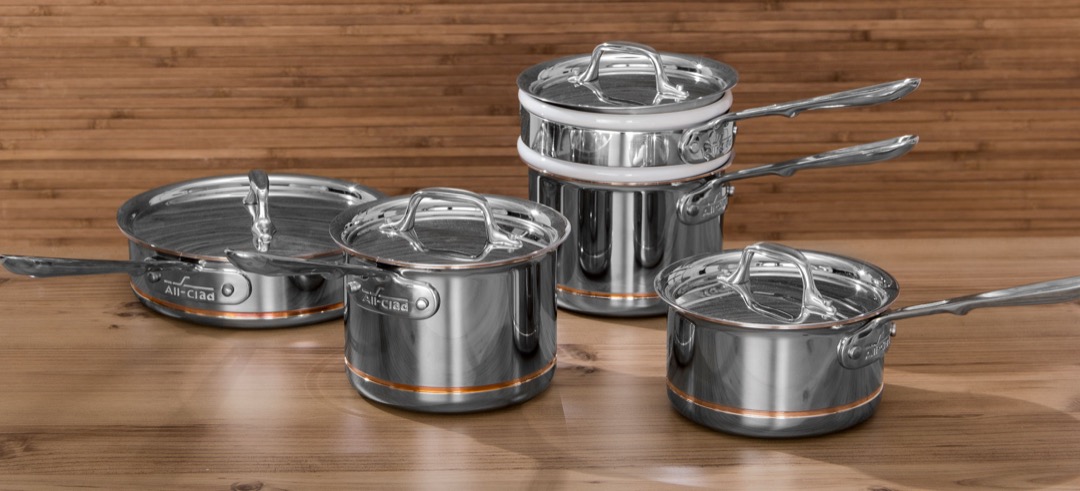
The best non-toxic cookware is mostly the cookware restaurant kitchens already use. In every professional kitchen I have worked in, the line ran on clad stainless, carbon steel and cast iron, and nonstick was a short stack of cheap egg pans that got thrown out every few months. Nobody chose that setup for health reasons. It was chosen because uncoated metal survives high heat, metal tools and a dishwasher, and a coating does not. In 2026 that same choice happens to settle most of the chemistry questions people bring to this search.
I am Nora Whitfield, CIA-trained, ServSafe certified, and for four years the test-kitchen lead for a restaurant group. I am a cook, not a toxicologist, so the health claims on this page come from the FDA, the EPA, Consumer Reports, the CDC and published studies, and I name them as I go. What I can add is the kitchen side: which surfaces hold up, which ones fade, and which listing claims say something checkable.
The page is built on a simple rule. A pan with no coating needs no chemistry claim, because the material is the claim. A coated pan is only as trustworthy as the specific substances its maker is willing to name. Below are twelve picks, from a full stainless set down to a single egg pan, each reviewed once, followed by sections on PFAS-free, nonstick, ceramic and stainless cookware, and a plain-language look at what the safety research supports.
Find the Best Non-Toxic Cookware for Your Need
Jump to the material or job you came for.
- Overall best non-toxic cookware
- Best PFAS-free cookware
- Best non-toxic nonstick pan
- Best non-toxic ceramic cookware
- Best non-toxic stainless steel cookware
- More use cases
How We Chose This Non-Toxic Cookware
Every product was checked live on Amazon US and against Amazon’s own product API on the day of publication, with the delivery location pinned to Dallas so regional availability quirks did not distort a listing. I did not cook in these pans for this article. The ranking comes from listings, maker documentation and published independent test results, and I say which is which.
Products were ranked on four things. First, what the food touches, with the body of the pan named separately. Second, how specific the maker’s materials claim is, because naming PTFE, PFAS, lead and cadmium is a statement and saying non-toxic is not. Third, stated oven and induction limits. Fourth, how each surface ages according to owner reports and independent testing, because a coating that is safe on day one and flaking by month eight is not a good buy.
Several listings were rejected. Sets that only claimed PFOA-free and PFOS-free were left out, because that wording fits an ordinary PTFE pan. Le Creuset was considered for the Dutch oven slot and set aside: on Amazon most colors flip to third-party sellers, and its public statements describe compliance with FDA rules rather than naming substances as absent.
Best Non-Toxic Cookware Overall
Twelve products, each reviewed once with its own card. The first four are the picks most kitchens should choose between.
Best Overall: Cuisinart MultiClad Pro 12-Piece Stainless Set
This is the set I would put in front of most people first, because it answers the non-toxic question by having nothing to answer. The cooking surface is bare polished stainless. There is no coating, no trade-name finish, no exclusion list to read. Underneath is an aluminum core clad between stainless layers, and the cladding runs up the walls to the rim rather than stopping at a disc on the base.
That full cladding is the detail that matters in use. A saucepan heated only from a base disc scorches at the edge and stays cool up the walls. A fully clad pan spreads heat into the sides, so a reduction tightens evenly and a pan sauce does not burn where the base meets the wall. Twelve pieces cover saucepans, a stockpot, skillets and a saute pan, so this is a set you will not outgrow.
The trade-off is technique. Bare stainless sticks if you add cold food to a cold pan. Heat the pan first, add fat, and let protein release on its own before you move it. Owners also report rainbow tints and white spots, which are cosmetic and lift with a little vinegar or a stainless cleanser. If you want a deeper single piece for braising and shallow frying, our saute pan guide covers the shapes worth adding.

Cuisinart MultiClad Pro 12-Piece Stainless Steel Cookware Set, MCPS-12N
by Cuisinart
The best non-toxic cookware set for most kitchens, because fully clad stainless removes the coating question entirely and cooks like restaurant gear.
Pros
- Tri-ply construction runs up the sidewalls to the rim, so the aluminum core carries heat through the sides of a saucepan instead of only across the base
- The cooking surface is bare polished stainless with no coating of any kind, which means there is no coating chemistry to verify and nothing that can wear through into food
- Oven safe to 500F and induction compatible, so a sear on the burner can finish in the oven in the same pan
- Dishwasher safe, with riveted stainless handles that carry no plastic or coated parts to degrade
Cons
- Food sticks unless the pan is preheated and filmed with fat first, which is a technique to learn rather than a defect
- Owners report rainbow discoloration and white spotting, which is cosmetic and lifts with a mild acidic cleaner
- Cladding to the rim makes the larger pieces heavy once they are full
Best Budget: Lodge 12-Inch Pre-Seasoned Cast Iron Skillet
Cast iron is the oldest nonstick surface in the kitchen and the only one you can repair at home. The Lodge skillet is bare iron seasoned at the factory with vegetable oil, which bakes into a hard polymerized layer. That layer is made of cooking fat, not an applied coating, and when it wears you rebuild it. Our guide to seasoning a cast iron skillet walks through it, and cleaning cast iron without stripping the seasoning is easier than its reputation suggests.
The listing calls the pan PFAS-free and made without PFOA or PTFE. Those statements are true by construction, because there is no coating to contain either. Iron is magnetic, so it works on induction, and our explainer on cast iron and induction covers how to avoid scratching a glass cooktop.
One disclosure that most roundups skip. The Amazon listing carries a California Proposition 65 warning for cancer and reproductive harm. Prop 65 notices are triggered when a product may expose someone to any listed substance above a very low threshold, and they are common on cast metal goods. The listing does not say which substance triggered this one, so I will not guess. What I can say is that the notice is there, and you should know about it before you buy.
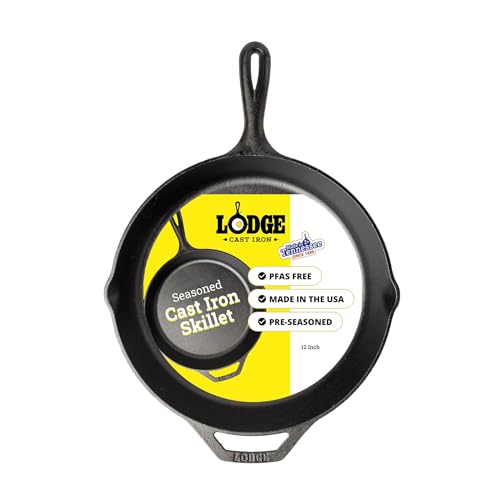
Lodge Pre-Seasoned Cast Iron Skillet, PFAS-Free, 12 Inches
by Lodge
The budget pick, and a nonstick pan that never wears out, provided you keep up the seasoning and accept the weight.
Pros
- Bare iron seasoned with baked-on vegetable oil, so the release surface is polymerized cooking fat rather than an applied coating
- Listed as PFAS-free and made without PFOA or PTFE, a claim that is true by construction because there is no coating to contain either
- The seasoning can be rebuilt indefinitely, so this is a nonstick surface that never has to be thrown away
- Made in the USA, works on induction because iron is magnetic, and goes from stovetop to oven to grill
Cons
- The Amazon listing carries a California Proposition 65 warning, and the listing does not say which substance triggers it
- Heavy, slow to heat, and prone to hot spots on a burner smaller than the pan
- Long acidic simmers strip seasoning and pull extra iron into the food
Best Premium Stainless: All-Clad D3 10-Piece Set
All-Clad’s D3 is the bonded tri-ply line that set the template for clad cookware in American kitchens, and it is still made in the USA. Like the Cuisinart set, it has a bare stainless cooking surface over an aluminum core, so the materials question is identical. What you pay for is fit and finish, heat ceiling and warranty.
The 600F oven rating and broiler clearance are the practical differences. A steak seared on the stove can go under the broiler in the same pan, and a frittata can finish under direct heat without a second thought. The limited lifetime warranty is the other real argument: this is cookware that tends to outlive the kitchen it was bought for.
The cons are price and care. All-Clad recommends hand washing to keep the exterior bright, and some owners report discoloration after the first few uses. That is heat tint on stainless, not a breakdown of anything, and it does not affect cooking. If the price is the obstacle, the Cuisinart MultiClad Pro gets you the same construction idea for much less.
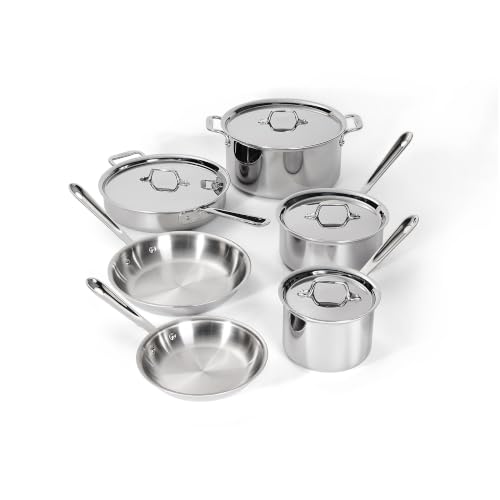
All-Clad D3 Stainless Steel Cookware Set, 10-Piece, Made in the USA
by All-Clad
The premium upgrade: American-made tri-ply that will outlast every coated pan on this page and the kitchen it is bought for.
Pros
- Bonded tri-ply with an aluminum core, the construction professional kitchens have used for decades, made in the USA
- Oven safe to 600F and safe under the broiler, so a hard finish under high heat is always available
- Bare stainless cooking surface with nothing to coat, flake or certify
- Backed by a limited lifetime warranty
Cons
- A premium price for ten pieces
- All-Clad recommends hand washing to keep the finish looking new
- Some owners report discoloration after the first few uses, which is cosmetic
Best Ceramic Set: Caraway 12-Piece Ceramic Cookware Set
If you want easy release without PTFE, Caraway is the set I would look at first. The cooking surface is a sol-gel ceramic coating over an aluminum body, and the listing names PTFE, PFOA, PFAS, lead and cadmium as absent rather than leaning on a vague badge. That claim also has outside scrutiny behind it. In August 2025, the National Advertising Division of BBB National Programs found that Caraway had a reasonable basis for its free-of-PFAS and non-toxic claims about its own cookware. The same decision did not support Caraway’s claims that competitors’ pans are toxic, which is worth knowing when you read its marketing.
The set is induction compatible and oven safe to 550F, which is high for a ceramic coating. The magnetic pan racks and lid holder are more useful than they look. Most coated pans are damaged in the cupboard, stacked against each other, not on the stove.
The honest caveat applies to every ceramic pan on this page. Sol-gel coatings lose their slickness over months to a couple of years, faster than PTFE. Cook at medium heat, skip aerosol sprays, and hand wash. Caraway sells this set itself through Amazon rather than Amazon selling it directly.

Caraway 12-Piece Non-Stick Ceramic Cookware Set
by Caraway
The ceramic set with the most specific exclusion list and an advertising-review finding behind its PFAS-free claim, for cooks who want easy release and accept that it wears.
Pros
- Names PTFE, PFOA, PFAS, lead and cadmium individually instead of printing an undefined non-toxic badge
- In August 2025 the National Advertising Division of BBB National Programs found Caraway had a reasonable basis for its free-of-PFAS and non-toxic claims about its own cookware
- Oven safe to 550F, high for a ceramic-coated pan, and induction compatible
- Magnetic pan racks and a lid holder keep pans from being stacked against each other, which is how most coatings get scratched
Cons
- Sol-gel ceramic loses its slickness over months to a couple of years, so the set carries a replacement cost a stainless set does not
- A premium price for a coated set
- Hand wash recommended, and sold by Caraway Home rather than by Amazon
Best Dutch Oven: Staub 7-Quart Round Cocotte
Enameled cast iron is cast iron sealed under a fused glass enamel, so food never touches bare iron and acidic braises are safe from the metallic taste that bare iron can give them. The question with enamel is the glaze, and here Staub is unusually direct. Its own safety and materials page states that Staub is cadmium free, lead-free, PFOA free, PTFE free and PFAS free, and says the cookware is regularly tested by third-party certified labs. That is the most specific enamel statement I found for this page. Most enamel makers say their products meet FDA requirements, which is a compliance claim rather than an absence claim.
The interior is matte black enamel, which browns meat better than a glossy light enamel and hides staining. The pot is rated to 500F with the lid and 900F without it, which covers a no-knead loaf baked in a very hot oven. The lid’s underside spikes drip condensation back onto the food during long braises.
It is heavy, it is a premium purchase for a single pot, and some owners report interior chipping. Enamel chips from thermal shock and metal tools, so heat it gradually and use wood or silicone.

Staub Cast Iron 7-qt Round Cocotte - White
by Staub
The enameled Dutch oven backed by the most specific maker statement found for this category, built for braising and bread.
Pros
- Staub's own safety page states its cookware is cadmium free, lead-free, PFOA free, PTFE free and PFAS free, and cites regular third-party certified lab testing
- Enamel over cast iron, so food touches enamel rather than bare iron, which suits long acidic braises
- Oven safe to 900F without the lid and 500F with it, enough for bread baked in a very hot oven
- Seven quarts with a heavy self-basting lid, sized for a whole chicken or a pot of stock
Cons
- Very heavy when full
- Some owners report chipping of the interior enamel
- A premium price for a single pot
Best Value Dutch Oven: Lodge Essential Enamel 6-Quart Dutch Oven
The Lodge Essential Enamel pot does the same job as the Staub at a budget-tier price: porcelain enamel fused to cast iron, oven safe to 500F, induction compatible, and big enough for a family braise or a pot of beans. The listing states it is PFAS free and made without PFOA or PTFE.
The gap is in the paper trail. The listing makes no statement about lead or cadmium in the enamel, and, like the Lodge skillet, it carries a California Prop 65 notice without naming the substance behind it. US-sold enamel is subject to FDA limits on lead and cadmium leaching, so silence is not evidence of a problem. It does mean you are relying on the regulatory floor rather than the maker’s own absence claim.
Owners also report chipping, mostly around the rim. For an occasional braiser that is a fair trade. If you braise weekly and want the strongest maker statement, the Staub is the better buy.

Lodge Essential Enamel Cast Iron Dutch Oven, 6 Quart, Island Spice Red
by Lodge
The value Dutch oven: the same enamel-over-iron idea as the premium pots, with a thinner paper trail on glaze chemistry.
Pros
- Listed as PFAS free and made without PFOA or PTFE
- Porcelain enamel over cast iron, so tomato braises and wine-based stews never react with bare metal
- Six quarts, oven safe to 500F, and induction compatible
- Enameled cast iron at a budget-tier price, from a maker with a long cast iron history
Cons
- Some owners report enamel chipping, especially around the rim
- The listing makes no lead or cadmium statement, and it carries a Proposition 65 notice
- Heavy, like all enameled cast iron
Best Carbon Steel: Merten & Storck 12-Inch Pre-Seasoned Skillet
Carbon steel is what many restaurant saute stations run on, and it deserves more attention than it gets in non-toxic roundups. A correction first, because the error circulates: carbon steel is not a blend of cast iron and stainless. It is an iron-carbon alloy with less carbon than cast iron, rolled into a thinner, smoother pan. Like cast iron it is uncoated, and like cast iron its release comes from seasoning.
The Merten & Storck skillet arrives pre-seasoned, works on induction and is rated to 600F. The practical difference from the Lodge is weight. A 12-inch carbon steel pan is far easier to lift, tilt and toss, which is why line cooks prefer it for eggs, fish and fast sears.
Expect a break-in period. Factory seasoning on carbon steel is thin, and owners report it wearing in the first few weeks. Cook fatty foods early, avoid long acidic simmers, and dry the pan on the burner right after washing, because it rusts if left wet. The same seasoning method from our cast iron guide applies here.

Merten & Storck Pre-Seasoned Carbon Steel 12" Frying Pan Skillet
by Merten & Storck
The restaurant line cook's pan: uncoated, light enough to toss, and better every month you use it.
Pros
- Carbon steel is iron with a little carbon and no coating, so the release surface is seasoning you build and keep
- Much easier to lift and toss than cast iron of the same diameter
- Oven safe to 600F and induction compatible
- Pre-seasoned at the factory, so it can cook on day one
Cons
- The factory seasoning wears and needs rebuilding over the first few weeks
- Eggs and fish stick until the seasoning matures
- Rusts if left wet, so it has to be dried on the burner straight after washing
Best Budget Ceramic Set: GreenLife 16-Piece Ceramic Set
GreenLife is the budget route into PTFE-free nonstick. The listing calls the coating PFAS-free ceramic nonstick, which is a sol-gel coating with no fluoropolymer, over a light aluminum body. Sixteen pieces, including utensils and a steamer, will outfit a first apartment or a vacation kitchen from one box.
Two specs limit it. It is not induction compatible, and it is rated only to 350F in the oven, so it is a stovetop set. That suits the eggs, pancakes, rice and gentle sautes it does best.
Treat the coating as consumable. Owner reports of fading release and chipping are common, which matches what independent testers say about ceramic in general. Cook at medium or below, use a little butter or oil instead of spray, and replace the pans you use most as they lose their slick.

GreenLife 16 Piece Ceramic Nonstick Pots & Pans Cookware Set, Cream
by GreenLife
The budget way into PTFE-free nonstick, best treated as a set you will partly replace rather than a lifetime purchase.
Pros
- Listed as PFAS-free ceramic nonstick, a sol-gel coating with no fluoropolymer in it
- Sixteen pieces including utensils and a steamer, enough to outfit a first kitchen from one box
- Very easy release when new, so eggs and pancakes slide with little oil
- Light aluminum bodies that heat quickly and are easy to handle
Cons
- Coating wear and chipping reports are common, so plan on replacing the most-used pans
- Not induction compatible
- Oven safe only to 350F
Best Budget Nonstick Pan: SENSARTE 10-Inch Ceramic Frying Pan
If you only want one coated pan for eggs, this is a sensible place to start. What stood out on the SENSARTE listing is the wording: the coating is described as free of intentionally added PFOA, PTFE, PFAS, lead and cadmium. “Intentionally added” is exactly the phrasing state PFAS laws use, because trace contamination from the environment cannot be ruled out in any manufactured product. A maker that uses the legal phrasing is at least speaking the same language as the regulators.
The cast aluminum body has an induction base and the pan comes with a lid. The listing does not state an oven temperature, so treat it as a stovetop pan.
Owner reviews split on durability, with some reporting sticking after a few weeks of use. That is the ceramic pattern again. At this tier, buy it expecting to replace it, and keep it away from high heat and the dishwasher to stretch its life.

SENSARTE 10 Inch Nonstick Ceramic Frying Pan with Lid, PFAS/PTFE/PFOA Free
by SENSARTE
A budget ceramic egg pan with unusually precise exclusion wording, bought with the expectation that the coating is consumable.
Pros
- States the coating is free of intentionally added PFOA, PTFE, PFAS, lead and cadmium, which is the same wording state PFAS laws use
- Induction-compatible base on a ceramic pan
- Includes a lid
- Sold by the maker but shipped by Amazon, which keeps returns simple
Cons
- Owner reviews split on durability
- Some owners report sticking after a few weeks of use
- The listing does not state an oven temperature
Best Ceramic Pan for Induction: GreenPan Valencia Pro 10-Inch
GreenPan was an early mover in ceramic nonstick, and the Valencia Pro is its induction-ready line: a hard-anodized aluminum body with a magnetized base, a diamond-reinforced Thermolon ceramic coating, and oven safety to 600F with the glass lid rated to 425F. The listing states the coating is free of PFAS, PFOA, lead or cadmium.
There is one fact every buyer should know. GreenPan’s Amazon listings describe this coating as the first NSF Certified ceramic nonstick. On March 13, 2026, NSF published a public notice stating that GreenPan “does not have a NSF certification at this time and is not authorized to claim NSF Certification or use the NSF Certification Mark.” That notice concerns the certification claim. It is not a finding about the PFAS-free claim, which is a separate statement. I am including the pan because it is a capable induction ceramic pan, and stating the notice plainly because a certification claim is something buyers reasonably rely on.
Owner reports on coating life are mixed, and its star average trails the rest of the page. Use the same care as any ceramic pan.

GreenPan Valencia Pro 10" Ceramic Nonstick Frying Pan with Lid
by GreenPan
A capable induction-ready ceramic pan whose PFAS-free claim stands on its own, sold under a certification claim that NSF has publicly disputed.
Pros
- Listed as free of PFAS, PFOA, lead or cadmium
- Hard-anodized aluminum body with a magnetized base that works on induction
- Oven safe to 600F, with the glass lid rated to 425F
- Uses GreenPan's long-running Thermolon ceramic in a diamond-reinforced version
Cons
- Owner reports on coating longevity are mixed
- Its star average trails every other pick on this page
- The listing advertises NSF certification, but a March 13, 2026 NSF public notice says GreenPan does not hold one
Best Single Stainless Pan: Tramontina Tri-Ply Clad 12-Inch Skillet
If you are not ready to replace a whole set, replace the pan you use most. For most households that is the 12-inch skillet. The Tramontina Signature is fully clad tri-ply with a satin stainless surface, oven safe to 500F, induction compatible, dishwasher safe and listed as NSF certified.
A 12-inch clad skillet does nearly everything an old nonstick pan did except eggs: searing, pan sauces, shallow frying, roasting vegetables in the oven. Pair it with one ceramic egg pan and you have removed PTFE from daily cooking.
It comes without a lid, and it has the same learning curve as all bare stainless. Preheat until a drop of water beads and skates, add fat, then add food. If you are unsure which fat to use at searing heat, our oil smoke point chart lists the safe ranges.

Tramontina Signature Tri-Ply Clad Stainless Steel 12-Inch Large Frying Pan
by Tramontina
The one-pan route into uncoated cooking: a fully clad 12-inch skillet that replaces the nonstick pan most people reach for.
Pros
- Fully clad tri-ply in a 12-inch skillet, the single pan that does most of the searing in a working kitchen
- Bare satin stainless cooking surface with nothing to coat or certify
- Listed as NSF certified, oven safe to 500F, and induction compatible
- Dishwasher safe
Cons
- The same learning curve as all bare stainless: preheat, then add fat, or food sticks
- No lid included
Best Budget Stainless Set: Cuisinart Chef’s Classic 11-Piece Set
The Chef’s Classic set gives you the same inert cooking surface as the clad sets, bare stainless on every piece, at a budget-tier price. Eleven pieces include glass lids and a steamer insert, the set is oven safe to 500F, and it is listed as induction compatible.
The difference is construction, and it is worth being clear about. This is not fully clad. The aluminum sits in an encapsulated disc on the base only, so heat is strong at the bottom and weaker up the sidewalls. For boiling pasta, steaming and soups that is irrelevant. For reductions and sauces you will want to stir more and keep the heat moderate.
Owners report staining and discoloration, which is common on stainless and does not affect safety. As a starter set it is the simplest way to move a whole kitchen off coated pans.

Cuisinart Chef's Classic Stainless Steel Pots and Pans Set, 11 pc, 77-11G
by Cuisinart
The budget stainless set: the same inert cooking surface as the clad sets, with a simpler base that heats less evenly up the sides.
Pros
- Bare stainless cooking surface on every piece, so it is as coating-free as the fully clad sets
- Eleven pieces with glass lids and a steamer insert
- Oven safe to 500F and listed as induction compatible
- A budget-tier way into a full set of uncoated stainless
Cons
- The aluminum sits in an encapsulated base only, not clad up the sides, so the sidewalls run cooler than on fully clad pans
- Owners report staining and discoloration
Best PFAS-Free Cookware
The surest PFAS-free cookware is cookware with no coating at all, because PFAS in pans almost always means a fluoropolymer nonstick coating such as PTFE. That is also what the state laws target: the bans in Minnesota, Colorado, Maine and elsewhere cover intentionally added PFAS, and in cookware the regulators read that as the nonstick coating that contacts food. “Intentionally added” is the key phrase. No maker can promise zero trace PFAS from the environment, so the honest claim is that none was put there on purpose. These three cover the main routes: seasoned iron, a reviewed ceramic claim, and enamel with a named absence statement.
| Product | Price | Buy |
|---|---|---|
| Lodge Pre-Seasoned Cast Iron Skillet, PFAS-Free, 12 InchesBest PFAS-free skillet No coating exists to contain PFAS, so the listing's PFAS-free claim is true by construction | $29.90 | View on Amazon |
| Caraway 12-Piece Non-Stick Ceramic Cookware SetBest PFAS-free coated set Its free-of-PFAS claim was found to have a reasonable basis by the National Advertising Division in August 2025 | $445.00 | View on Amazon |
| Staub Cast Iron 7-qt Round Cocotte - WhiteBest PFAS-free Dutch oven Staub states its enamel is PFAS, PTFE, PFOA, lead and cadmium free and cites third-party lab testing | $299.95 | View on Amazon |
Best Non-Toxic Nonstick Pan
A non-toxic nonstick pan means one of two things: a ceramic coating made without PTFE, or a seasoned iron or steel surface. Ceramic gives the easiest release out of the box and fades with use. Seasoning starts slower and improves for as long as you own the pan. For eggs every morning, I would keep one ceramic pan and accept replacing it. For everything else, seasoned cast iron is the nonstick surface that never wears out, because you can always rebuild it. Whichever you choose, never preheat a coated pan empty on high heat.
| Product | Price | Buy |
|---|---|---|
| SENSARTE 10 Inch Nonstick Ceramic Frying Pan with Lid, PFAS/PTFE/PFOA FreeBest budget ceramic nonstick pan Uses the legal phrasing: no intentionally added PFOA, PTFE, PFAS, lead or cadmium | $35.99 | View on Amazon |
| GreenPan Valencia Pro 10" Ceramic Nonstick Frying Pan with LidBest ceramic nonstick for induction Hard-anodized body, induction base and a 600F pan rating; note NSF's 2026 notice on its certification claim | $99.99 | View on Amazon |
| Lodge Pre-Seasoned Cast Iron Skillet, PFAS-Free, 12 InchesBest nonstick that never wears out Seasoning is baked-on oil you can rebuild indefinitely, so the release surface is never thrown away | $29.90 | View on Amazon |
Best Non-Toxic Ceramic Cookware
Most “ceramic cookware” is not ceramic. It is an aluminum pan with a thin sol-gel coating, a silica-based layer sprayed on and cured, that releases food without fluoropolymers. Solid ceramic or fired clay cookware exists, but it is a separate and much smaller category. The coating’s advantage is chemistry: no PTFE. Its weakness is life span, which independent testers put at months to a couple of years. So the buying question is how specific the maker’s claim is, and how much you want to pay for something you will replace.
| Product | Price | Buy |
|---|---|---|
| Caraway 12-Piece Non-Stick Ceramic Cookware SetBest ceramic cookware set Names PTFE, PFOA, PFAS, lead and cadmium, with a 550F rating and storage racks that protect the coating | $445.00 | View on Amazon |
| GreenLife 16 Piece Ceramic Nonstick Pots & Pans Cookware Set, CreamBest budget ceramic set Sixteen pieces of PFAS-free ceramic for a first kitchen, though not induction compatible and only rated to 350F | $64.99 | View on Amazon |
| GreenPan Valencia Pro 10" Ceramic Nonstick Frying Pan with LidBest ceramic pan for induction Diamond-reinforced Thermolon on hard-anodized aluminum, with a magnetized base for induction | $99.99 | View on Amazon |
Best Non-Toxic Stainless Steel Cookware
Stainless steel cookware is the most practical answer to the non-toxic question because the cooking surface is the metal itself. The decision is construction. Fully clad pans carry an aluminum core up the walls, which is what makes sauces and reductions behave. Base-disc pans heat strongly at the bottom only, which is fine for boiling and steaming. All three sets here have a bare stainless surface, so pick by how you cook and how much construction you want. Some nickel migrates from new stainless during long acidic simmers, a point covered in the metals section below.
| Product | Price | Buy |
|---|---|---|
| Cuisinart MultiClad Pro 12-Piece Stainless Steel Cookware Set, MCPS-12NBest stainless cookware set Tri-ply clad to the rim, oven safe to 500F, induction ready and dishwasher safe | $270.96 | View on Amazon |
| All-Clad D3 Stainless Steel Cookware Set, 10-Piece, Made in the USABest premium stainless set Made-in-USA bonded tri-ply, rated to 600F and broiler safe, with a limited lifetime warranty | $799.95 | View on Amazon |
| Cuisinart Chef's Classic Stainless Steel Pots and Pans Set, 11 pc, 77-11GBest budget stainless set Bare stainless with an aluminum-encapsulated base, glass lids and a steamer insert | $170.30 | View on Amazon |
Best Non-Toxic Cookware by Use Case
A few more jobs where one pick on this page fits clearly.
| Product | Price | Buy |
|---|---|---|
| Tramontina Signature Tri-Ply Clad Stainless Steel 12-Inch Large Frying PanBest for induction Fully clad stainless on a magnetic base, the simplest induction upgrade from a nonstick skillet | $49.95 | View on Amazon |
| Staub Cast Iron 7-qt Round Cocotte - WhiteBest for braising Enameled cast iron with a heavy self-basting lid and a maker statement naming lead and cadmium as absent | $299.95 | View on Amazon |
| Merten & Storck Pre-Seasoned Carbon Steel 12" Frying Pan SkilletBest for searing Uncoated carbon steel rated to 600F that gets slicker the more you sear in it | $59.95 | View on Amazon |
| SENSARTE 10 Inch Nonstick Ceramic Frying Pan with Lid, PFAS/PTFE/PFOA FreeBest for eggs A light ceramic egg pan with a lid and precise no-intentionally-added wording | $35.99 | View on Amazon |
| GreenLife 16 Piece Ceramic Nonstick Pots & Pans Cookware Set, CreamBest budget starter set Sixteen PFAS-free ceramic pieces including utensils, for a stovetop-only starter kitchen | $64.99 | View on Amazon |
| All-Clad D3 Stainless Steel Cookware Set, 10-Piece, Made in the USABest made in the USA Bonded tri-ply made in the USA with a limited lifetime warranty | $799.95 | View on Amazon |
The Claim Ladder: How to Read a Non-Toxic Label
“Non-toxic” has no legal definition for cookware. No agency certifies it and any maker can print it. So I sort claims by how much they actually tell you, from most to least.
- No coating at all. Stainless, cast iron, carbon steel. The material is the claim, and there is nothing to verify beyond it. This is why the top of this page is uncoated.
- Named exclusions plus third-party testing. A maker that lists PTFE, PFAS, lead and cadmium as absent and says who tests for them, as Staub does for its enamel, has made a statement that can be checked and challenged.
- “PTFE-free” or “PFAS-free”. A real chemistry difference, because PTFE is a fluoropolymer and is generally counted within the PFAS family. Useful, but it says nothing about the glaze or metals.
- “Non-toxic” or “clean” with nothing named. Marketing until the maker says what it means.
- “PFOA-free” on its own. Close to meaningless today. Under the EPA’s PFOA Stewardship Program, launched in 2006 with 2010 and 2015 targets, the eight major fluoropolymer manufacturers phased PFOA out by 2015. Almost every nonstick pan is now PFOA-free, including ordinary PTFE pans. Consumer Reports stopped treating PFOA-free as a meaningful rating, and in its 2022 testing one PTFE pan labeled PFOA-free still contained measurable PFOA.
Two more traps. PTFE often hides behind trade names. The Ecology Center’s lab work identified coatings sold under names such as QuanTanium and Greblon as PTFE. And California’s AB 1200 now restricts “free of” claims: cookware sold there cannot advertise that it is free of one chemical from a listed class, PFOA for example, while other members of that class are intentionally added.
Is Nonstick Cookware Safe?
Here is the honest calibration, because this is the question most people arrive with. Undamaged PTFE nonstick, used below roughly 450F, is considered low risk. The FDA authorizes PTFE coatings for food contact and states that they contain a negligible amount of PFAS capable of migrating into food. That is not the same as zero, and it is not a recommendation, but it is the regulator’s position.
The risk is heat. According to Poison Control, PTFE begins to break down above roughly 500F, and an empty pan on a high burner gets there fast. In a 2003 test, the Environmental Working Group recorded an empty nonstick pan reaching 736F in a little over three minutes. The fumes cause polymer fume fever, a flu-like illness that usually passes in a day or two. The CDC’s research identifies carbonyl fluoride as a principal product of PTFE pyrolysis. Overheated PTFE releases mainly fluorinated gases of that kind. Lab work has also measured trace PFOA-family compounds in the fumes, but PFOA is not the main product.
Two groups should take this more seriously. Bird owners first: pet birds can be killed by PTFE fumes at temperatures that cause people no symptoms, which is why bird owners are commonly advised to keep PTFE pans out of the house. And anyone using an old, scratched pan: a 2022 laboratory study found that a single scratch in a nonstick coating can release thousands of micro- and nanoplastic particles.
So the real case against PTFE rests on what happens over years of use: high heat and abrasion, and most kitchens are not careful about either. Uncoated metal removes the need to be careful.
How Long Ceramic Nonstick Really Lasts
Ceramic is the PTFE-free coating, and it trades chemistry for longevity. Wirecutter, Serious Eats and Consumer Reports have all found that sol-gel ceramic loses its slickness faster than PTFE. Wirecutter’s description runs from about a dozen uses in the worst case to a handful of months at best, and in Serious Eats’ scratch testing only a few premium ceramic pans came through unscathed. Ceramic coatings also degrade under high heat, so the claim that they cannot be harmed by heat is wrong.
That makes ceramic a replacement-cost decision. A ceramic pan is a fine choice for eggs and fish if you budget for replacing it. A full premium ceramic set makes sense if you value the light weight and easy release enough to pay for it again in a few years.
Do Stainless Steel, Cast Iron and Aluminum Leach Metals?
All cookware metals can transfer in small amounts, and the evidence points to a few specific cases rather than a general danger.
Stainless steel
In a 2013 study by Kamerud and colleagues, tomato sauce simmered for twenty hours in new stainless pots picked up measurable nickel and chromium. The amount fell sharply over the first several cooking cycles as the pots conditioned. Twenty hours of acidic simmering is extreme, so this matters mainly to people with a diagnosed nickel allergy. For them, enamel, cast iron or carbon steel are better for long tomato sauces. For everyone else it is not a reason to avoid stainless.
Cast iron and carbon steel
These add dietary iron to food, most with acidic dishes cooked for a long time. For most people that is harmless. Anyone with hemochromatosis or another iron-overload condition should ask their clinician before cooking in bare iron routinely.
Aluminum
Uncoated aluminum reacts with acidic food, which is why every aluminum pan on this page is coated or anodized. The long-circulating link to Alzheimer’s disease is unproven, and Alzheimer’s Research UK says there is not enough high-quality evidence for it.
Imported cookware and lead
This is the metal risk worth acting on. In 2025 the FDA warned that certain imported aluminum, brass and Hindalium cookware can leach lead into food, and it kept updating its list of affected products through the end of the year. Buy from known brands with traceable sellers, and be wary of unbranded aluminum pots with no maker information.
Enamel: Ask for the Glaze Statement
Enameled cast iron is one of the safest surfaces in the kitchen, with one question attached: the glaze. The FDA sets limits on how much lead and cadmium can leach from ceramic glazes on food-contact ware sold in the US, so a US-sold enameled pot sits on top of a real standard. What separates makers is whether they go further. Staub states its cookware is lead and cadmium free and cites regular third-party lab testing. Other makers state compliance with FDA rules, which tells you the pot meets the floor but not what is in the glaze. The Lodge enamel listing makes no lead or cadmium statement at all. None of that is evidence of a problem. The difference is how much each maker will commit to in writing, and that is what this page ranks.
State PFAS Cookware Laws
There is no federal ban on PFAS in cookware, and the FDA still authorizes PTFE coatings. States have moved on their own. Rules verified October 2026; state rules change, so check your state’s environmental agency before relying on a date.
| State | What the law does | Effective |
|---|---|---|
| Minnesota | Bans intentionally added PFAS in cookware | January 1, 2025 |
| Colorado | Bans intentionally added PFAS in cookware | January 1, 2026 |
| Maine | Bans intentionally added PFAS in cookware | January 1, 2026 |
| Connecticut | Labeling requirement, then a ban | Labeling 2026, ban 2028 |
| Vermont | Bans intentionally added PFAS in cookware | July 2028 |
| New Mexico | Bans intentionally added PFAS in cookware | 2027 |
| California | AB 1200 disclosure and “free of” claim rules; the SB 682 ban was vetoed in October 2025 | Disclosure rules in force |
In practice, Minnesota’s agency reads its cookware ban as applying to PFAS nonstick coatings that touch food. That is why uncoated stainless and iron are untouched by these laws, and why the claim wording on coated pans is worth reading so closely.
Buyer's Guide
Non-toxic is not a regulated term for cookware, so this guide sorts pans by what the food touches and by how specific the maker is willing to be. Six factors decide whether a pan earns the label in practice.
Start With What the Food Touches
The cooking surface matters more than the body of the pan. Caraway, GreenLife, SENSARTE and GreenPan all use an aluminum body, and in every case a ceramic coating sits between that aluminum and your food. Stainless, cast iron and carbon steel have no coating at all, so the material is the whole claim. Enameled cast iron has a glass-like enamel layer that is stable but should come with a lead and cadmium statement. Ask one question of every listing: what is the outermost layer, and did the maker name it.
Rank the Claim by How Specific It Is
A listing that names PTFE, PFAS, lead and cadmium as absent and cites third-party testing is making a checkable statement. PTFE-free or PFAS-free names a real chemistry difference. Non-toxic or clean with nothing named is marketing. PFOA-free on its own tells you almost nothing, because PFOA has been out of US nonstick manufacturing since around 2015 and PTFE pans carry the label too. Read the exact wording, not the badge.
Match the Oven Ceiling to How You Cook
Stated oven limits on this page run from 350F on the GreenLife set to 600F on the All-Clad set, the carbon steel skillet and the GreenPan pan, with Staub's cocotte rated to 900F without its lid. Coatings and lids set the ceiling, not the metal. If you finish steaks under the broiler or bake bread in a very hot Dutch oven, buy uncoated or enameled cast iron for that job and keep coated pans for gentle work.
Check Induction Before You Buy
Induction needs a magnetic base. Cast iron, carbon steel and most clad stainless work automatically. Ceramic pans need a magnetic steel plate bonded to the base, and many budget ceramic sets skip it: the GreenLife set on this page is not induction compatible, while the Caraway, SENSARTE and GreenPan pans are. A fridge magnet that sticks firmly to the underside is the quickest test.
Budget for the Coating's Lifespan
Ceramic coatings lose their release within months to a couple of years, so the true cost of a ceramic pan is its price divided by how long it stays slick. Stainless, cast iron and carbon steel have no coating to replace and routinely last decades. If you cook daily, one good uncoated skillet plus a single inexpensive ceramic egg pan you replace when it fades is usually better value than a full premium coated set.
Weigh the Pan Before You Commit
Cast iron and enameled cast iron are heavy, and a full Dutch oven can be hard to lift from a hot oven, which matters for anyone with weak wrists or arthritis. Carbon steel gives the same uncoated surface at a lighter weight. Tri-ply stainless sits in between. Ceramic-coated aluminum is light, which is a large part of its appeal. Choose the material you will actually use every day, because the safest pan is the one that does not sit in a cupboard while an old scratched nonstick does the cooking.
How to Choose the Best Non-Toxic Cookware
Start with the job, not the label. If you cook a little of everything, buy clad stainless first. It is the closest thing to a universal answer: no coating, safe with acid, oven and broiler ready, dishwasher safe, and good for decades. A full set like the Cuisinart MultiClad Pro or a single 12-inch skillet like the Tramontina are both good ways in.
Add one uncoated nonstick surface next. Cast iron is cheaper and holds heat for searing and baking. Carbon steel is lighter and better for eggs and fast sears once seasoned. Either will do most of what an old nonstick pan did, and neither ever needs replacing.
If you still want a coated pan, and many cooks reasonably do for eggs, buy ceramic and read the exclusion list. Prefer wording that names PTFE, PFAS, lead and cadmium, ideally with outside testing or review behind it. Skip anything that only says PFOA-free. Then use it gently: medium heat, a little fat, no aerosol spray, no dishwasher, wood or silicone tools.
For braising and bread, choose enameled cast iron and ask for the glaze statement. Staub names lead and cadmium as absent. Lodge’s enamel is a budget-tier alternative that relies on the FDA floor.
Check induction and oven limits against your stove and your habits before you buy, because a ceramic set that will not work on your cooktop is an avoidable return. Finally, retire any pan with a flaking or deeply scratched coating. That pan is the real exposure route, more than any label on a new one.
Final Verdict
The Cuisinart MultiClad Pro 12-piece set is the best non-toxic cookware for most kitchens. Fully clad stainless removes the coating question rather than answering it, cooks evenly up the sidewalls, goes in the oven and the dishwasher, and will still be in service long after a coated set has been replaced. If you want the made-in-USA version with a broiler-safe rating and a lifetime warranty, the All-Clad D3 is the upgrade.
On a budget, the Lodge 12-inch cast iron skillet is the pick: bare iron, seasoning you can rebuild forever, and a nonstick surface that never wears out, with the Prop 65 notice disclosed so you can decide with full information. If you want PTFE-free easy release, the Caraway ceramic set names PTFE, PFAS, lead and cadmium as absent and has an advertising-review finding behind its PFAS-free claim, with the caveat that every ceramic coating wears.
The same logic carries into the oven. For pans and dishes that bake rather than fry, see our guide to non-toxic bakeware, and if you cook over very high heat, a cast iron wok is another uncoated tool worth owning.
Frequently Asked Questions
What is the safest cookware?
Is nonstick cookware safe?
Does PFOA-free mean PFAS-free?
How long does ceramic nonstick cookware last?
Can stainless steel or cast iron leach metals into food?
Related Articles
About the Reviewer

Nora Whitfield, CIA Culinary Arts, ServSafe Certified
A.O.S. Culinary Arts, The Culinary Institute of America
Nora Whitfield trained at the Culinary Institute of America and spent twelve years in professional kitchens, the last four running the test kitchen for a regional restaurant group where her job was to decide which equipment could survive a dinner service and which could not. She has seasoned more carbon-steel woks than she can count, boiled water in every kettle worth owning, and broken enough cheap gear to know exactly where manufacturers cut corners. She reviews kitchen equipment the way she specified it professionally: cook on it, clean it, and see what it looks like after a month.