How to Descale a Kettle
Limescale is calcium carbonate, and acid dissolves it. A chef explains the vinegar and citric acid methods, the real chemistry, and how often to do it.
Updated
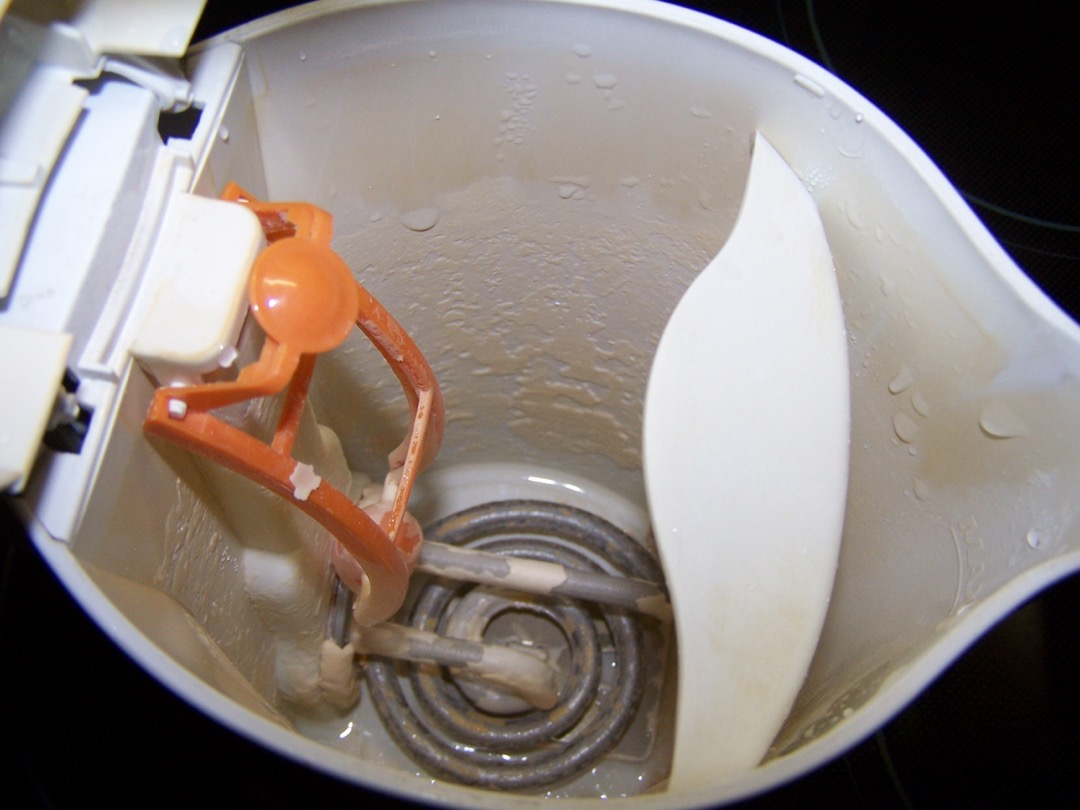
The first sign is usually noise. A kettle that used to come up to the boil quietly starts to rumble and clatter like a bad radiator, and it takes longer to get there than it did. Look inside and you will find the element, or the base of the pot, wearing a chalky white crust.
I ran a restaurant group’s test kitchen for four years in a building with genuinely hard water. The espresso machines got descaled on a written schedule because the manufacturer demanded it. The kettles got done whenever somebody noticed the rattling, which is to say far too late. I have descaled them with vinegar, with citric acid, with proprietary powders costing several times as much as either, and once, on internet advice I should have known better than to follow, with baking soda. That last attempt did nothing at all, and the reason it did nothing is the most useful thing in this article.
What Limescale Is, and Why It Forms in Kettles
Limescale is calcium carbonate, CaCO3, the same compound as chalk and eggshell. Hard water carries calcium in solution as calcium bicarbonate, which is soluble, invisible, and passes through your taps without a trace.
Heat changes that. Boiling drives dissolved carbon dioxide out of the water, the bicarbonate equilibrium collapses, and the calcium comes out of solution as carbonate, which is not soluble. It has to land somewhere, and it lands on the hottest surface available. In a kettle that is the element or the base plate directly above it, which is exactly where you find it. This is also why cold pipes stay largely clear while a kettle furs up in weeks. Heat is the trigger, not time.
Scale is a poor conductor, so a coated element runs hotter to deliver the same energy, wasting electricity and shortening its own life. And because it grows on the hottest spot, it grows fastest where it does the most damage.
Fellow’s support documentation lists the symptoms better than anyone else in the field: sluggish temperature readout response, over-boiling, inaccurate temperatures, and poor heating efficiency. Add the obvious ones and you have a full checklist. Your kettle needs descaling if you see any of these:
- Visible white, grey or chalky deposit on the element, base, or inside walls
- Loose white flakes floating in the water or landing in your cup
- A rumbling, rattling boil where it used to be quiet
- A noticeably longer time to boil than when the kettle was new
- Water that tastes chalky, flat, or faintly metallic
- On a variable temperature kettle, a readout that lags, drifts, or overshoots
- Boiling that runs on past the cut-off point
That last group deserves emphasis, because it costs you something you paid for. Scale between the element and the temperature sensor slows and distorts the reading, so the 175 degree setting you bought a temperature control kettle for stops actually being 175 degrees. If you brew green tea or pour over to a target temperature, descaling is calibration, not housekeeping.
Is Limescale Actually Dangerous?
No. Calcium carbonate is inert, non-toxic, and sold in pharmacies as a calcium supplement. America’s Test Kitchen says it plainly in its own descaling guidance: limescale is unattractive, and it is not unsafe. What it does is slow your boil, waste energy, throw off temperature accuracy, drop flakes in your cup, and give the water a chalky edge. Those are the reasons to deal with it. Health is not one of them.
How Often to Descale, Using an Actual Number
Every article on this says “more often if you live in a hard water area” and stops, which is useless, because almost nobody knows how hard their water is. You can find out in two minutes. Your water utility publishes an annual quality report with hardness in grains per gallon or parts per million, and a packet of test strips costs less than a bag of coffee. Here is the classification those numbers map onto.
| Classification | Grains per gallon | ppm (mg/L) |
|---|---|---|
| Soft | Under 1.0 | Under 17 |
| Slightly hard | 1.0 to 3.5 | 17 to 60 |
| Moderately hard | 3.5 to 7.0 | 60 to 120 |
| Hard | 7.0 to 10.5 | 120 to 180 |
| Very hard | Over 10.5 | Over 180 |
The manufacturers who publish an interval land in a tight band. KitchenAid says about once a month with daily use, more often with hard water. Zojirushi says every one to three months, depending on the mineral content of the water. America’s Test Kitchen says every one to two months. Nobody publishes a hardness-indexed table, so what follows is practitioner guidance built on those three figures rather than a measured result.
| Your water | Daily use | Occasional use |
|---|---|---|
| Very hard, over 180 ppm | Every 2 to 4 weeks | Every 6 to 8 weeks |
| Hard, 120 to 180 ppm | Every 4 to 6 weeks | Every 2 to 3 months |
| Moderately hard, 60 to 120 ppm | Every 1 to 2 months | Every 3 months |
| Soft to slightly hard, under 60 ppm | Every 3 months | Every 3 to 6 months |
The kettle is the better guide after a cycle or two. Opening the lid to the first pale bloom of deposit means you have the interval right. Chipping at a crust means you are overdue.
How to Descale a Kettle With Vinegar
This is the standard method, it works, and it is almost certainly in your cupboard. Use plain white distilled vinegar at around 5 percent acetic acid. The same jug handles a dozen other jobs, and a few it should never be used for, which I cover in our guide to household uses of vinegar.
- Empty the kettle and unplug it.
- Fill with white vinegar and water: 1 part vinegar to 3 parts water for light scale, 1 to 1 for a heavy crust. Cover the scale, and do not fill past the maximum line.
- Bring it to a boil, then switch it off. If your manual says not to boil anything but water, skip this and pour the solution in already hot instead.
- Let it stand. Thirty minutes handles most scale, two hours a heavy deposit, overnight for the worst cases. A longer soak does more than a stronger solution.
- Pour it out. Anything left should now be soft. Wipe it away with a cloth, sponge, or soft nylon brush.
- Rinse, then fill, boil and dump at least twice, three times if you can still smell vinegar. This step is not optional, and it is where most people stop early.
The fizzing you see is the reaction itself. Acetic acid converts calcium carbonate into calcium acetate, which is soluble, plus water and carbon dioxide gas: 2 CH3COOH + CaCO3 gives Ca(CH3COO)2 + H2O + CO2. Those bubbles are the CO2 leaving, and the calcium that was locked in the crust is now dissolved in the liquid, which is why it pours away.
That gives you a free progress indicator nobody mentions. While it fizzes, the reaction is running. If fizzing stops while scale remains, the acid is spent and you need a fresh batch rather than more soaking time.
How to Descale a Kettle With Citric Acid
Citric acid is the better tool, and the agent manufacturers name when they name one. It sells as a white powder in the canning aisle, sometimes as sour salt, and it is the active ingredient in most branded descaling powders.
- Fill the kettle about two thirds and bring it to a boil.
- Switch off, then stir in the citric acid. Two tablespoons per 500 ml of water is a good working strength. With a branded powder such as Dezcal, America’s Test Kitchen’s ratio is 1 ounce per 32 ounces of kettle capacity.
- Let it stand. America’s Test Kitchen calls five minutes enough in a full kettle of boiling solution. Fellow recommends at least half an hour. I use thirty minutes by default.
- Pour it out and wipe away any softened residue with a soft cloth.
- Rinse, then boil and discard one or two full kettles of clean water before using it again.
Citric acid runs the same acid-carbonate reaction as vinegar plus one extra trick: it chelates calcium ions, wrapping around them and holding them in solution rather than simply converting them. That is why it works faster on the same deposit and deals more completely with the thin mineral film left after the visible crust is gone. It also leaves no smell, which matters more than it sounds when the next thing in the kettle is water for tea. On a stainless steel electric kettle with a concealed flat element, citric acid is my standing recommendation, because a concealed plate is hard to inspect and hard to wipe.
Vinegar, Citric Acid, Baking Soda: The Honest Comparison
| Agent | Dissolves limescale? | Speed | Smell | Verdict |
|---|---|---|---|---|
| White vinegar, 5 percent | Yes | 30 min to overnight | Strong, needs extra rinses | Fine. Use what you have. |
| Citric acid powder | Yes, and chelates calcium | 5 to 30 min | None | The better tool. |
| Lemon juice from concentrate | Yes, weaker | Moderate | Mild | Workable substitute. |
| Baking soda | No | Not applicable | None | Does not work. |
| Dish soap | No | Not applicable | Soapy | Cannot dissolve scale. |
There is a real disagreement running through this field that nobody acknowledges, so let me state both sides and resolve it.
America’s Test Kitchen advises against vinegar in kettles, on the grounds that it is corrosive and does not completely remove limescale, and recommends a citric acid product instead. Fellow’s own documentation gives a vinegar method alongside a citric acid method and calls both safe and effective, noting only that citric acid is stronger and leaves no lingering scent. KitchenAid publishes a 1 to 3 vinegar method and calls diluted white vinegar usually safe and effective, with the caveat that you should check your manual. Zojirushi recommends citric acid without forbidding vinegar, saying that if you use bottled lemon juice or white vinegar you should clean more frequently.
Both camps describe something true. Acetic acid is corrosive in the sense that every acid is, and concentrated vinegar left in contact with stainless steel for long periods, repeatedly, without proper rinsing, will pit metal and degrade gaskets. It is also true that vinegar is the weaker performer on the thin residual film, which is what America’s Test Kitchen means by not completely removing limescale. Neither observation describes a diluted solution used every few weeks and rinsed out with three clean boils, which is what almost everybody actually does.
The working rule: vinegar if it is what you have, diluted and rinsed properly. Citric acid if you want the faster and more complete result, and always in a pump-dispensing water boiler. Never baking soda. And America’s Test Kitchen is entirely right about dish soap, which has no reaction to offer calcium carbonate and tends to stick to the scale rather than remove it.
Why Baking Soda Is the Wrong Tool
Worth being blunt about, because it appears on major brand blogs as though it were an equal alternative.
Sodium bicarbonate is mildly alkaline. Limescale is calcium carbonate, which is a base. Dissolving a base takes an acid. Two bases in the same pot do not react, and boiling does not change that. Baking soda cannot dissolve limescale because there is no reaction available to it.
What it can do is scrub, since the undissolved powder is a mild abrasive, and that is the entire basis of every baking soda method you have read. It is polishing, not descaling, and polishing is a bad idea here. Zojirushi says so directly for its water boilers: baking soda is not a recommended cleaning or descaling agent, it is abrasive, it will scratch the liner, and it can clog the dispensing mechanism. Fellow makes the same point about abrasives in general, warning that steel wool or a stiff brush on the inner surface damages it, which leads to worse limescale afterwards and can start rust. A scratched surface gives new crystals more places to nucleate, so abrading a kettle brings the next crust on faster.
Mixing baking soda with vinegar or lemon juice, which several pages suggest, is the worst version. The acid and the base neutralise each other on contact, producing an impressive fizz and a solution of sodium acetate with no descaling power left in it. You consumed the acid before it reached the scale.
Stovetop, Copper and Enamel Kettles
Everything above assumes an electric kettle with a stainless interior, which covers most of the market. Stovetop kettles need a different reading, and the variable is the metal, not the shape.
Stainless steel and enamel are the easy cases. A stainless steel stovetop kettle descales exactly like an electric one, and heating on a burner rather than with an internal element gives you gentler control: bring the diluted solution to a simmer, take it off the heat, let it stand. Enamel is generally fine with diluted vinegar, though spot test first, since enamel quality varies and a chipped or crazed coating exposes whatever is underneath. Most whistling kettles sit in one of those two groups, with one extra job: the whistle in the spout collects its own scale and goes reedy or silent when it does. Soak the cap separately in the same solution.
Copper is where the standard advice becomes actively wrong. This is general copper cookware chemistry applied to kettles rather than anything kettle-specific, and it applies cleanly. Acid promotes copper leaching into the water, so vinegar in an unlined copper interior puts dissolved copper into what you are about to drink. On a tin-lined kettle the acid attacks the soft tin instead. Switching to citric acid rescues neither case, because the problem is acid meeting the metal, not which acid it is. Descale a copper-interior kettle mechanically and gently with warm water and a soft cloth, or use the product its maker specifies. A copper exterior is a separate matter: vinegar dulls and damages the finish, so keep the solution inside. A kettle chosen for a gas burner is usually stainless or enamelled steel with a wide base, which puts it firmly in the low-risk group.
Preventing Limescale Between Descales
You cannot stop calcium precipitating when you heat water, so prevention means slowing it and making the next descale easier.
Filter the water, and know which filter you have. A carbon jug filter improves taste and removes chlorine but leaves most of the calcium in place. A cartridge with ion exchange resin, sold specifically for hard water, swaps calcium and magnesium for sodium and makes a real difference.
Boil only what you need, because water you boil and leave behind deposits its calcium and then sits there evaporating. Empty the kettle after each session rather than leaving water standing overnight, and wipe the interior when it cools. Thirty seconds a day removes the film before it becomes a crust.
Watch the kettle when you travel. Hardness varies enormously between municipalities, so a travel kettle living half its life in hotel rooms meets water far harder than whatever you have at home. Check it after every trip rather than on your usual cycle.
One design point outranks all of that. A kettle you can see into and reach into is a kettle you will actually maintain. Wide openings, removable lids, and exposed or shallow elements turn descaling into a five minute job instead of one you keep deferring. The models in our no-plastic stainless steel kettle roundup were picked partly on that basis, since an all-steel water path has nothing acid can degrade and no seams to trap scale.
Troubleshooting
| Problem | Cause | Fix |
|---|---|---|
| Still smells or tastes of vinegar | Not enough rinse cycles | Boil and dump clean water two or three more times, or run a short citric acid pass |
| Scale returned within days | Heavy deposit only partly dissolved, and the remainder seeded new growth | Run a full second pass with a longer soak |
| Fizzing stopped, scale remains | The acid is spent | Pour it out and mix a fresh batch |
| White flakes after descaling | Loosened scale that never dissolved | Rinse, then boil and pour off through the spout filter |
| Element still dull or discoloured | Staining, not scale | Cosmetic. Leave it rather than abrading it |
The two recurring complaints are worth expanding. Lingering vinegar smell is under-rinsing, and it takes more clean boils than people expect, especially after a 1 to 1 solution or apple cider vinegar. Three cycles is the realistic minimum, and if it persists, a short citric acid pass clears the residue holding the smell.
Scale that seems to return within days was never fully removed. A thick deposit does not dissolve evenly, and whatever survives gives new crystals somewhere to grow, so the second layer builds faster than the first. Run a proper second pass with a long soak rather than shortening the interval on incomplete work.
Descaling is a ten minute job with a thirty minute wait in the middle, and the reward is a kettle that boils faster, holds its temperature honestly, and lasts longer. Put it on the calendar at whatever interval your water hardness calls for, and you will never chip at a crust again.
Frequently Asked Questions
Is it safe to boil vinegar in a kettle?
Is it safe to use a kettle that has limescale in it?
Do you use baking soda or vinegar to descale a kettle?
What kind of vinegar should you use to descale a kettle?
What can I put in my kettle to stop limescale coming back?
Related Articles
13 Best Tea Kettles for a Gas Stove of 2026, Tested by a CIA-Trained Chef
kettles-boiling
14 Best Stainless Steel Tea Kettles of 2026, Tested by a CIA-Trained Chef
kettles-boiling
12 Best Tea Kettles of 2026, Stovetop and Electric, Chosen by a CIA-Trained Chef
kettles-boiling
10 Best Electric Tea Kettles With Temperature Control of 2026
kettles-boiling
8 Best Plastic-Free Electric Kettles of 2026, Audited Part by Part
kettles-boiling
About the Reviewer

Nora Whitfield, CIA Culinary Arts, ServSafe Certified
A.O.S. Culinary Arts, The Culinary Institute of America
Nora Whitfield trained at the Culinary Institute of America and spent twelve years in professional kitchens, the last four running the test kitchen for a regional restaurant group where her job was to decide which equipment could survive a dinner service and which could not. She has seasoned more carbon-steel woks than she can count, boiled water in every kettle worth owning, and broken enough cheap gear to know exactly where manufacturers cut corners. She reviews kitchen equipment the way she specified it professionally: cook on it, clean it, and see what it looks like after a month.