8 Best Plastic-Free Electric Kettles of 2026, Audited Part by Part
Most no-plastic kettle claims are never checked. Chef Nora Whitfield audits the lid, water gauge and filter on 8 plastic-free electric kettles, and names two that fail.
Updated
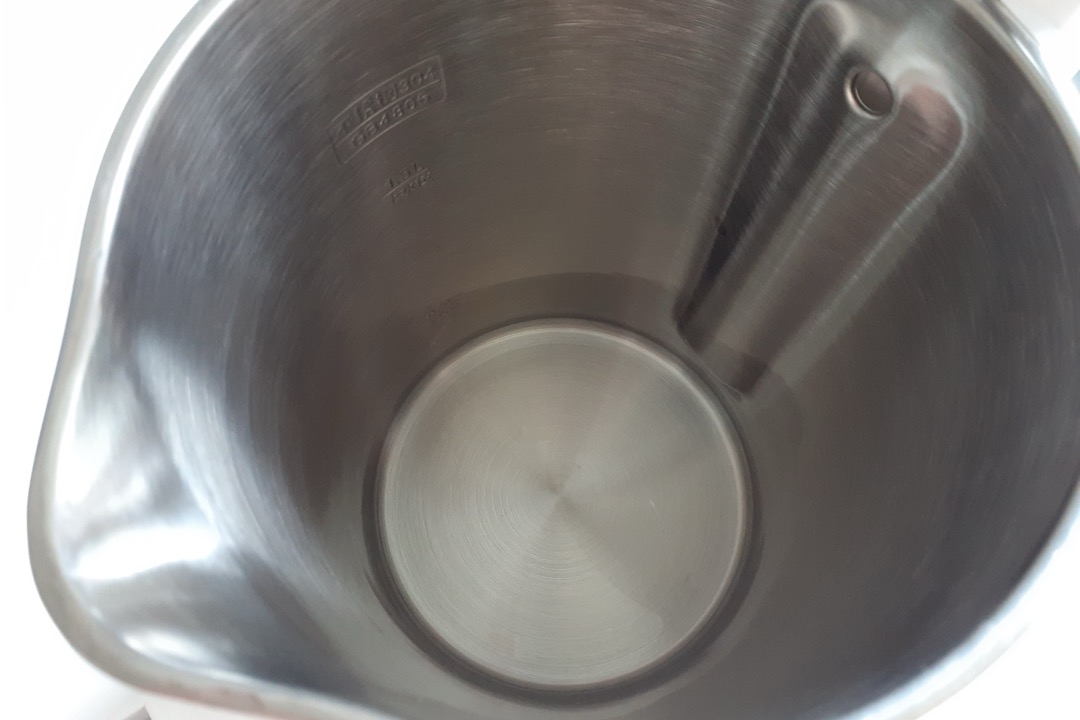
There is no shortage of plastic-free electric kettle roundups. What there is a shortage of is anyone checking. I read through the pages currently ranking for this term before writing, and two of them do real work, opening kettles and reporting what they found. One recommends four kettles that are not plastic-free in any sense, including a model whose lid mechanism and water windows are both plastic, on the strength of a listing that says BPA-free materials.
That is the gap this page is trying to close. I spent eleven years in restaurant test kitchens and the habit that stuck hardest is refusing to accept a material claim about the shell as a claim about the whole object. On an electric kettle the distinction is not academic. The phrase stainless steel describes the part you look at. The parts the water touches are the lid underside, the water-level gauge and the spout filter, and on most kettles sold under that phrase at least one of them is plastic.
So every kettle below was checked part by part against its own listing data, and I have recorded a verdict of pass, partial or fail rather than smoothing everything into a recommendation. Where a brand names each water-contact part, I say so. Where it stays silent, that is recorded as not stated, which is a different thing from confirmed plastic and gets reported differently. Two well-reviewed kettles failed outright and are named further down, along with what gave them away, because knowing what a failure looks like is more useful than another list of winners. If you want the wider all-steel category rather than the plastic question specifically, the stainless steel electric kettle roundup covers that ground.
| Product | Price | Buy |
|---|---|---|
| Hazel Quinn Retro Electric Kettle, 1.7 Liters with ThermometerBest Overall | $55.99 | View on Amazon |
| Cuisinart Soho 1-Liter Double Wall Electric KettleBudget Pick | $49.95 | View on Amazon |
| SAKI Luna Pro Variable-Temperature Electric Kettle, 1.75LPremium Pick | $169.95 | View on Amazon |
| ASCOT Glass Electric Kettle, 1.5L Borosilicate GlassRunner-Up | $50.99 | View on Amazon |
| Greater Goods Gooseneck Electric Kettle, 1200W Temperature ControlRunner-Up | $79.99 | View on Amazon |
| Fellow Clyde Electric Kettle, 1.5 LiterRunner-Up | $99.95 | View on Amazon |
| Cosori Stainless Steel Electric Kettle with Temperature Control, 1.7LRunner-Up | $89.98 | View on Amazon |
| LONGSEED 1.5L Ceramic Electric Kettle, 1200W Retro DesignRunner-Up | $94.99 | View on Amazon |
Find the Best Plastic-Free Electric Kettle for Your Need
Jump to the situation that matches yours.
- Overall best plastic-free electric kettles
- Best all stainless steel electric kettle with no plastic
- Best plastic-free electric kettle with temperature control
- Best plastic-free glass electric kettle
- Best non-toxic electric kettle with no plastic
- Best plastic-free gooseneck electric kettle
- Best plastic-free electric kettle for baby formula
- Best 100 percent plastic-free electric kettle
- More use cases
How We Chose These Kettles
Each kettle was audited against four water-contact parts rather than its title: the inner vessel, the lid underside, the water-level gauge and the spout filter. On temperature-controlled models I added a fifth, the seal around the temperature probe, which is usually silicone even on kettles that are otherwise clean. Marketing bullets were cross-checked against the retailer material specification field, because the two disagree more often than you would expect, and the field occasionally names plastic the description omits. That cross-check is what caught both of the failures named later on this page.
Where a brand declined to state a material, I recorded not stated and left it there rather than inferring. That verdict appears on two of the eight kettles here and it is not a criticism, it is an accurate description of what is knowable. I also weighted review pool size heavily, because a complete materials claim from a brand with sixty reviews is worth less than a partial one from a brand with two thousand, and I read the one-star reviews specifically for the words plastic, flake and glued, which is where owner findings contradict manufacturer claims. Temperature presets appear on several of these kettles but I did not rank on them, since that is a separate buying decision with its own page.
Best Plastic-Free Electric Kettles Overall
Eight kettles, each reviewed once, ordered so the strongest general recommendation comes first.
Hazel Quinn Retro 1.7L: Best Overall
This is the only listing I found that closes all three loopholes in a single sentence, stating food-grade 304 stainless steel for the interior, the lid and the filter by name. Most brands claiming plastic-free status are describing the vessel and quietly leaving the other two parts unmentioned. Hazel Quinn does not, and then goes further by replacing the water-level window with an analog thermometer dial set into the lid. That window is the part I find plastic on more often than anything else in this category, and designing it out entirely is a stronger guarantee than any wording.
The dial is also genuinely useful rather than decorative, since it tells you when the water has dropped to a temperature green tea will tolerate without you guessing. The rest is a conventional and slightly slow kettle: 1200 watts, a Strix thermostat with triple shut-off, 1.7 litres. Two complaints recur in the reviews and both are worth knowing. It is loud coming up to a boil, and a minority of owners report rust-coloured spotting inside after some months, which is usually mineral deposit that descales away but is reported often enough to mention. With more than 1,800 reviews behind it, this is the most evidenced complete claim on the market.

Hazel Quinn Retro Electric Kettle, 1.7 Liters with Thermometer
by Hazel Quinn
The most complete no-plastic claim on Amazon, covering the interior, the lid and the filter by name, and the only one of them backed by a review pool this deep.
Pros
- The only listing in this roundup that names all three water-contact parts individually, stating food-grade 304 stainless steel for the interior, the lid and the filter in one sentence
- An analog thermometer dial on the lid replaces the translucent water-level strip entirely, which removes the part I find plastic on more often than any other
- More than 1,800 reviews, the deepest record of any kettle that makes a complete no-plastic claim, so the reliability picture is actually evidenced rather than assumed
- A Strix thermostat with triple shut-off protection, the component that decides whether auto shut-off still works after a few hundred cycles
Cons
- A vocal minority of owners report rust-coloured spots forming inside after a few months of use
- Noticeably loud as it approaches a boil, which several reviewers mention unprompted
- At 1200 watts it is slower to boil than the 1500-watt kettles here
Cuisinart Soho 1L: Best Budget
This one deserves a moment of explanation, because the retailer material field for it reads Plastic and a shopper skimming would stop there. What that field is describing is the outer wall of a double-wall kettle, the cool-touch shell you hold. The water sits against a stainless steel inner vessel and never meets it. This is the useful inverse of the trap the rest of this page is about: instead of steel branding hiding an internal polymer, here a plastic label hides an entirely steel water path.
Once you know that, it is straightforwardly the best cheap option here. Cuisinart publishes a three-year warranty, the longest term of any kettle on this page and considerably longer than most of the premium models. There are more than 800 reviews and not one recurring complaint about plastic taste or smell, which is the sentiment signal that matters most when the claim being tested is exactly that. The limitations are size and a lid that several owners say does not open fully, which makes descaling more awkward than it needs to be. At one litre it is a desk and small-kitchen kettle rather than a household one.

Cuisinart Soho 1-Liter Double Wall Electric Kettle
by Cuisinart
Proof that a cheap double-wall kettle can keep every bit of its plastic on the outside, provided you read past the material field to work out which layer it is describing.
Pros
- A double-wall build that puts the plastic where it belongs, on the outside, so the exterior stays cool while the water sits against steel
- A three-year limited warranty, the longest published term of any kettle in this roundup and a real statement about expected life
- More than 800 reviews with no plastic-taste or plastic-smell complaints, which is the sentiment signal that matters most for this specific claim
- A compact one-litre footprint that suits an office desk or a small kitchen without dominating the counter
Cons
- The retailer material field reads Plastic first, which describes the cool-touch outer shell rather than the water path, but will read as a red flag to anyone skimming
- Several owners report the lid does not open fully, which makes descaling more awkward than it should be
- One litre means boiling twice for a household of three or more
SAKI Luna Pro 1.75L: Best for Temperature Control
The Luna Pro is the kettle almost every other page in this search puts first, and several of them imply it is only available direct from the brand, which is no longer true. It is on Amazon with nearly a thousand reviews behind it. What earns it a place here is the same thing that earns the Hazel Quinn its place, approached differently: SAKI replaced the water window with a digital display, so there is no translucent strip to be made of anything. You cannot hide plastic in a part that does not exist.
On top of that it is comfortably the most capable kettle here. Variable temperature from 104F upward, six presets, and altitude calibration to 9,900 feet, which genuinely matters if you live somewhere water boils below 212F and your tea has been tasting flat. Keep-warm is adjustable from zero to two hours rather than the fixed hour most brands offer. Two honest caveats. A real minority of owners report failures inside the first year, which is a harder thing to accept at this price than at fifty dollars. And the 2026 revision of this kettle moved to a plastic structural frame inside the base. That sits well outside the water path and changes nothing about what your water touches, but if you are buying on principle rather than on exposure, you should know it changed.

SAKI Luna Pro Variable-Temperature Electric Kettle, 1.75L
by SAKI
The most precise kettle in this roundup and the one that solves the water-window problem most elegantly, with a reliability record that does not quite match its price.
Pros
- A digital display in place of a water window, which makes it structurally impossible to hide plastic in the part of a kettle where plastic is most often hidden
- True variable temperature from 104F to a full boil with six one-touch presets, and altitude calibration up to 9,900 feet that no other kettle here offers
- A keep-warm you can set anywhere from zero to 120 minutes, rather than the fixed hour most brands give you
- Genuinely sold on Amazon with nearly a thousand reviews, despite most of the search results implying it is direct from the brand only
Cons
- A real minority of owners report units failing within the first year, which is hard to accept at this price
- The 2026 revision moved to a plastic structural frame inside the base, outside the water path but worth knowing if you are buying on principle
- The most expensive kettle recommended here by a wide margin
ASCOT Glass 1.5L: Best Glass Kettle
A glass kettle solves the hardest part of this problem by removing it. There is no water-level window to interrogate because the entire body is one, and no opaque interior for anything to hide behind. ASCOT then does the thing most glass brands do not, which is extend the no-plastic claim explicitly to the lid and the filter rather than stopping at the vessel. Only one other listing on this page is that specific.
The trade-offs are the ones glass always brings, and the reviews are consistent about them. The base and handle are plastic, and owners describe them as low-grade. Neither touches the water, so the audit stands, but it does affect how the kettle feels in daily use. More seriously, there is a real cluster of reports of breakage within the first few weeks, and at 3.9 stars this has the lowest rating of anything I am recommending. Buy it for the transparency, in both senses, and accept that glass is the fragile choice.

ASCOT Glass Electric Kettle, 1.5L Borosilicate Glass
by ASCOT
The simplest way to be certain nothing is hiding in the water path, because you can see the entire water path.
Pros
- One of only two listings here that explicitly extends its no-plastic claim to the lid and the filter, not just the vessel
- A transparent borosilicate body makes a hidden water window structurally impossible, because the whole kettle is the window
- You can see the water, which means you can see scale building long before it becomes the thing that kills the kettle
- Boils at a full 1500 watts, faster than either of the steel kettles near this price
Cons
- Owners consistently describe the base and handle as low-grade plastic, and although neither touches the water it undercuts the feel of the thing
- A real cluster of reports of breakage within the first weeks, which is the risk you accept with glass
- The lowest rating of anything recommended on this page
Greater Goods Gooseneck 0.8L: Best for Pour-Over
Pour-over needs two things a normal kettle cannot do, an aimed slow stream and water held at a chosen temperature, and this is the cheapest kettle here that does both without compromising the materials question. Greater Goods names 304 stainless steel for the interior and makes an explicit no-plastic-contact claim, and the maximum fill line is etched into the steel rather than printed on a strip, which is the detail that tells you someone thought about it.
The brew timer is a genuinely good idea, counting your pour so you are not watching a phone with a kettle in your hand. Two things keep it out of the top spots. The lid material is never stated, and multiple owners report the lid cracking at around the one-year mark, which is suggestive without being conclusive. And at 0.8 litres this is a coffee tool. If it is going to be your only kettle, you will be refilling it constantly.

Greater Goods Gooseneck Electric Kettle, 1200W Temperature Control
by Greater Goods
The pour-over kettle for people who want temperature control and an etched fill line rather than a printed plastic one, with a lid whose material the brand never names.
Pros
- A precision gooseneck spout with real temperature control from 104F upward, which is the combination pour-over actually needs
- The maximum fill line is etched into the steel rather than printed on a plastic strip, sidestepping the category's most common hidden part
- A built-in brew timer, so the kettle counts your pour instead of you watching a phone
- Food-grade 304 stainless steel named explicitly for the interior, with a no-plastic-contact claim in the brand's own wording
Cons
- Multiple owners report the lid cracking after roughly a year, and the brand does not state what the lid is made of
- At 0.8 litres this is a coffee tool, not a household kettle
- Some reports of the display failing in the second year
Fellow Clyde 1.5L: Best Design-Led Pick
The Clyde qualifies in an unusual way. Fellow makes no plastic-free claim about it at all, so on paper it should not be here. Its owners make the claim instead, repeatedly and independently, reporting that the water meets only stainless steel. That is a weaker form of evidence than a published specification, and I want to be clear that it is weaker, but it is also evidence nobody was paid to produce.
It is also the best-looking kettle in this roundup by a distance, a stovetop teapot shape that happens to plug in, and the spout genuinely does not drip. Build quality sentiment is among the strongest in the category. What you give up is any temperature control whatsoever, which at this price is a real omission, and the review pool is the thinnest of the steel kettles here. One thing worth clarifying, since it comes up constantly in discussions of this brand: the silicone sensor ring that people report on Fellow’s temperature-controlled kettles is a feature of those models. The Clyde has no temperature sensor to seal.

Fellow Clyde Electric Kettle, 1.5 Liter
by Fellow
A kettle that earns its place on what its owners found rather than on what its brand claims, which is an unusual and rather reassuring way to qualify.
Pros
- The best-looking kettle here by some distance, a stovetop teapot silhouette that happens to be electric
- Owners repeatedly confirm the water meets only stainless steel, which is a stronger signal than a marketing bullet because nobody was paid to write it
- A genuinely drip-free spout, which is rarer than it should be at any price
- Build quality sentiment is among the strongest of anything in this category
Cons
- Fellow makes no explicit plastic-free claim of its own, so the verdict rests on owner reports rather than a published specification
- No temperature control at all, which is a strange omission at this price
- A thinner review pool than the established steel kettles here
Cosori Temperature Control 1.7L: Best for Brewing Presets
I have included this one partly because it is a capable kettle and partly because it is the most instructive listing in the category. Cosori claims an all-metal interior with no plastic parts contacting the water, and the water-level indicator is set inside the body rather than being an external strip, which is the right design decision. Most owners who mention the claim say it holds up when they look.
Not all of them. One detailed critical review describes what appears to be plastic under the lid and a spout that looks glued rather than welded, and separate reports describe the interior steel flaking, which would be a more serious problem than any disclosure question. Even supportive owners describe a small silicone seal around the lid and the temperature probe. None of that makes the kettle bad, and a silicone probe seal is close to universal on temperature-controlled models. It does mean the claim is contested rather than settled, and with barely 200 reviews there is not yet enough evidence to call it either way. That is why it sits here as a partial rather than a pass.

Cosori Stainless Steel Electric Kettle with Temperature Control, 1.7L
by Cosori
The best case study on this page for why a claim gets checked rather than repeated, and still a capable preset kettle if you accept the uncertainty.
Pros
- Five one-touch brewing presets holding to within about five degrees, which covers green tea through to a rolling boil without guesswork
- The water-level indicator is set inside the body rather than being a translucent exterior strip
- A 60-minute keep-warm, the feature most often missing from kettles that get their materials right
- The large majority of owners who mention the plastic-free claim say it holds up under inspection
Cons
- The claim is disputed by a credible minority, including a detailed report of plastic under the lid and a spout that appears glued rather than welded
- Separate reports describe the interior steel flaking, which is a more serious complaint than any material disclosure question
- Barely over 200 reviews, one of the two thinnest records in this lineup
LONGSEED Ceramic 1.5L: Best Ceramic Kettle
Ceramic is the material people ask about most and the one with the thinnest field by far. This is the only all-ceramic electric kettle I could verify on Amazon with any meaningful review history, and I want to frame it accurately: it is the best of a weak set rather than a strong product in absolute terms. The vessel and lid are genuinely ceramic, so the water sits against a glazed surface with no metal and no polymer, and ceramic holds heat longer than thin steel so a poured pot stays hot.
The caveats are substantial. Seventy-three reviews is very little to go on. There is a real cluster of leaking complaints, which is what ceramic tends to do when it fails. And the all-ceramic description overstates the object, since owners confirm the lower section and heating plate are plastic. That is outside the water path and does not affect the audit, but it is not what the marketing implies, and this page is not in the business of letting that pass unremarked.

LONGSEED 1.5L Ceramic Electric Kettle, 1200W Retro Design
by LONGSEED
The best ceramic kettle I could actually verify, offered with the honest caveat that the ceramic field is thin and this is the strongest of a weak set.
Pros
- The only credible all-ceramic option I could verify on Amazon with any real review history behind it
- A genuinely ceramic body and lid, so the water sits against a glazed surface with no metal or polymer involved
- Ceramic holds heat noticeably longer than thin steel, so poured water stays hot in the pot
- A relief-carved retro design that looks like nothing else in the category
Cons
- Only 74 reviews, by far the thinnest evidence base on this page
- A real cluster of leaking complaints, which is the failure mode ceramic is prone to
- The all-ceramic framing overstates it, since owners confirm the lower section and heating plate are plastic, outside the water path but not what the marketing implies
Stainless Steel Kettles That Fail the Plastic-Free Test
Two widely recommended kettles disclose plastic in their own specification data while selling on a stainless steel identity, and both are worth naming because they show the two different shapes this problem takes.
The Haden Dorset is the inverse of what you would expect. Its material field reads, in the retailer’s own words, BPA-free plastic internal components and stainless steel housing. The steel is the part you look at. The internals, which is where the water goes, are plastic. To Haden’s credit the brand never claims otherwise and markets the kettle entirely on style, so nothing here is deceptive. The problem is a buyer who reads stainless steel in the title and completes the sentence themselves. With more than 1,200 reviews and a 4.4 average it is a perfectly good kettle. It is not a plastic-free one.
The Aarke kettle is the more surprising case, because it costs roughly four times what the best pick on this page costs and is built beautifully. Its material field lists polypropylene and silicone ahead of stainless steel. Aarke makes no plastic-free claim either, selling on design and temperature precision, and owners report no plastic taste at all. But it is a useful corrective to the assumption that spending more solves this: the Cuisinart at fifty dollars and the ASCOT at fifty-one both keep plastic further from the water than the two-hundred-and-fifty-dollar option does. Price and water-path purity are close to unrelated in this category.
Best All Stainless Steel Electric Kettle with No Plastic
If you want steel specifically, with no glass or ceramic in the equation, the field narrows to kettles that either name every water-contact part or design the risky parts away. These three do one or the other, and they differ mainly in how much you want to spend on control.
| Product | Price | Buy |
|---|---|---|
| Hazel Quinn Retro Electric Kettle, 1.7 Liters with ThermometerBest all-steel kettle overall Names 304 steel for the interior, lid and filter, and uses a thermometer dial instead of a window | $55.99 | View on Amazon |
| SAKI Luna Pro Variable-Temperature Electric Kettle, 1.75LBest all-steel with temperature control Claims a 304 steel interior and replaces the window with a digital display | $169.95 | View on Amazon |
| Cosori Stainless Steel Electric Kettle with Temperature Control, 1.7LBest all-steel for presets Claims an all-metal interior with internal level markings, though a minority of owners dispute it | $89.98 | View on Amazon |
Best Plastic-Free Electric Kettle with Temperature Control
Temperature control introduces one part the other kettles do not have, a probe sitting in the water, and its seal is silicone on essentially every model that offers the feature. That is worth accepting rather than hunting for a unicorn: silicone is inert at boiling temperatures and is not the polypropylene the microplastics research concerns itself with. What still varies is everything else in the water path.
| Product | Price | Buy |
|---|---|---|
| SAKI Luna Pro Variable-Temperature Electric Kettle, 1.75LBest temperature control overall Six presets, altitude calibration and a two-hour adjustable keep-warm, with a digital display instead of a window | $169.95 | View on Amazon |
| Greater Goods Gooseneck Electric Kettle, 1200W Temperature ControlBest temperature control for pour-over Degree-level control with a gooseneck spout and an etched steel fill line | $79.99 | View on Amazon |
| Cosori Stainless Steel Electric Kettle with Temperature Control, 1.7LBest temperature control on a budget Five presets and a 60-minute keep-warm, the most preset control here without stepping up to the Saki | $89.98 | View on Amazon |
Best Plastic-Free Glass Electric Kettle
Glass has one structural advantage nothing else offers: there is no opaque wall for a component to hide behind, and no separate water window to be made of plastic. The whole vessel is transparent, so the audit is something you can perform yourself in the kitchen. The cost is fragility, and a glass kettle still needs a lid and a filter, which is exactly where a careless glass brand puts its plastic.
| Product | Price | Buy |
|---|---|---|
| ASCOT Glass Electric Kettle, 1.5L Borosilicate GlassBest glass kettle Borosilicate glass with the no-plastic claim explicitly extended to the lid and the filter | $50.99 | View on Amazon |
| Hazel Quinn Retro Electric Kettle, 1.7 Liters with ThermometerBest steel alternative The steel option if you would rather not own something breakable, with all three parts named as 304 | $55.99 | View on Amazon |
Best Non-Toxic Electric Kettle with No Plastic
Non-toxic is a looser phrase than plastic-free and worth pinning down. In practice people asking for it want two things: nothing leaching from a polymer into hot water, and a metal surface that is food-grade rather than unspecified. That points to either a named steel grade or a non-metal vessel, plus a water path with no polymer in it. These three cover the three material families.
| Product | Price | Buy |
|---|---|---|
| Hazel Quinn Retro Electric Kettle, 1.7 Liters with ThermometerBest non-toxic steel kettle Names 304 food-grade steel for all three water-contact parts, the most complete disclosure here | $55.99 | View on Amazon |
| ASCOT Glass Electric Kettle, 1.5L Borosilicate GlassBest non-toxic glass kettle Borosilicate glass with a lid and filter claim, so nothing metallic or polymer touches the water | $50.99 | View on Amazon |
| Cuisinart Soho 1-Liter Double Wall Electric KettleBest non-toxic budget kettle A stainless interior with every plastic component kept on the outer wall, and the longest warranty on this page | $49.95 | View on Amazon |
Best Plastic-Free Gooseneck Electric Kettle
A gooseneck is a single-purpose spout, narrow and long so the stream can be aimed and slowed for pour-over coffee. Buying one as a household kettle is a mistake, since the same shape that gives you control makes emptying a large kettle tedious. Only two kettles here have the spout, and they split cleanly between control and looks.
| Product | Price | Buy |
|---|---|---|
| Greater Goods Gooseneck Electric Kettle, 1200W Temperature ControlBest gooseneck for control Degree-level temperature control and a brew timer, with 304 steel named for the interior | $79.99 | View on Amazon |
| Fellow Clyde Electric Kettle, 1.5 LiterBest gooseneck for looks A tapered spout in a classic teapot shape, plastic-free by owner report rather than published claim | $99.95 | View on Amazon |
Best Plastic-Free Electric Kettle for Baby Formula
This comes up constantly and deserves a direct answer. Formula preparation is the one use case where the plastic question has a genuine evidence base behind it, since the widely cited nanoplastic research measured polypropylene infant bottles during formula preparation rather than kettles. Guidance in several countries is to make up formula with water at around 70C to kill bacteria in the powder, then cool it, which makes temperature selection a real requirement rather than a luxury. You want a set temperature and a water path with no polymer in it.
| Product | Price | Buy |
|---|---|---|
| SAKI Luna Pro Variable-Temperature Electric Kettle, 1.75LBest for formula overall Sets and holds an exact temperature and keeps warm up to two hours, with a claimed all-steel interior | $169.95 | View on Amazon |
| Greater Goods Gooseneck Electric Kettle, 1200W Temperature ControlBest compact option for formula Holds a chosen temperature precisely in a small kettle that boils fast for a single feed | $79.99 | View on Amazon |
| Cuisinart Soho 1-Liter Double Wall Electric KettleBest budget option for formula No temperature selection, so boil and cool, but a steel water path for the least money of these three | $49.95 | View on Amazon |
Best 100 Percent Plastic-Free Electric Kettle
Strictly, no such thing is sold. Every mains kettle has a plug, a switch and base electronics containing polymers. What is achievable is a water path with no plastic in it and no silicone seal inside the vessel, which means giving up temperature control, since the probe seal is the last polymer to go. These two get closest, and both do it by having no probe at all.
| Product | Price | Buy |
|---|---|---|
| Hazel Quinn Retro Electric Kettle, 1.7 Liters with ThermometerClosest to fully plastic-free in steel All three water-contact parts named as 304 steel, with a thermometer dial replacing the window and no probe inside | $55.99 | View on Amazon |
| ASCOT Glass Electric Kettle, 1.5L Borosilicate GlassClosest to fully plastic-free in glass A glass vessel with lid and filter claimed plastic-free, and nothing hidden because nothing is opaque | $50.99 | View on Amazon |
Best Plastic-Free Electric Kettles by Use Case
A few smaller situations that come up often enough to name directly.
| Product | Price | Buy |
|---|---|---|
| Cuisinart Soho 1-Liter Double Wall Electric KettleBest for a desk or small kitchen One litre with a steel interior, a three-year warranty and the smallest footprint here | $49.95 | View on Amazon |
| LONGSEED 1.5L Ceramic Electric Kettle, 1200W Retro DesignBest ceramic option A glazed ceramic vessel and lid, the only verifiable ceramic option, on a thin review record | $94.99 | View on Amazon |
| Fellow Clyde Electric Kettle, 1.5 LiterBest for a kitchen you look at The stovetop teapot silhouette, drip-free, plastic-free by owner report | $99.95 | View on Amazon |
| Cosori Stainless Steel Electric Kettle with Temperature Control, 1.7LBest for loose-leaf tea Five presets covering delicate greens through to a rolling boil, with a 60-minute hold | $89.98 | View on Amazon |
| SAKI Luna Pro Variable-Temperature Electric Kettle, 1.75LBest for high altitude The only kettle here that calibrates its boil point for elevation, up to 9,900 feet | $169.95 | View on Amazon |
Buyer's Guide
Every kettle on this page is sold as plastic-free or nearly so, and the phrase means something different on each of them. These are the six things I would settle before spending anything, in the order I would settle them.
The four parts that actually touch the water
The vessel is rarely the problem. Check the lid underside, the water-level gauge, the spout filter and, on temperature-controlled models, the seal around the probe. A kettle can have plastic in all four while its title says stainless steel. Look for a listing that names each part separately. A brand willing to write that the interior, lid and filter are 304 stainless steel is telling you something a brand writing stainless steel construction is not.
How the kettle shows you the water level
This single detail predicts the rest better than any other. A translucent strip set into the body is plastic sitting in the water, and it is the most commonly hidden part in the category. An etched fill line, markings inside the steel, an analog dial or a digital readout all remove that part completely. A glass body makes it moot, because the entire vessel is the gauge. If a listing shows a window and stays silent about its material, assume plastic.
Read the material field, not just the bullets
The retailer specification field is the highest-value cross-check available, and it has caught plastic that marketing copy omits. Two popular kettles disclose it there and nowhere else: one premium model lists polypropylene and silicone ahead of stainless steel, and one best-selling model states plastic internal components alongside a stainless steel housing. It is not sufficient on its own. It can also mislead in the other direction, describing a cool-touch outer shell as plastic on a kettle whose water path is entirely steel, so work out which layer it is naming.
Steel grade, and whether one is stated at all
Grade 304, also written 18/8, is the standard food-grade austenitic steel for anything holding hot water. Grade 316 adds molybdenum and resists chloride corrosion better, which matters in coastal or heavily softened water. The useful signal is not which grade you get but whether the brand publishes one, because a company naming a grade has committed to a specification it can be held to. Silence is not evidence of plastic, but it is evidence that nobody has promised you anything.
Material family, and what each one costs you
Steel is durable, hides the water level and is the only family that survives being knocked off a counter. Glass shows you everything, never affects flavour and cannot hide a window, but it breaks and the cheap ones break early. Ceramic holds heat longest and is the most inert of the three, though the field is thin and leaks are the common failure. None of the three is automatically plastic-free, because all of them still need a lid, a spout and a seal.
Cleaning access and published warranty
Limescale is what kills an electric kettle, and the deciding feature is whether your hand and a descaling brush fit through the opening. A wide, fully opening lid makes descaling a two-minute job and a narrow one makes it something you skip until the kettle dies. Check the warranty too. Most kettles in this category publish nothing at all, so a stated two or three-year term is a genuine claim about expected life rather than a marketing line.
How to Choose the Best Plastic-Free Electric Kettle
Work in this order. Decide first whether you need temperature control, because that decision sets your floor on plastic: a temperature probe needs a seal, and that seal is silicone on every model worth buying. If you want the water path completely free of polymer, you are choosing a boil-only kettle, and you should stop looking at the temperature-controlled ones rather than hunting for one that solves a problem nobody has solved.
Then pick your material family. Steel survives being knocked over and hides the water level, which is why so many steel kettles get a plastic window fitted. Glass hides nothing and breaks. Ceramic is the most inert and the least proven. After that, read the listing for the four parts, the inner vessel, the lid underside, the gauge and the filter, and treat silence as unknown rather than as steel. Check the material specification field as well as the bullets. And whatever you land on, make sure a hand and a brush fit through the opening, because limescale is what actually kills these things, and the kettle that dies first is always the one that was too awkward to descale.
Final Verdict
The Hazel Quinn Retro is the one I would buy, and for a narrow reason: it is the only kettle here that names all three water-contact parts in its own words and then removes the riskiest of them, replacing the plastic level window with a thermometer dial. It is not the fastest kettle on this page and it is not the quietest. It is the one whose claims are complete and survive being checked, and it has more than 1,800 reviews standing behind it. On a budget, the Cuisinart Soho is the sensible answer once you understand that the plastic in its specification field is the outer shell of a double wall and not the surface the water meets. If you want temperature control, the SAKI Luna Pro is the most capable thing here, with the caveat that its reliability record does not quite match its price.
The wider point is worth carrying into whatever you end up buying. Stainless steel on an electric kettle describes the shell, not the water path, and the brands that mean it say so part by part. Price is close to useless as a proxy, since the two kettles that failed this audit include the most expensive one I looked at. If a stovetop kettle would suit you better, the stainless steel tea kettle roundup and the whistling kettle picks cover that ground, and for boiling water away from home there is the travel kettle guide.
Frequently Asked Questions
Is there a 100 percent plastic-free electric kettle?
Which kettle is best for avoiding microplastics?
What is the safest electric kettle to use?
Where does plastic usually hide in a stainless steel kettle?
Does BPA-free mean the same thing as plastic-free?
Related Articles
12 Best Tea Kettles of 2026, Stovetop and Electric, Chosen by a CIA-Trained Chef
kettles-boiling
10 Best Electric Tea Kettles With Temperature Control of 2026
kettles-boiling
9 Best Stainless Steel Electric Kettles of 2026, Tested by a CIA-Trained Chef
kettles-boiling
14 Best Stainless Steel Tea Kettles of 2026, Tested by a CIA-Trained Chef
kettles-boiling
12 Best Travel Tea Kettles of 2026, Tested by a CIA-Trained Chef
kettles-boiling
About the Reviewer

Nora Whitfield, CIA Culinary Arts, ServSafe Certified
A.O.S. Culinary Arts, The Culinary Institute of America
Nora Whitfield trained at the Culinary Institute of America and spent twelve years in professional kitchens, the last four running the test kitchen for a regional restaurant group where her job was to decide which equipment could survive a dinner service and which could not. She has seasoned more carbon-steel woks than she can count, boiled water in every kettle worth owning, and broken enough cheap gear to know exactly where manufacturers cut corners. She reviews kitchen equipment the way she specified it professionally: cook on it, clean it, and see what it looks like after a month.